WA looks to boost salvage logging as wildfires scorch record amount of state land
Sep 04, 2026 | 8:28 pm ET
Description
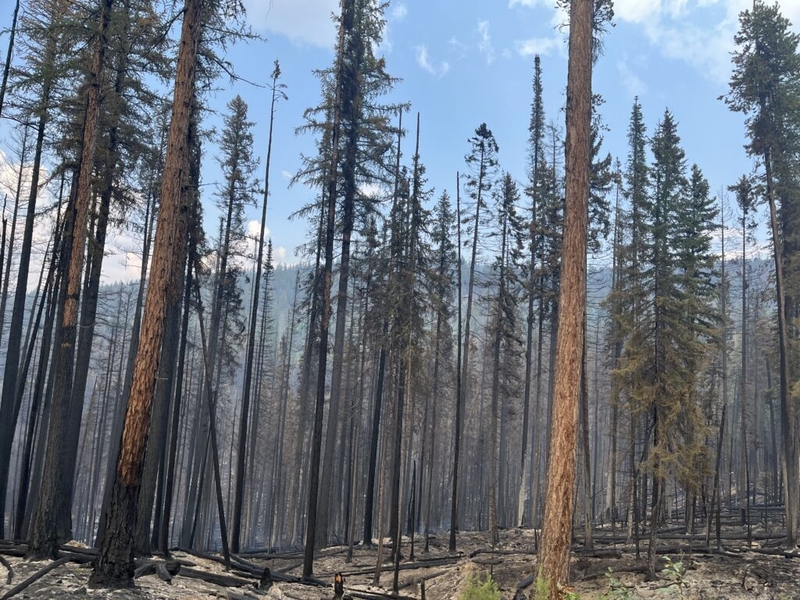
The Board of Natural Resources passed a resolution that allows the Department of Natural Resources to auction salvage harvests worth $2 million or less without board approval. (Photo provided by the Department of Natural Resources)
Summer wildfires burning through Washington just broke another record.
They’ve scorched more than 886,000 acres. Of those, 93,000 acres are on state trust land, marking the record for the largest amount of state-managed land burned by fires in a season since recordkeeping began in 2000.
Two-thirds of that state land was forests, meaning a hit to revenue from timber sales. Money from logging on Washington’s public land helps pay for schools and other parts of state and local government.
Officials are now racing to sell the charred timber before it molds or becomes even less valuable. The state’s Board of Natural Resources this week voted to allow the Department of Natural Resources to sell more burned forestland without board approval.
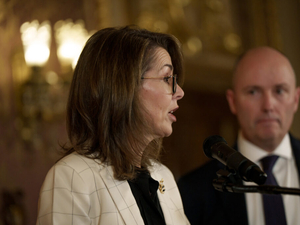
Public Lands Commissioner Dave Upthegrove touted it as a strategy to “maximize value to the trust.”
“It cuts the timeline to bring (timber sales) to auction by about two months,” said Michael Kearney, the department’s product sales and leasing division manager.
Before the resolution, the department could appraise and sell burnt timber, in what’s called salvage harvests, without board approval if it was worth less than $250,000. After this week’s board vote, that threshold is $2 million.
The move better positions the department in the niche market of burned and rotting wood. It can be used as an industrial wood fuel, for landscaping, or to produce certain types of cabinets or house siding and roofing.
With so much land burning around the West this summer, burned timber is plentiful.
“We weren’t the only impacted forest land out there. There’s tribal land, there’s private, there’s a lot of federal land,” said Alfred Watson, the department’s regional manager for northeast Washington. “There’s going to be a lot of competition in that market.”
The scale of a salvage timber harvest is limited.
After a wildfire, some tree species quickly decline in value, and rough terrain makes many state forests inaccessible to logging. And, with the magnitude of this year’s wildfire season, the department doesn’t have the resources to harvest it all.
Of the roughly 60,000 acres of fire-scarred state forest, “I doubt we would even be able to approach 10% of that,” said Kearney, noting that the department’s estimate is around 4,000 acres. “We very likely don’t have the capacity or time to try to do that much.”
Before auction, salvage harvests will still require several internal reviews and a State Environmental Policy Act review from the Department of Ecology.
Lost revenue in the Sinlahekin fire
Twelve miles west of Tonasket, the Sinlahekin fire, which started on July 26 and continues to burn over 166,000 acres, has cost the department hundreds of thousands of dollars in lost timber revenue. As of Sept. 4, the fire is 38% contained.
During the fire, four state timber parcels planned for auction during the next fiscal year went up in flames. Two of those sales, named Ten Mile and Cold Park, would have brought in at least $800,000, based on their comparison with past sales of similar size, according to Kearney.
Those sales, now salvage harvests, have combined appraised minimum bids totaling $218,000, Kearney said, costing the department around $600,000 in lost revenue.
The Sinlahekin fire also tore through four timber sales that were already auctioned. Per the sale contract, purchasers are still responsible for paying the full amount.
Olympia, WA