Virginia education board updates graduation requirements, expands course options for students
Sep 01, 2026 | 5:28 am ET
Description
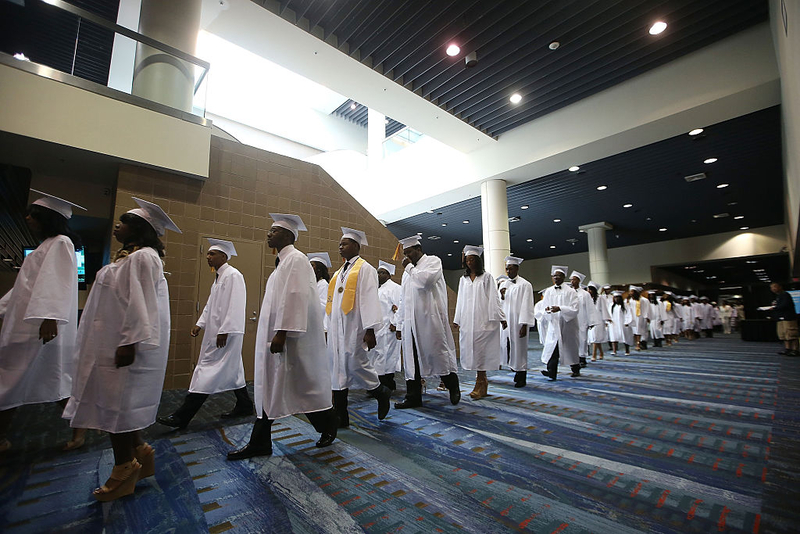
A group of high school graduates. (Photo by Mario Tama/Getty Images)
The Virginia Board of Education has approved updates to its list of approved courses, clarifying expanded graduation requirements for schools.
The measure spells out graduation rules that schools must understand and follow, building on legislative efforts to expand how students can earn a standard or advanced studies diploma by meeting graduation requirements in math, science, history and social studies, economics and personal finance.
These new standards give certain students more ways to satisfy requirements, such as in history and social sciences. This is especially useful for students taking Advanced Placement and International Baccalaureate courses, or transferring to Virginia schools later in high school.
For example, students may use African American History or AP African American Studies, if available, to meet their World History I or World Geography requirement. However, they must pass an approved alternative assessment to receive the history and social studies credit needed to meet the graduation requirement.
The list of changes also allows more approved Economics and Personal Finance (EPF) courses, such as IB Economics or IB Business Management, to count toward the EPF requirement if they include the required EPF material. The course must be approved by the state education department and meet EPF standards.
Students who transfer into a Virginia public high school after 10th grade can also use International Baccalaureate courses to meet some graduation requirements, substituting for Virginia and U.S. history, government and economics, and personal finance classes.
The revamped standards also provide an exception for the required first aid, CPR, and AED training if the student’s IEP or 504 Plan states they cannot complete the training, or if they transferred after 10th grade from a school or program that did not require or provide credit for the training.
The changes went into effect for the current school year.
The board did not make any direct comment on the graduation requirements at its most recent meeting on Aug. 27.
However, Board Member Amber Northern, appointed by former Gov. Glenn Youngkin, asked department staff to return at a future meeting with guidance showing how schools can use existing seat-time flexibility.
Seat-time flexibility allows students who have mastered the required material or skills to earn course credit through alternative learning experiences rather than spending a fixed number of hours in a traditional classroom. Virginia authorized the option in 2024.
Northern said students have “no time” in their schedules to participate in alternative learning pathways because so many of the credits required for graduation are already committed to mandatory courses.
“Our kids have no time to take a CTE (career and technical education) apprenticeship, to do work-based learning, do all the stuff that we’re doing when our course requirements consume 22 of our 24 credits,” Northern said last Thursday.
She later called for clearer guidance for school divisions, saying, “I think we’d do a real service to our divisions if we could supplement our graduation requirements with here’s how you can use the flexibility that you’ve been given.”
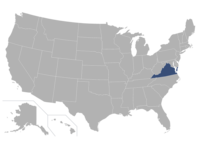
Richmond, VA