Utah wildlife officials use $3.4 million from hunting, fishing license sales for habitat restoration
Jun 26, 2026 | 7:05 am ET
Description
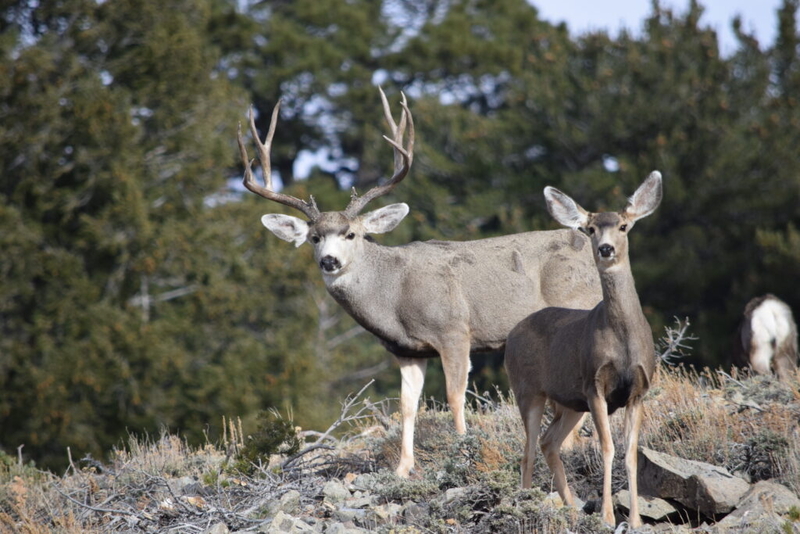
A buck and a doe are seen in a wildlife area in the northeastern region of Utah in November, 2022. (Photo courtesy of the Utah Division of Wildlife Resources)
Utah wildlife officials are set to use about $3.4 million from hunting and fishing license sales for 71 habitat restoration projects, including some to improve community fishing and help mule deer populations.
The Utah Division of Wildlife Resources Habitat Council allocated the funding during its annual funding meeting April 29, the division announced in a news release Thursday.
The Habitat Council, which the Utah Legislature created in 1995, is tasked with providing funding specifically for enhancing, preserving and protecting fish and wildlife habitats while also improving hunting and fishing access.
The council is made up of eight members (four people representing the public and four Utah Department of Natural Resources employees) that acts as an advisory board, providing recommendations for how state leaders should spend the money collected from hunting and fishing license sales.
Alison Whittaker, habitat conservation coordinator for the Utah Division of Wildlife Resources, expressed appreciation for hunters and anglers, calling them “the backbone of wildlife conservation” in a prepared statement.

“When you buy a hunting or fishing license, you are directly supporting wildlife conservation. That money helps fund many of the crucial habitat restoration projects that help to maintain fish and wildlife populations for future generations to enjoy,” Whittaker said. “Providing the necessary habitat for these species is vital to their survival, and requires ongoing restoration efforts as climate conditions continue to shift.”
Some of the “high-priority fish and wildlife projects” the $3.4 million will help fund over the next year (from July 1 to June 20, 2027) include:
- $220,000 for Canyon View Park Pond habitat and access improvements, meant to improve habitat for fish and fishing access for anglers at the Canyon View Park Pond community fishing pond in Spanish Fork. The project will include dredging the pond and installing habitat structures and an aeration system.
- $188,000 for the Little Montes recreation developments, meant to help provide more feed and habitat for wildlife and also improve fishing amenities and access at the Little Montes Wildlife Management Area in northeastern Utah. It includes construction of a floating trail, tree planting, building three pavilions around the reservoir, planting food plots for wildlife and adding structures below the dam to help reduce erosion.
- $150,000 for the Dry Creek Reservoir conservation pool, meant to increase water storage for the community fishing pond in Highland so fish can survive during extreme drought years.
- $58,000 for Thousand Lakes habitat improvement, which is the fourth phase of a project to improve habitat in the Garden Basin drainage on the east side of Thousand Lake Mountain in Sevier County. It aims to improve habitat through the removal of water-guzzling trees, which will allow for the growth of other vegetation — like native shrubs and flowering plants — that benefit deer and other wildlife.
- $50,000 for Willow Watershed habitat improvements, part of an ongoing effort to improve the area near Willow Creek and Meadow Creek in northeastern Utah. This project will include maintaining beaver dam-like structures to reduce erosion, removing juniper trees to help deer and other big game, and seeding work to improve plant diversity.
- $50,000 for the Eastern Sierra De La Sal Mountain Beaver Basin project to restore aspen and make other habitat improvements to the mule deer summer range on the northeastern side of the La Sal Mountains in Grand County.
“We are extremely grateful for other partners who help fund these projects as well, which are so critical for fish and wildlife,” Whittaker said. “We wouldn’t be able to complete as many of these necessary conservation projects without these important partnerships.”
Since 2006, the Habitat Council program has set aside more than $50.6 million for 1,672 wildlife habitat projects across the state, improved more than 455,000 acres of land habitat and restored 2,151 miles of streams and rivers, according to the division.
Salt Lake City, UT