US Supreme Court ruling ‘provides much-need finality’ on mail voting in Pa.
Sep 15, 2026 | 2:50 pm ET
Description
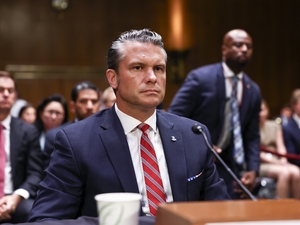
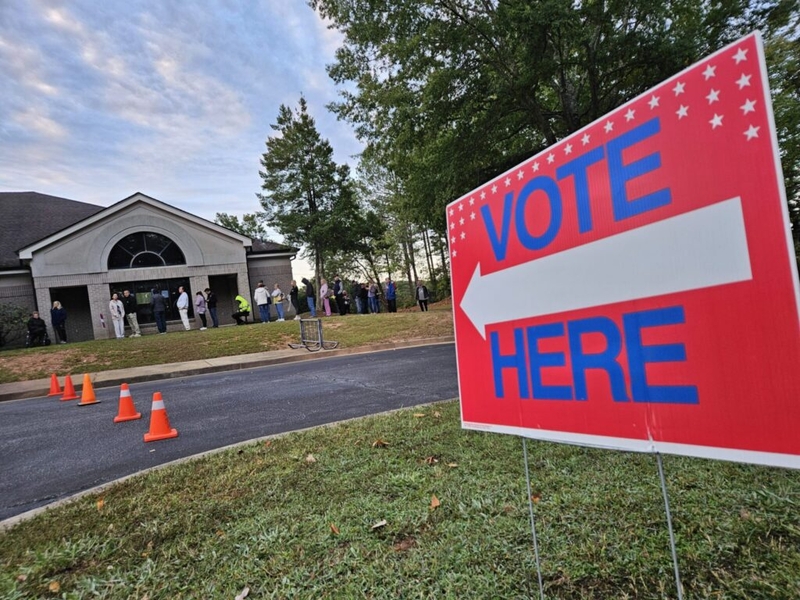
In addition to mail-in ballots, Secretary of the Commonwealth Al Schmidt said the commonwealth's oath for poll workers applied to insider trading on prediction markets. (Photo by Ross Williams/Georgia Recorder)
Pennsylvania’s top elections chief hailed a U.S. Supreme Court decision as a major victory for voters.
Secretary of the Commonwealth Al Schmidt said Monday’s ruling blocking the U.S. Postal Service from implementing a mail-in ballot rule before November’s crucial midterm elections is necessary to protect state elections.
“Eligible Pennsylvanians who choose to vote by mail should have confidence that they can continue to do so safely and securely,” Schmidt said in a Tuesday press conference. “The Shapiro administration fought to prevent this unprecedented overreach into Pennsylvania’s elections, and we will continue fighting to ensure that the people of this commonwealth have yet another free, fair, safe and secure election this November.”
US Supreme Court blocks Trump rule limiting mail voting, sides with Dem states
Nearly two million Pennsylvanians used mail-in ballots in 2024, compared to 5 million people who voted in person. President Donald Trump, who votes by mail, continued his attack on the popular method, directing USPS to restrict mail-in voting — a move that some argue usurps Constitutional, congressional and state authority.
The court’s decision wasn’t unanimous, with conservative Justices Clarence Thomas and Samuel Alito dissenting. Justice Brett Kavanaugh, in a brief concurrence, concluded that aspects of the ruling may be legal, but was unworkable in the short timeframe.
Schmidt also said that the state’s existing policy prohibited election staff from participating in prediction market trading related to election outcomes. Such trades — placed on Polymarket, Kalshi and other places, are typically less than $1 and can include races for mayor, governor and the U.S. Senate.
“The statutory oath that every Pennsylvania poll worker takes includes phrasing on bets and wagers, specifically stating that, ‘I am not directly or indirectly interested in any bet or wager on the result of this election,’” Schmidt added. “We’ll work with law enforcement and the prediction market platforms themselves on any investigation or review of credible evidence that an election worker in Pennsylvania used confidential information for personal financial gain.”
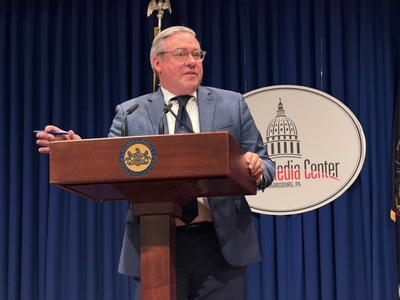
He urged people to trust credible sources of information — such as his agency or county election officials — over the projections of outside entities. Notably, in Los Angeles’ mayor race, online influencers accused election officials of cheating when market odds contradicted the outcome.
“Polls and prediction markets should not be confused for the verified results calculated by your local county officials,” he continued.
Schmidt’s public appearance coincided with National Voter Registration Day, which marks three years since Pennsylvania adopted automatic voter registration for people applying for a driver’s license or identification card.
“The results have been really impressive, not just in terms of new voters being registered to vote, but especially younger voters,” Schmidt said.
Of the state’s nearly 9 million voters, upwards of 750,000 are between the ages of 18 and 25, compared to nearly 1.5 million in the 25 to 34 cohort, according to the agency’s voter registration dashboard.
The deadline to register to vote before the upcoming election is Monday, Oct. 19.
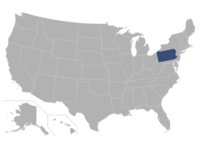
Harrisburg, PA