US Supreme Court orders another look at how WA political maps are drawn
Oct 05, 2026 | 4:52 pm ET
Description
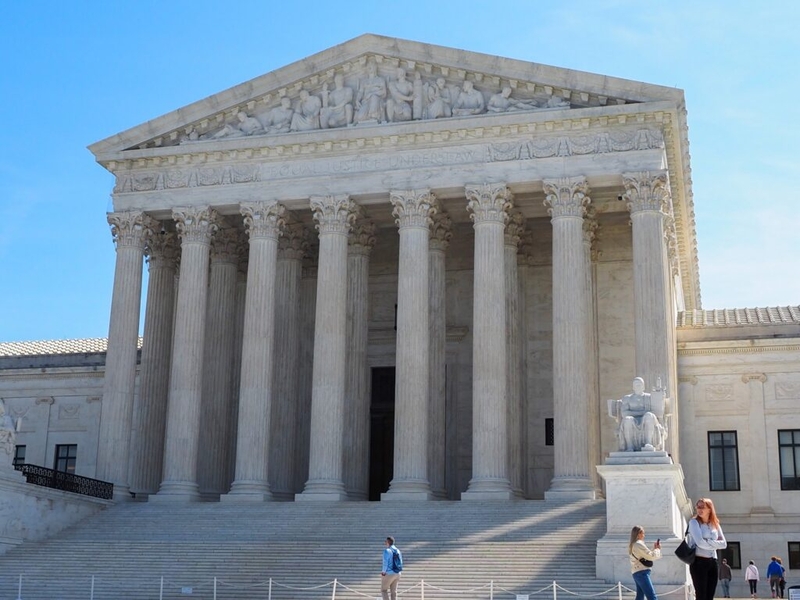
The U.S. Supreme Court on April 9, 2026. (Photo by Ashley Murray/States Newsroom)
The U.S. Supreme Court on Monday set the stage for another redrawing of Washington state’s political maps.
On the first day of its new session, the court accepted a legal challenge to the boundaries, then remanded it to a lower court to determine if the way a federal judge drew the lines in 2024 complies with a ruling earlier this year in a Louisiana redistricting case.
Monday’s action will not affect next month’s election. But it could lead to the state’s legislative district boundaries changing before they’re next scheduled to be redrawn in 2031, depending on the pace at which the process proceeds.
Those contesting the 2024 map and the state attorney general had each asked the Supreme Court to take this step.
This case dates back more than four years. It started when a group of Latino voters contested the 15th Legislative District borders adopted by the state’s redistricting commission and approved by the Washington Legislature in early 2022.
Their lawsuit contended the final map violated the federal Voting Rights Act because it impaired the ability of Latino voters in the Yakima Valley to participate equally in elections. The case included a trial in June 2022 featuring testimony from commissioners and voting experts.
Plaintiffs argued that while Latinos were a slight majority of the district’s voters, the final contours included areas where their turnout is historically lower and excluded communities where Latinos are more politically active. This fracturing can depress Latino turnout and weaken their voting strength, they argued.
U.S. District Court Judge Robert Lasnik agreed, approving new lines in early 2024 to enhance the political voice of Latino voters. The 9th U.S. Circuit Court of Appeals upheld his decision, concluding race was not the predominant factor in shaping the redrawn map.
The controversial revamp shifted more than 300,000 people across 13 legislative districts in eastern and western Washington.
Jose Trevino and state Rep. Alex Ybarra, R-Quincy, have sued to get the redrawn maps tossed. They petitioned the U.S. Supreme Court in January to take up the case and were energized in April when the legal landscape was transformed by the Supreme Court in Louisiana v. Callais.
In that ruling, the majority rewrote how the federal Voting Rights Act is applied in redistricting by significantly curtailing the use of race in drawing boundaries. Now, it is expected that Lasnik, first appointed to the bench by President Bill Clinton, will be deciding if his 2024 decision aligns with the court’s current approach.
“The lower courts should be given the first opportunity to apply that decision to the facts of this case,” Washington Attorney General Nick Brown wrote in a brief filed in June.
He noted that would be in line with how the Supreme Court dealt with redistricting cases in Alabama, North Dakota and Mississippi.
Attorneys for the original plaintiffs in the case wanted the Supreme Court to deny the petition.
“We won this case twice already, and we intend to win again. As a result of our previous litigation, Latino voters in Yakima Valley had an equal voice in state legislative elections for the first time in decades,” Annabelle Harless, director of redistricting at the Campaign Legal Center, said in a statement.
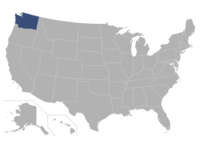
Olympia, WA