Virginia governor pledges overhaul of outdated K-12 school funding formula
Nov 02, 2026 | 5:27 am ET
Description
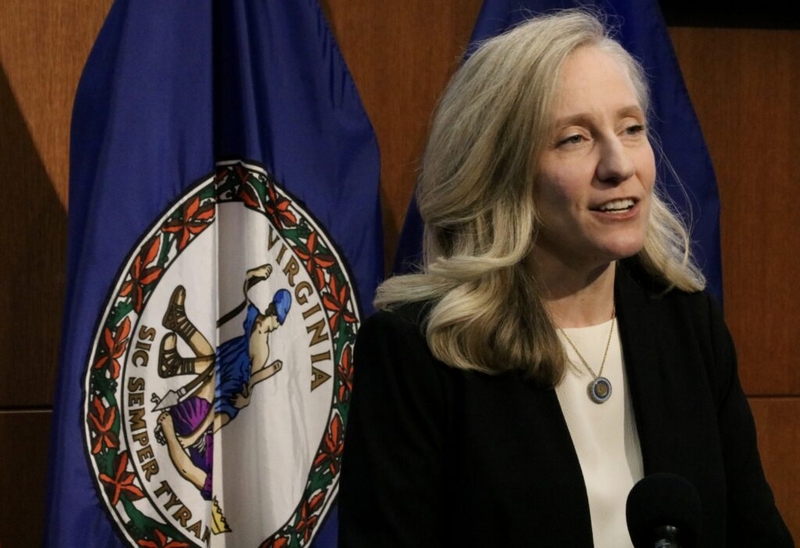
Virginia Gov. Abigail Spanberger speaks to press on April 27, 2026 at an event in Richmond touting policy accomplished during her first 100 days in office. (Photo by Charlotte Rene Woods/Virginia Mercury)
Gov. Abigail Spanberger said on Oct. 29 that she is committed to adjusting Virginia’s K-12 funding formula, after a state research group found it needs substantial changes and advanced a plan to hire an expert tasked with studying a new funding mechanism for up to 24 months.
The existing formula is over 50 years old, does not adequately reflect the real costs of operating schools, and has forced local governments to spend far more on K-12 education than the state.
Virginia lawmakers approve plan to advance new K-12 school funding formula
While the governor did not set a firm timeline for preparing it for the next biennium’s budget in December 2027, Spanberger said in an interview with the Mercury last Thursday that she aims to complete this monumental task before the end of the current administration, which ends in 2029.
“I’d do it tomorrow if we could do it,” said Spanberger. “(However) that is not realistic, but we have to get it done before the end of our administration.”
She also argued that a modernized funding formula could help Virginia’s schools better address monetary gaps and meet student needs.
Earlier efforts
States outside of Virginia have taken two to three years to reform their K-12 funding formulas, emphasizing the challenge such an undertaking poses for state governments.
In Virginia, lawmakers and the legislative branch have had to find alternative ways to get the necessary funds to Virginia’s schools.
One successful initiative to provide financial relief to localities for students with specific needs, such as those qualifying for free lunch, English as a second language, or special education, came during former Gov. L. Douglas Wilder’s administration 30 years ago.
In 1992, Virginia created its K–12 At-Risk Add-On funding provision and dedicated $46.9 million in the 1992-1994 biennium.
The Governor’s Commission on Educational Opportunity for All Virginians found that educating students from low-income households costs more than the state’s basic school funding formula provides. The add-on was intended to provide additional state funding to help cover those costs.
Ultimately, the provision eventually became state law and has undergone multiple changes.
Looking ahead
Spanberger’s administration, lawmakers and education leaders, including the Virginia Association of School Superintendents (VASS), are eager to reform the new funding formula.
Sarah Calveric, VASS president, said the association is emphasizing that it be a student-driven formula that would better address regional demographic differences and geographic needs.
This method would also give school districts the ability to attract and retain staff through alignment with prevailing wages, and enable them to procure specialized resources such as mental health providers and literacy specialists.
“When you create a funding formula that is more student-driven, it helps keep the focus on the main thing, which is students, their specific needs, and the geographic trends that school divisions are addressing on a daily basis,” Calveric said to the Mercury.
Lawmakers will return to Richmond to discuss education legislation and other subjects starting on Jan. 13.
During the 45-day session, which the governor could extend, the Virginia Department of Education is expected to select a consultant, who will begin work during session after publishing its formal service request and selecting a bid.
The consultant will have to include policy factors such as base funding per student, class sizes, extra weights for student needs, operating costs, transition provisions and the Local Composite Index, which determines what each locality can pay for its schools.
The process will also include input from education leaders and other key partners on shaping the new formula.
Spanberger said one challenge of such a large-scale change is the limited timeframe of a single-term governorship to complete the work in four years.
With only three years and two months remaining, the administration is trying to be aggressive to keep the project moving forward.
Richmond, VA