U.S. Supreme Court declines to take up Maine lobster boat tracking appeal
Oct 05, 2026 | 4:39 pm ET
Description
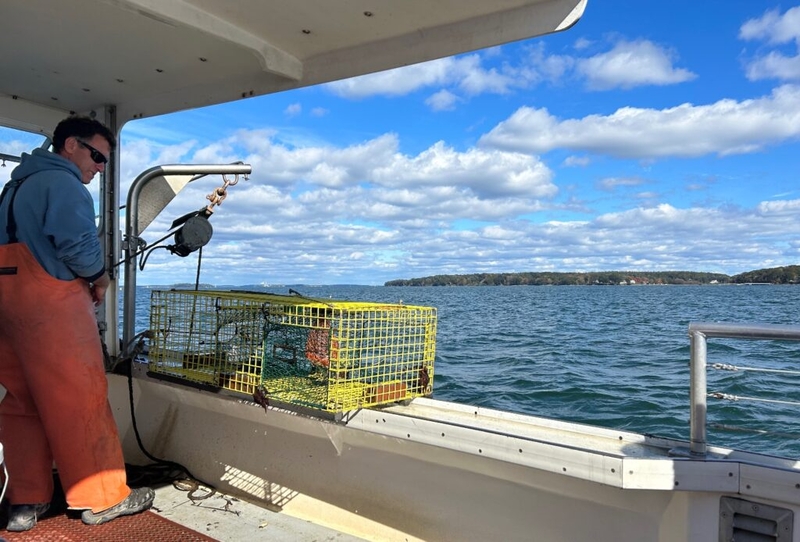
Setting lobster traps in Casco Bay. (Photo by AnnMarie Hilton/Maine Morning Star)
The U.S. Supreme Court declined to hear a Maine lobsterman’s legal challenge to an electronic vessel tracker requirement, putting an end to the multi-year lawsuit.
In an order Monday, the court denied a request to take up the appeal by Frank Thompson, a Vinalhaven lobsterman.
In a statement, Maine Department of Marine Resources Commissioner Carl Wilson said the department believes the tracking data is critically important to the long-term sustainability of the lobster fishery.
“It will inform the lobster stock assessment, enhance offshore enforcement and support better decision-making in a range of federal management contexts,” Wilson said.
Thompson’s attorney, Matthew Gilliam with Pacific Legal Foundation, said in a statement that the denial does not diminish the importance of the issues in the suit.
“Forcing lobstermen to carry a GPS tracker on their private boats and submit to around-the-clock surveillance as a condition of keeping their license remains a serious constitutional concern,” Gilliam said. “We are committed to fighting for Fourth Amendment protections from government overreach and we will continue to pursue every lawful avenue to protect individual rights.”
At the center of the case is a 2023 requirement that all federally licensed lobster vessels must operate GPS trackers. The rule was passed by the Atlantic States Marine Fisheries Commission, and implemented by the Maine Department of Marine Resources.
Thompson sued DMR Commissioner Carl Wilson in federal court when the rule went into effect in 2024, arguing that the tracking constituted an unreasonable search and seizure and violated his constitutional rights.
But federal judges were not persuaded. The lawsuit was dismissed by the district court, and that ruling was upheld by the First Circuit Court of Appeals last year. With the Supreme Court declining to intervene, the First Circuit ruling is the final order in the suit.
The Conservation Law Foundation previously filed an amicus brief in the case, supporting the regulations and arguing that it is legal and vital to track lobster boats to ensure effective management of the industry.
“New England’s lobster population has declined dangerously,” Conservation Law Foundation Associate Attorney Sarah Shahabi said in a statement. “Tracking lobster boats provides the timely and accurate data that regulators need. This decision is a valuable step toward appropriately managing this iconic species.”

Augusta, ME