US Senate candidates in 9 key races quiet about Social Security benefits cliff
Oct 07, 2026 | 3:17 pm ET
Description
Without congressional action, Social Security could be facing a a 22% reduction in benefits in 2032. (Photo illustration by Getty Images)
WASHINGTON — Nearly all of the U.S. senators elected this year will be in office when Congress debates how to restructure Social Security to prevent an automatic drop-off in retirement benefits in 2032.
Very few candidates in competitive races, however, have policy proposals on their campaign websites and many, when contacted by States Newsroom, declined to share details about which changes they’d support if elected.
Maya MacGuineas, president of the Committee for a Responsible Federal Budget, said even though Social Security’s financial woes have been discussed more during this year’s campaign cycle, most candidates have shied away from getting into the weeds.
“What's really disappointing is nobody is talking about a realistic suite of options that will fix it,” she said. “There are a few who will mention lifting the payroll tax cap, which is probably the most often cited policy, but that on its own won't fix the program.”
Workers now pay a 6.2% tax that goes directly to Social Security, though that doesn’t apply to earnings above $184,500.
MacGuineas said one upside to this year’s campaign cycle is more voters understand that a candidate promising not to touch Social Security guarantees the automatic benefit cut in 2032, which will worsen over time.
But, she said, she understands why candidates would want to wait until they are actually elected to Congress to go into detail about something that was once widely considered the third rail of American politics.
“It's been so long since politicians have been honest about what Social Security faces and what fixes will be required,” MacGuineas said. “An election cycle is not where you'd expect a 180-degree switch into a direct conversation. I think this is the first step, and hopefully, post-midterms, we are able to start having that conversation.”
Two-way communication
Shai Akabas, vice president of economic policy at the Bipartisan Policy Center, said candidates need to be honest with voters about the changes they’ll likely have to make to Social Security.
At the same time, he said, politicians need to hear from Americans that they understand Congress must take some action in the years ahead.
“Until we get that two-way street working, it's going to be really hard to move anything into law,” he said.
Candidates, and those who work for them, have plenty of resources to study up on Social Security’s financial problems and explore the numerous changes that could be combined to avoid a 22% reduction in benefits from taking place in 2032.
“It's not like policymakers are entering into a novel problem that has unexplored solutions,” Akabas said. “They're walking on well trodden ground and it is more about finding the political will to put those solutions together to create a bipartisan reform package than it is creating solutions from scratch.”
While Akabas said it’s important for candidates to discuss realistic solutions on the campaign trail, the job of fixing the program would be less fraught if undertaken in a bipartisan way.
“If the two parties together hold hands and say, ‘Here's a reform that we're going to put in place, and yes, it has difficult decisions, but it's the right thing to do for the country,’ I think our polling shows that that could be reasonably well received,” he said. “If, on the other hand, a candidate is putting that proposal out by themselves, it is extremely easy for the other side to message, ‘This candidate just wants to raise your taxes’ or ‘This candidate just wants to cut Social Security.’”
Here’s what politicians running in close Senate races say about Social Security on their websites and shared with States Newsroom when asked for which detailed policy changes they’d support if elected to Congress.
Alaska
Democrat Mary Peltola’s website says if elected she would “work to eliminate taxes on Social Security benefits for the nearly 95,000 seniors in Alaska.” A spokesperson wrote she “is in this race to fix the rigged system in DC and put Alaska first – that means putting more money in Alaskans’ pockets and ending federal income tax on Social Security.”
- Republican Dan Sullivan didn’t have any policy proposals on his campaign website and staff didn’t respond to multiple requests for more information.
Iowa
Republican Ashley Hinson’s campaign website says she would preserve “Social Security and Medicare benefits that vulnerable Iowans depend on, while rooting out waste, fraud, and abuse that deplete these programs.” Campaign communications director Billy Fuerst wrote in an email that Hinson “will always protect Social Security for Iowa seniors, and she will work with anyone to ensure the long-term solvency of this vital program. Ashley has never and will never cut a penny from Social Security.”
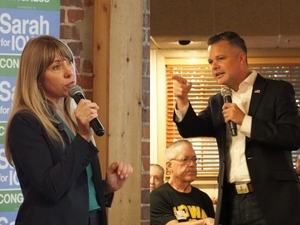
- Democrat Josh Turek’s website says he would strengthen “Social Security by ensuring billionaires pay their fair share” and raise “Social Security income and assets limits for disabled individuals.” A staffer for his campaign sent several examples of Turek talking about Social Security, including an article in the Iowa Capital Dispatch that quoted him saying it was “ridiculous” that wealthy Americans didn’t pay any taxes to Social Security on income above $184,500.
Kansas
Democrat Adam Hamilton’s website states: “We need to protect social security and provide real solutions for seniors.” A campaign staffer sent an article from the Johnson County Post quoting Hamilton as saying, “Both parties have kicked the can down the road, and the only way this gets solved is if Republicans and Democrats act together. And there’s movement: Elizabeth Warren, a Democrat, and Bernie Moreno, a Republican, are working on bipartisan legislation to lift the payroll tax cap. That’s where I’d start. Right now only the first $184,500 of income is subject to Social Security tax, so somebody making $50,000 pays that tax on every dollar they earn while a person making millions pays on a small fraction. Raising the cap is the best lever we have to keep the program solvent without cutting benefits. I think about my mom, who’s on Social Security now. A cut is not an option for her, and it shouldn’t be for anyone."
- Republican Roger Marshall didn’t have any policy positions on his campaign website and staff didn’t respond to multiple requests for more information.
Maine
Republican Susan Collins’ campaign website has one paragraph mentioning her work enacting a law that increased Social Security benefits for millions of Americans who had pensions after working in government or other public-sector jobs. Collins wrote in a statement that she supports “creating an independent, bipartisan commission of experts to develop recommendations —similar to the one in the early 1980s. I have supported proposals calling for such a commission for Congress to consider.” Collins added that she remains “committed to keeping Social Security strong for current and future generations. It's a critical program and the foundation of retirement income for most Mainers, and I've voted repeatedly to preserve it.”
- Democrat Troy Jackson’s website says he would “protect” Social Security and notes he published an op-ed in the Bangor Daily News saying he would eliminate the $184,500 payroll cap and raise benefits. He wrote he would “never” vote to raise the retirement age or privatize the program. Campaign spokesperson Maggie Amjad wrote in an email that, “Troy is committed to protecting Social Security from cuts and ensuring that Mainers receive the secure retirement and benefits they’ve paid into and earned.” She added that if elected, “he’ll work to scrap the cap and require millionaires to pay Social Security taxes on their income, allow Medicare to negotiate the price of every drug, eliminate profiteering and waste, and expand benefits—not raise the retirement age.”
Michigan
Democrat Abdul El-Sayed’s website says he would “fight to close the Social Security payroll tax cap to make sure the rich pay their fair share so that Social Security stays solvent well into the future.” Campaign spokesperson Cole Wozniak wrote in an email that El-Sayed would “ensure our seniors get the benefits they earned through a lifetime of labor.”
- Republican Mike Rogers doesn’t have any policy details on this campaign website. But communications director Alyssa Brouillet wrote in an email that Rogers is committed to protecting the program since his “parents survived on social security, as do his wife, Kristi’s, parents.” Brouillet added that Rogers “is committed to protecting social security and Medicare for our seniors.”
New Hampshire
Democrat Chris Pappas’ campaign website says he “will never vote to cut benefits or force seniors to work longer for less. He has fought against efforts to raise the retirement age, slash Social Security benefits, and privatize the entire system, a move that would gamble Granite Staters’ hard-earned benefits in the stock market and benefit Wall Street. Chris is committed to shoring up and improving Social Security to ensure that current retirees and future generations can trust that their benefits will be there.”
- Republican John Sununu didn’t have any policy details on his campaign website and staff didn’t respond to multiple requests for more information.
North Carolina
Democrat Roy Cooper didn’t have any policy proposals on his campaign website and staff didn’t respond to multiple requests for more information.
- Republican Michael Whatley didn’t have any policy positions on his campaign website and staff didn’t respond to multiple requests for more information.
Ohio
Democrat Sherrod Brown’s website says that because of the Social Security Fairness Act, a broadly bipartisan bill that became law in 2024, more than 2 million “former teachers, bus drivers, police officers, firefighters, and other workers are now receiving their full Social Security payments that previously were withheld by the federal government.” A campaign spokesperson didn’t provide any details about what types of policy changes Brown would support in the future to avoid the automatic benefit cut, responding to States Newsroom’s request for policy details with criticisms of Husted.
- Republican Jon Husted didn’t have any policy details on his campaign website and staff didn’t respond to multiple requests for more information.
Texas
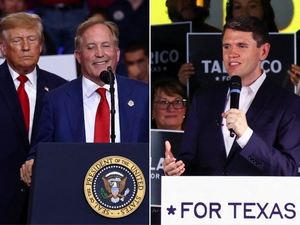
Republican Ken Paxton’s website doesn’t have any policy proposals related to Social Security. A campaign staffer responded in an email that Paxton “believes we must protect Social Security for the millions of seniors who spent their lives paying into the system and are counting on the benefits they earned.” The campaign staffer also said that Paxton “will continue to stand behind lowering taxes and ensuring Social Security remains protected for generations to come." The campaign didn’t explain how exactly Paxton would do that if he became a senator.
- Democrat James Talarico’s website says he would support “eliminating the tax cap on those earning over $400,000 a year, and incentivize employer-sponsored pensions.” A campaign staffer wrote in an email that Talarico would eliminate the $184,500 payroll tax ceiling for Social Security. He would also “support creating a tax system in which every dollar of income over $400,000 is taxed to fund Social Security. This policy would include a tax ramp-up starting at $400,001 that grows with additional income. This would ensure the top 2% of American earners are doing their part to keep this program solvent, without increasing the tax burden on the middle class during a cost-of-living crisis.” The campaign staffer wrote that Talarico wouldn’t support increasing the retirement age at which Americans can begin collecting Social Security benefits or reduce scheduled benefits.
All States Newsroom content is free to republish. Read our republishing policy for more information.