US Senate candidate asks judge to put him on special GOP primary ballot
Aug 03, 2026 | 4:56 pm ET
Description
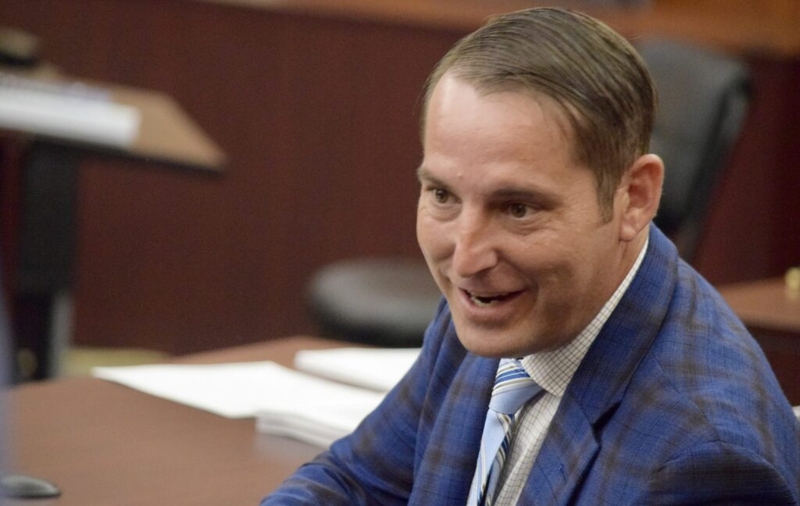
Decertified U.S. Senate candidate Danny Ford II speaks with his lawyers ahead of a Richland County court hearing Monday, Aug. 3, 2026, in which he asked the judge to put him on the ballot for the special Republican primary. (Photo by Jessica Holdman/SC Daily Gazette)
COLUMBIA — A decertified candidate for U.S. Senate is asking a judge to order his name be included on special GOP primary ballots going forward.
But with absentee and overseas military ballots already in the mail, the South Carolina Republican Party argues altering ballots now would interrupt an election already in progress.
Danny Ford II of Clemson, one of a dozen people who filed to run in the Aug. 11 primary, sued the Republican Party last week for disqualifying him as a candidate. The winner of the primary will replace U.S. Sen. Lindsey Graham on the ballot in November following his unexpected death July 11.

Meanwhile, some 1,870 absentee and overseas military ballots have gone out since July 29 and nearly 60 have already been cast and returned.
“These are ballots that are in play,” said Thomas Nicholson, an attorney for the state Election Commission. “How do you un-ring that bell?
“I’m not sure how you do it without ordering a new election,” Nicholson added.
But Ford, son of Clemson’s first national football championship coach, is not asking the court to take it that far.
His lawyers said he respects that absentee and military voters won’t see his name on the ballot. Should the judge rule in Ford’s favor, they said, Ford’s name should be included on “all ballots practical” between the time of the judge’s order and election day Aug. 11.
Attorneys for the state GOP also urged Circuit Court Judge Daniel Coble not to make any changes. In the past, they said, courts have shied away from cases after voting is already underway.
“It would gut this election,” the party’s attorney, Rob Tyson, told reporters following the Monday court hearing.
Ford, who in June lost his bid to be South Carolina’s next agriculture commissioner, was one of three U.S. Senate candidates the GOP party decertified, citing party rules.
One candidate, Clark Neilson, was disqualified for living in North Carolina. The other two, Ford and self-named “hip-hop Republican” Darius Mitchell, were deemed ineligible for failing to meet a new rule passed last month requiring all candidates vote in two of the last three statewide GOP primaries.
Ford’s lawyers argued the rule, which took effect July 1, violates the state constitution’s requirement that the Legislature set how and when an election takes place. Political parties, acting as an extension of the state Election Commission, certify that a candidate meets qualifications for office under state law, his lawyers said.
Because the party is essentially “inhabiting the role of the state,” said Ford’s attorney Skyler Hutto, state law doesn’t allow the party to enact rules that are in conflict with state or federal requirements. Because the rule disqualifies an otherwise qualified candidate, it goes too far, he said.

“This is where the rubber begins to meet the road,” Hutto added.
The party countered that the First Amendment gives political parties leeway to decide who they affiliate with, and by extension, who can run in their primaries.
As long as party rules don’t run in direct contrast to the constitutional requirements to run for Senate — 30 years of age, a U.S. citizen for at least nine years, and residency in the state at the time of election — it has the ability to include additional requirements, the party’s lawyer said.
Tyson also said the party isn’t violating Ford’s right to seek office because he could run as a write-in candidate.
“But he doesn’t have a right to be on the Republican primary ballot,” he added.
Ford’s legal team also said the GOP’s new rule is arbitrary because it doesn’t define what counts as a separate election and leaves it up to party discretion on when to waive it.
Ford said he asked the party for a waiver. But the party’s waiver process does not allow candidates to apply for one themselves, spokeswoman Grace Short told the SC Daily Gazette. Party staff instead told decertified candidates they would need a voting member of the party to make a motion on their behalf.

Of the 48 voting members from 44 counties present during the certification meeting, none spoke up for Ford or any of the other candidates, Short said.
Ford also contends his votes in the June 9 GOP primary and the June 23 runoff, in which he lost to Republican Cody Simpson to become the party’s nominee for state agriculture chief, should count as separate statewide elections, allowing him to run.
The party counted those as a single election cycle. Tyson said the state Election Commission did the same when it barred anyone who cast a Democratic ballot in June from voting in the special primary.
By that argument, Hutto countered, the party already granted Ford his GOP bona fides for this election cycle when it certified him to run for commissioner of agriculture.
Coble told lawyers to file paperwork by 5 p.m. Monday and said he’d make a decision soon after.
Depending on how quickly the judge rules, that could leave the state Election Commission with less than 40 hours to reprint ballots and reset voting machines in time for the start of early voting at 8 a.m. Wednesday.
Columbia