U.S. Fish and Wildlife staff down more than a third nationwide, 40% in Oregon since Trump 2.0
Sep 03, 2026 | 4:37 pm ET
Description
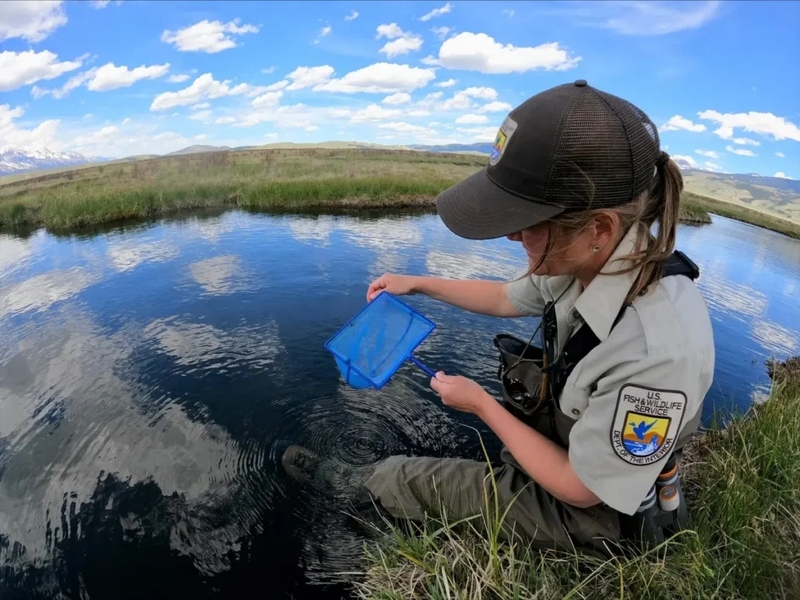
A U.S. Fish and Wildlife Service biologist examines macroinvertebrates at the National Elk Refuge near Jackson Hole, Wyo. The agency has lost 1,900 scientists due to early retirements, buyouts and cuts under the Trump Administration. (Photo by Kari Cieszkiewicz/U.S. Fish and Wildlife Service)
The number of people staffing the U.S. Fish and Wildlife Service has dropped by 3,600 during President Donald Trump’s second term, according to federal data obtained by the nonprofit conservation group Center for Biological Diversity.
Oregon, California, Alaska and Washington have seen some of the steepest losses, according to the agency’s year-over-year staff rosters obtained via public records request by Noah Greenwald, endangered species director at the center.
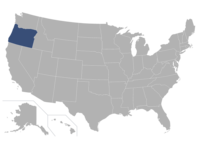
The number of Fish and Wildlife employees in Oregon is down 40% since 2024, from 434 full, part-time and seasonal staff in 2024 to 257 as of this year. Alaska has lost 220 staff, a 36% decline, and Washington has lost 222, a 38% decline.
U.S. Fish and Wildlife spokespersons at the agency’s Washington, D.C., headquarters and Pacific Region office did not respond to multiple emails requesting comment on Wednesday and Thursday, and the agency’s contact center line was nonfunctional.
Across the West, staff numbers are down since 2024, indicating many staff left and took buyouts or early retirements, or were cut by Elon Musk’s short-lived U.S. DOGE Service, a commission Trump created to slash federal spending.
- Alaska has lost 220 staff, a 36% decline
- Arizona has lost 83 staff, a 45% decline
- California has lost 313, a 36% decline
- Colorado has lost 189 staff, a 41% decline
- Idaho has lost 61 staff, a 35% decline
- Montana has lost 77 staff a 40% decline
- Nevada has lost 49 staff, a 37% decline
- New Mexico has lost 149 staff, a 47% decline
- Utah has lost 26 staff, a 35% decline
- Wyoming has lost 16 staff, a 25% decline
Among the losses nationwide are 1,900 scientists, including biologists, foresters and wildfire managers, including 95 scientists who worked for the Fish and Wildlife Service in offices across Oregon, from coastal cities to La Grande to Roseburg, Bend and Portland.
“This brain drain will be hard to undo now that the Fish and Wildlife Service has lost so many expert scientists who helped save endangered animals and plants,” Greenwald said in a news release. “Americans overwhelmingly want to see our wildlife healthy and flourishing, but the Trump administration has made it clear that its goal is the exact opposite.”
Trump has listed fewer vulnerable species for federal protection than any other presidential administration since Congress first passed the Endangered Species Act, according to Greenwald’s analysis of the agency’s own database.
In the year following the 2025 DOGE cuts, the U.S. lost about 350,000 federal jobs, according to one estimate from the nonprofit Work for America, which helps former federal workers find new jobs in state and local governments.
Salem, OR