U.S. Army Corps of Engineers gives green light to Line 5 tunnel
Aug 12, 2026 | 1:29 pm ET
Description
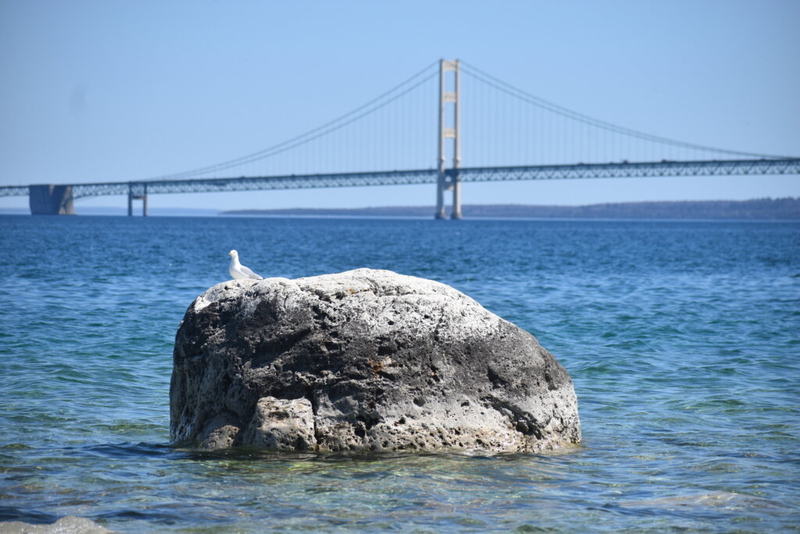
Ceremonial rock in Mackinac Straits prior to Anishinaabek water ceremony at McGulpin Point, Mackinaw City. May 2021 | Laina G. Stebbins
Canadian energy company Enbridge has secured another permit needed for its Line 5 tunnel project, moving the effort closer toward construction after another critical permit was struck down less than two weeks earlier.
The controversial Line 5 pipeline runs from Superior, Wisconsin to Sarnia, Ontario, with a 4.5-mile segment of dual pipelines running through the Straits of Mackinac, where Lake Michigan and Lake Huron meet.
The U.S. Army Corps of Engineers announced on Wednesday that it had issued a permit for the project, authorizing the company to tunnel beneath the lake bed in the Straits of Mackinac, where Lake Michigan and Lake Huron meet.
The tunnel would house a four-mile-long pipeline segment intended to replace the dual pipelines running along the lake bed amid ongoing concerns that the pipelines could rupture, spilling oil and natural gas liquids into the Great Lakes.
Tribal nations from throughout the Great Lakes region and environmental advocates have pushed to shut down the pipeline for many years, pointing to the 2010 Kalamazoo River oil spill from Enbridge’s Line 6B, and a series of anchor strikes that dented Line 5’s eastern and western segments as warning signs of the potential for a spill.
Enbridge has pointed to the tunnel project as a preventative measure against any future anchor strikes and oil spill concerns, though pipeline opponents argue that constructing the tunnel carries its own list of harms, including impacts to nearby wetlands and the destruction of several cultural sites and archaeological resources.
In April 2025, the U.S. Army Corps of Engineers confirmed that its environmental review of the tunnel project would move forward on a shortened timeline, following an executive order from President Donald Trump.
“This has been a very carefully weighed decision,” the Corps’ Detroit District Commander, Lt. Col. Donald K. Lew, said in a statement. Wednesday. “The approval of the Enbridge Line 5 tunnel permit application is the culmination of a robust and thorough evaluation process. The Detroit District team worked extensively with and appropriately considered the views of various federal and state resource agencies, Tribes, and the applicant. I am confident that we have granted authorization for a thoroughly vetted proposal that will meet the purpose and need for the project while maximizing protection of natural resources.”
In the lead up to the corps’ announcement, the Bay Mills Indian Community, Little River Band of Ottawa Indians, Sault Ste. Marie Tribe of Chippewa Indians, Grand Traverse Band of Ottawa and Chippewa Indians, Match-E-Be-Nash-She-Wish Band of Pottawatomi, Nottawaseppi Huron Band of the Potawatomi and the Little Traverse Bay Bands of Odawa Indians withdrew as cooperating agencies over the Trump Administration’s decision to expedite the review.
“Today’s decision by the U.S. Army Corps is more than a procedural failure, it is a profound breach of the United States’ treaty trust responsibility to Tribal Nations,” Bay Mills Indian Community President Whitney Gravelle said in a statement. “Our treaties are solemn promises that carry the highest legal and moral obligation, yet the Corps cast that aside. They disregarded our treaty rights, ignored the information we provided through consultation, and pushed past cultural resource obligations under the manufactured excuse of an ‘energy emergency.’ Instead of honoring the commitments embedded in the 1836 Treaty of Washington, they chose to treat Tribal Nations as an obstacle rather than as sovereigns whose rights must be honored – all to advance Enbridge’s interests at the expense of our homelands, our waters, and the Great Lakes.”
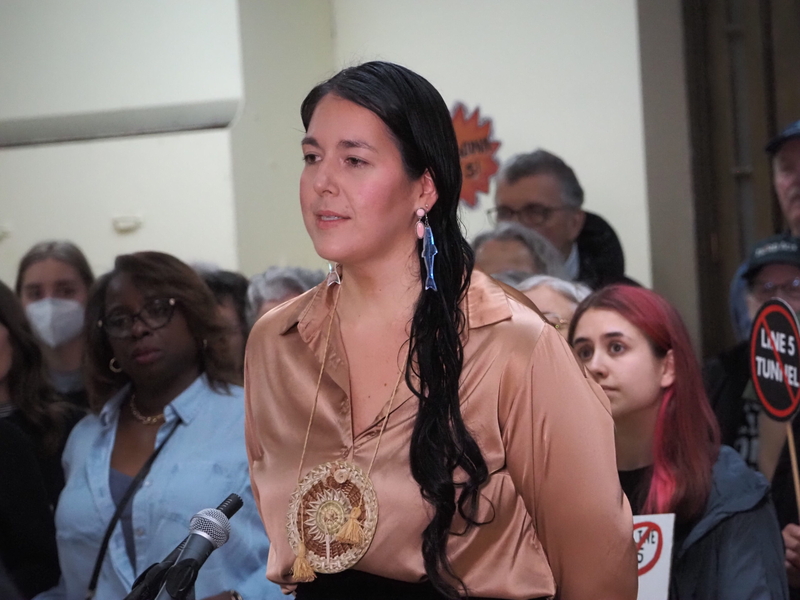
Gravelle previously told Michigan Advance the tunnel would bore through what the Anishinaabe consider to be the site of creation, and that there are hundreds if not thousands of archeological sites on the north and south ends of the straits.
David Holtz, coalition coordinator for the anti-Line 5 Oil and Water Don’t Mix coalition, called the Army Corps of Engineers’ review a “thoroughly flawed product of a rushed process” arguing the corps deliberately avoided considering the environmental impacts if Line 5 were decommissioned.
“Instead, the Corps defines its ‘No Action Alternative’ to assume that Enbridge simply keeps operating the existing pipelines across the Straits,” Holtz said in a statement. “By constructing the analysis that way, the Corps excludes from serious consideration the alternative of ending Line 5’s operation altogether. That is precisely the kind of incomplete alternatives analysis the Michigan Supreme Court has now rejected under state environmental law.”
On July 31, the state supreme court determined the Michigan Public Service Commission must redo its permit for the tunnel project after a host of tribal nations and environmental advocates successfully argued that the commission failed to consider several alternatives to the Line 5 tunnel project, and that the commission had improperly limited the scope of its review.
In a statement, Enbridge spokesperson Ryan Duffy said Wednesday’s permitting decision marked a significant step forward, reflecting “more than six years of rigorous, comprehensive review” from the corps.
“The Corps followed its strict, legally mandated Environmental Impact Statement (EIS) process, in the case of the tunnel project, a six‑year methodical evaluation that examined key environmental, cultural, engineering and community considerations,” Duffy said. “A federal EIS represents the highest standard of environmental review required for major critical energy and other infrastructure projects.”
- 3:40 pmThis story was updated with reaction from various groups to the decision.
Lansing, MI