Unfounded fraud concerns are putting an effective mental health program at risk
Apr 24, 2026 | 7:00 am ET
Description
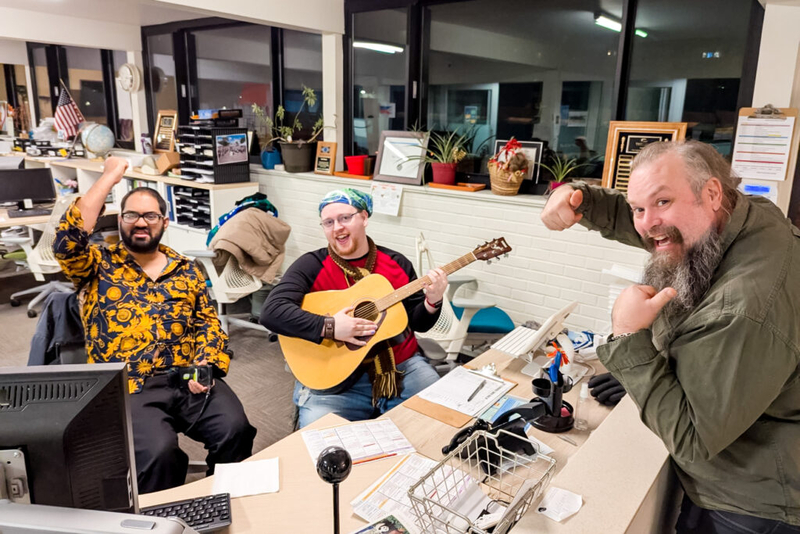
Members of Vail Communities’ Hopkins Clubhouse pose for a photo as they wait to greet visitors at the reception desk. (Photo courtesy of Vail Communities)
Former U.S. Surgeon General Dr. Vivek Murthy declared in 2023 that our newest epidemic is loneliness and isolation. While COVID-19 certainly impacted us, it’s not the only factor, and he recognized this as an issue prior to COVID.
His report quotes surveys that found that nearly half of all adults experienced loneliness, and rates were high among young adults. Among the shocking data: “The mortality impact of being socially disconnected is similar to that caused by smoking up to 15 cigarettes a day.”
People with mental illnesses experience loneliness at higher levels. Their symptoms may impact their ability to relate to others. The most serious mental illnesses emerge between 16-30. Young people often don’t know how to continue relationships with friends who develop these serious mental illnesses. They may be in and out of treatment programs, especially in the beginning of the illness, and lose touch with friends.
Loneliness doesn’t just impact people’s mental health. People who are lonely have a 29% increase in risk of heart disease, 32% increase in risk of stroke, 55% greater risk of hospital readmission, higher rates of obesity, poor diabetes, and blood pressure management, and it’s a predictor of suicidal ideation.
On the flip side, when we address loneliness, we see that social connection is associated with better nutrition, exercise, sleep and treatment adherence, it helps people maintain emotional stability and reduces relapses and hospitalizations. Murthy writes that “Our relationships are a source of healing and well-being hiding in plain sight — one that can help us live healthier, more fulfilled, and more productive lives.”
There is an effective program to help break the loneliness and isolation among people with serious mental illnesses called clubhouses, but due to the all-consuming focus on fraud prevention in social services of late, we’re in danger of losing two of the three clubhouses in Minnesota.
Clubhouses take a holistic approach by looking at housing, employment and education in addition to the mental health and health care needs of its members. Importantly, they connect their members to others to reduce isolation and loneliness. The U.S. Substance Abuse and Mental Health Services Administration consider them an evidence-based part of treatment.
The clubhouse model is consensus-based, with the members (people with mental illnesses) making decisions about programming. Members are viewed as capable people who have gifts and talents to offer. Clubhouses offer social connections and recognize and utilize the talents and abilities of its members.
The data collected by Clubhouse International show that one year of a clubhouse membership is the same cost as a 2-week stay in a psychiatric unit. The program reduces hospitalizations and increases employment, and members have better mental and physical health.
Vail Communities is a well-known clubhouse, formed in 1981. It operates two in Hennepin County and more recently one in Ramsey County. Vail is the only organization operating a clubhouse in Minnesota. Funding from the Department of Human Services supported 3,587 meals to be served at two of their locations, and were attended 5,987 times by members.
Unfortunately, Vail Communities has been notified that its contract with the Department of Human Services will not be renewed, placing its Uptown and Ramsey County Clubhouses at risk of closure if alternative funding is not secured by June 30. While Hennepin County provides some funding, Ramsey County does not. The grant was $900,000 per year.
The Department of Human Services is apparently reluctant to again offer a “sole source” contract to Vail, even though they’re the sole organization running a clubhouse in the state. They want to issue a request for proposal, known as an RFP, to allow anyone to apply for this grant. That could take closer to a year to publish the RFP and make a decision while the current funding will end on June 30.
The agency has been allowing lapses in grant funding for programs lately — even when they’re not sole source — and putting them at high risk for closure.
Concern over delayed RFPs, contracts and other grants management issue was so great that legislation passed in 2025 requiring the Department of Human Services to develop recommendations for moving some mental health funding from a competitive grant program to direct funding.
This isn’t about fraud, it’s about effective mental health programs needing to rely on grant funding. These programs are at great risk when there are delays in publishing RFPs and the incredibly long timeline to make decisions and sign contracts.
Putting effective low-cost programs at risk of closure due to unfounded fears about fraud puts our mental health system — and people’s lives — in jeopardy.

Saint Paul, MN