UM President Shinn gives first state-of-the-university address
Aug 21, 2026 | 6:05 pm ET

Description
The M on Mt. Sentinel stands above Main Hall on the University of Montana campus. (Provided by the University of Montana)
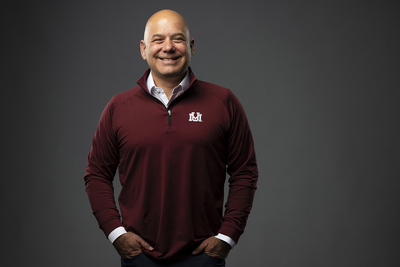
In his first state-of-the-university address as president of the University of Montana, Jeremiah Shinn announced a major fundraising initiative to support students.
“Our goal is simple: If a talented Montana student wants to earn a degree from this university, they will have the resources,” Shinn said.
Shinn in his address Friday pointed to specific achievements from students and accomplishments for the Treasure State.
He spoke to an estimated 800 people, 400 at UM and another 400 online, acknowledging the challenges higher education faces, and asking Montanans to see the Missoula flagship as bigger than any one program or interest.
In underscoring the students UM attracts and supports, Shinn pointed to James Straw.
He said Straw’s career with the U.S. Marine Corps was cut short by an autoimmune disease, but he earned an associate’s degree, transferred to UM, and became a Marshall Scholar and future physician.
The Marshall Scholarship supports intellectually distinguished students to contribute to the advancement of science, the humanities and creative arts.
“His story reminds us that there is no single front door to the University of Montana,” Shinn said.
In highlighting service to the state, Shinn said UM marks an historic moment this week welcoming an inaugural cohort of physician assistants, 24 students, including 20 from Montana, in a state needing 67 new physician assistants every year.
“Many of those students will complete clinical rotations in rural Montana, and many will choose to stay,” Shinn said. “And because they stay, families across the state will have better access to health care.”
He said UM has made similar contributions to increase the number of teachers who stay in Montana and said the institution is working to close the shortage of cybersecurity professionals in the state’s school districts, hospitals and businesses.
Shinn, who took the helm at UM on July 1 after President Seth Bodnar stepped down to run for the U.S. Senate, also asked people to do their part to welcome those students and help them feel like they belong — “every interaction matters.”
He said those interactions happen across campus and in many ways, as students stand in line for one of the 4,000 hamburgers it serves in a week, at Campus Recreation, or even at the Curry Health Center.
Susan Connelly, of the Blackfeet Nation, found community at Curry Health Center Wellbeing, an office focused on the physical, mental and emotional health of students, and Shinn said Connelly found her purpose there.
He said people like to ask about enrollment, but he said another important measure is how many people remain enrolled. In the past decade, he said, UM has increased the rate of people who stay at UM from their first to second year by nine percentage points.
He pointed to Connelly.
“Because she stayed, she flourished. Last spring, Susan, along with her friend Elannah Flat Lip, became the university’s first Indigenous Udall Scholars in two decades,” Shinn said.
The Udall Scholarship Program identifies future leaders in environmental, tribal public policy and health care fields, and it describes itself as highly competitive. In May, UM said it is No. 1 in the nation for Udall recipients at 51.
Shinn, previously interim president of Boise State University, also said UM must be “much louder and prouder” about its identity as a science university.
“The University of Montana is a great science university, and I don’t mean that as an aspiration. I mean that as a fact,” Shinn said.
For instance, he said, across the country, just 40% of students who apply to medical school are accepted, but UM students are accepted at nearly twice that rate, 74%.
“That’s not an accident. It’s evidence that our students are receiving an exceptional scientific education and world-class advising and support,” Shinn said.
Although he lauded UM’s accomplishments for students and the state, Shinn also said public confidence in education has declined. He said families and legislators have questions about the value of higher education, and “frankly, we ought to be asking those same questions.”
He said just 35% of Montana’s high school students enroll in the Montana University System, and while the university isn’t for everyone, for some, cost is a barrier, and the new fundraising initiative at UM aims to remove it.
After the address, UM spokesperson Dave Kuntz said the university still needs to collect more data to calculate a fundraising target, but he provided more details about Shinn’s vision.
Kuntz said many scholarships are narrowly tailored to specific programs or student demographics, but Shinn’s goal is that deans will have access to a renewable scholarship fund that closes the gap for any resident student who wants to attend UM and can’t afford it.
In his speech, Shinn repeatedly asked to put students first, to “choose patience over frustration, curiosity over assumption, kindness over our own convenience.”
“We exist to serve students. We exist to serve Montana,” Shinn said.
Helena, MT