Treasurer Pack says Mingo parents’ anger is ‘misdirected’ in Hope Scholarship lawsuit
Sep 08, 2026 | 1:22 pm ET
Description
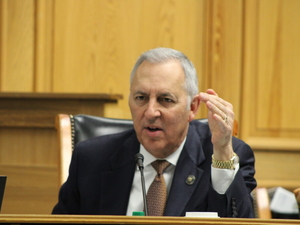
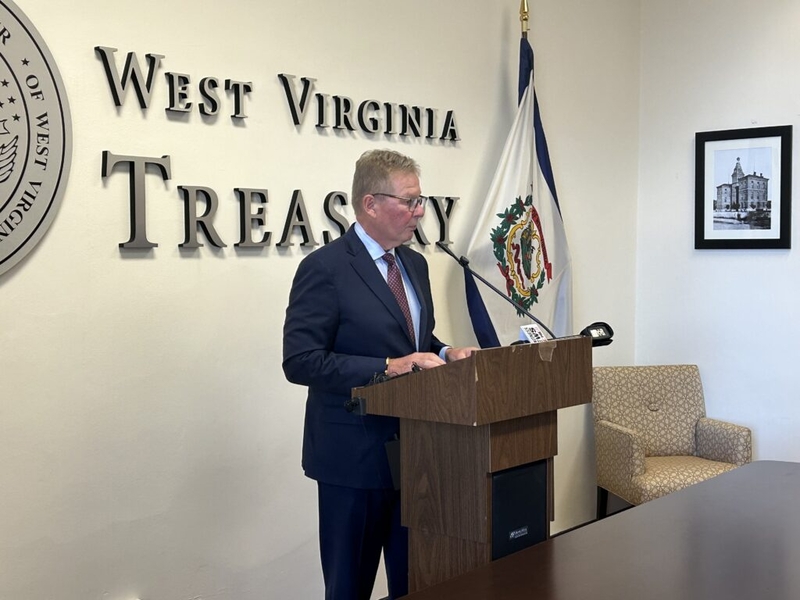
West Virginia State Treasurer Larry Pack addresses reporters about his 2026 legislative priorities during a news conference Nov. 17, 2025, in Charleston, West Virginia. (Photo by Lori Kersey/West Virginia Watch)
State Treasurer Larry Pack said his office will “aggressively oppose” any attempt to block universal expansion of the Hope Scholarship following a recent lawsuit from parents seeking to block new applicants.
Several parents of Mingo County students sued the state Treasurer’s Office last week over the Hope Scholarship’s recent expansion to all K-12 students.
The parents have asked a judge to stop new applications to the state’s education voucher program who are eligible under universal expansion.
Their students attend Dingess Elementary, which is expected to close next year. In the lawsuit, parents said the school district has been impacted by public schools’ financial distress while the state spent millions of dollars expanding the Hope Scholarship.
Pack said the parents’ “anger is misdirected.”
“It is unfortunate that the Hope Scholarship is still being used as a political football, distracting from the urgent issues facing our public schools,” Pack said in a statement Tuesday.
“While parents in Mingo County are right to demand solutions for public education, their anger is misdirected,” he continued. “We will aggressively oppose any attempt to reverse the universal expansion approved by the Legislature and signed by the governor. As Chairman of the Hope Scholarship Board, I am committed to ensuring every student in the program receives the unique educational opportunities they deserve.”
The lawsuit was also filed against the Hope Scholarship Board and West Virginia State Superintendent of Schools Michele Blatt. According to the lawsuit, Blatt was sued in her official capacity only because the state Department of Education transfers funding to the county school systems.
The Hope Scholarship opened up to all West Virginia students in grades K-12 for the first time this school year. Up until this year, the program was restricted to incoming kindergarten students or public school students enrolled for at least 45 days during the current school year.
The Hope Scholarship gives students around $5,400 this school year to pay for in- and out-of-state education outside of public schools and other eligible expenses.
Mingo County parents said that while their school is set to close, there is no Hope Scholarship education service provider offering a full-time school program within a reasonable commuting distance of their homes.
The lawsuit, filed in Kanawha County, asked that a judge ban further disbursement of the Hope Scholarship to new, first-time applicants who only became eligible under the universal expansion. It also asked the judge to mandate that defendants provide information on Hope Scholarship disbursements by county and recipient type so the court can evaluate the financial impact on public schools.
Mingo County parents noted in the lawsuit that lawmakers expanded universal eligibility for the Hope Scholarship while leaving the school funding formula unaddressed.
Lawmakers already allocated around $277 million for the Hope Scholarship to account for any student who chooses to use the program in the 2026-27 school year under universal expansion.
Meanwhile, lawmakers’ bills aimed at updating the decades-old school funding formula to better account for declining enrollment didn’t make it through the Legislature. The price of those funding formula bills was often a sticking point for lawmakers.
A school funding study commissioned by lawmakers ahead of the legislative session had recommended against universal expansion of the Hope Scholarship, saying, “that such an expansion would inefficiently subsidize private school tuition for many families who would have chosen private schools regardless.”
Pack has been vocal about public school funding and called on the Legislature “to act quickly and confront the urgent challenges in our public schools.”
“Our schools are demanding help, and the time for action is long overdue. We must cut burdensome regulations so teachers can focus on teaching,” he said. “But let’s be clear: improving public schools does not require sacrificing educational freedom. We can — and must — strengthen public education and uphold school choice at the same time. We are ready to partner with policymakers to deliver real change. The future of our students depends on it. Let’s get to work.”
Charleston, WV