For trans-Alaska gas pipeline operator, carbon dioxide may be a lucrative sideline
Jun 17, 2026 | 7:00 pm ET
Description
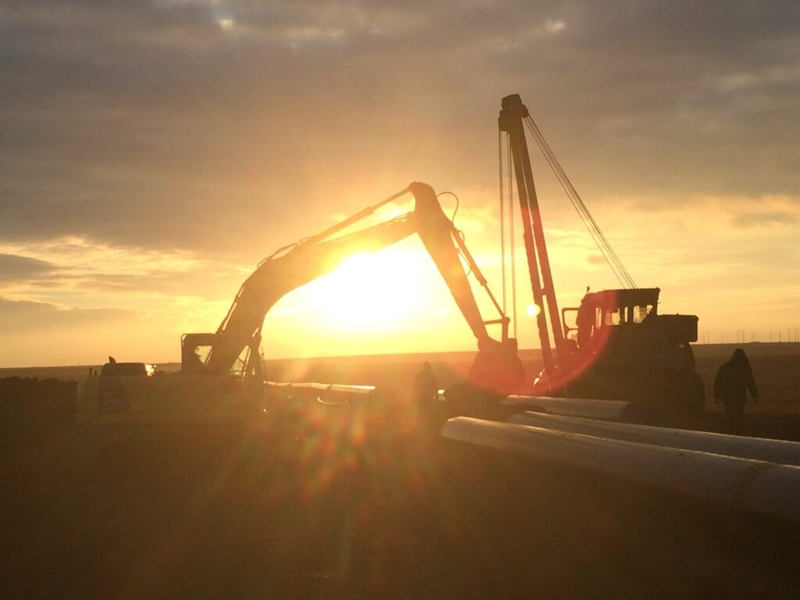
Gas pipeline construction. (Getty Images)
Carbon dioxide, a byproduct of the proposed trans-Alaska natural gas pipeline project, could net the pipeline’s operators more than $285 million per year from the federal government, the Alaska Department of Revenue estimates in a forecast released this month.
“It’s a benefit to the project and to whatever investors there are in the project,” said Dan Stickel, chief economist for the Department of Revenue, on June 2.
The proposed project, known as Alaska LNG, envisions an 807-mile pipeline from the North Slope to Cook Inlet. At the southern end would be an export terminal that would put gas on tankers bound for Asia.
On the North Slope would be a gas treatment plant that takes in gas from production wells, then splits the gas into what’s burnable and what’s not — mostly carbon dioxide.
Burnable gas would go down the pipeline and onward to Asia after being liquefied. The carbon dioxide would be injected deep underground.
“Carbon dioxide in the gas to be liquefied can’t be tolerated, even down to a few parts per million, so one of the key prerequisites for the LNG is to remove the CO2,” said Nick Fulford, a consultant hired by the Legislature to advise it on oil and gas issues.
Under current federal law, a carbon dioxide injection plant built before 2031 can receive a tax credit of up to $85 for each ton of carbon dioxide it stores underground in the first 12 years of the plant’s operation.
Those credits, known as 45Q for the relevant section of the federal tax code, can be used directly by the pipeline operator, or they can be sold to other companies. Fulford estimated they could be worth “80-90 cents on the dollar.”
Altogether, the Department of Revenue estimates those tax credits will be worth a combined $7.4 billion. Glenfarne, the pipeline project’s lead developer, has said the pipeline project could cost as much as $54.5 billion.
Asked about the credits after a legislative hearing on Tuesday, Glenfarne Alaska President Adam Prestidge said only that the credits are “significant” for the project’s financing.
In addition to the federal tax incentive, the state of Alaska may earn money from carbon dioxide being injected underground.
Just as the state rents land to people who want to use it, a law enacted in 2024 allows the Alaska Department of Natural Resources to charge companies for the use of underground “pore space” to store carbon dioxide.
The commissioner of the department would set the rental rate, and the Alaska Department of Revenue has not estimated how much money the state would earn.
Glenfarne owns 75% of the gas pipeline project. The state-owned Alaska Gasline Development Corp. owns the remaining 25%.
Adam Kissinger, a consultant for AGDC, told lawmakers on May 29 that the federal tax credits “are a great benefit to the project, but they certainly aren’t the make or break for this project.”
Carbon dioxide makes up between 5% and 18% of the natural gas beneath the North Slope, the U.S. Geological Survey has estimated.
There are many reasons to separate the carbon dioxide out of the natural gas. When carbon dioxide reacts with water, it can create carbolic acid, a substance that can damage oil and gas equipment.
In addition, mixed natural gases are less efficient when burned, and carbon dioxide would take up space in the pipeline that could be filled with usable, burnable gas instead.
Underground, at Point Thomson and Prudhoe Bay on the North Slope, are almost 40 trillion cubic feet of mixed natural gas, Frank Richards, president of AGDC, explained to state lawmakers.
That’s enough for 30 years’ worth of shipments, he said.
Alaska LNG’s treatment plant “will remove the CO2, it will be then captured and then sequestered back into geologic reservoir for about to the tune of 7 million tons per year. This has always been the design concept, and with it, then there’s the opportunity to utilize what is known as 45Q tax credits. Now, that doesn’t mean this is truly a revenue-generating aspect of the project, but it reduces the overall cost,” he said.
While the gas treatment plant would be eligible for only 12 years’ worth of federal tax credits, the carbon dioxide could still be valuable after the last credits are issued.
If injected underground, carbon dioxide can be used to pressurize oil and gas reservoirs, helping them to produce more petroleum — a process akin to the way a shaken soda bottle releases carbon dioxide and can cause the bottle to overflow.
Currently, the North Slope’s oil and gas producers simply reinject any mixed natural gases that result when they drill for oil.
If the North Slope plant begins taking away that natural gas, oil producers may want to take back the carbon dioxide for reinjection to keep oil reservoirs pumping, Richards and Fulford said.
“Now, exactly which oil fields on the Slope could be candidates for (enhanced oil recovery) using CO2 remains to be determined,” Fulford said on May 27, “but nonetheless, I think for every ton of CO2 injected, there’s the potential for three to five barrels of oil additional production. So, I think it’s quite conceivable that CO2 will have a value to some of the North Slope producers, and that too could generate some revenue for the project, but that’s a topic which remains to be seen.”

Juneau