The tiny frog that could: How Arizona is pulling a threatened species back from the edge
May 18, 2026 | 9:00 am ET
Description
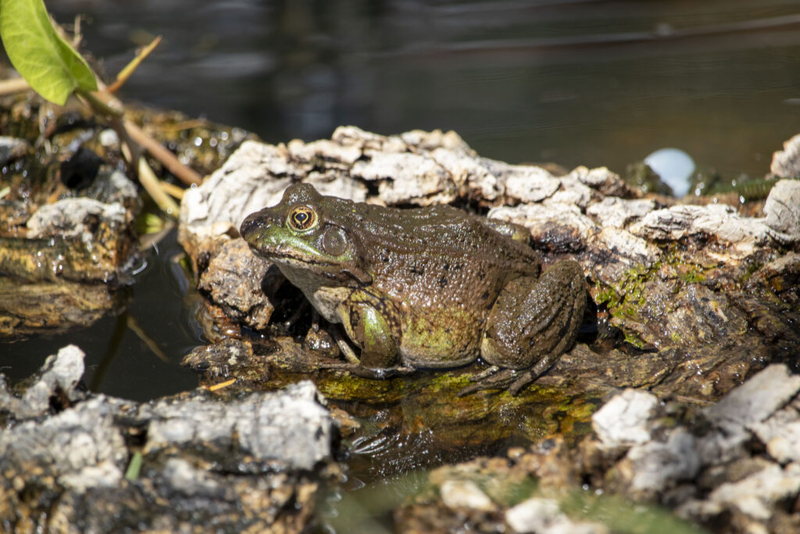
A Chiricahua leopard frog sits in a pond at the Phoenix Zoo as part of their conservation efforts to breed the amphibian that is listed as threatened in the Endangered Species Act. (Photo by Jerod MacDonald-Evoy/Arizona Mirror)
At first glance, you’d think a meteor had impacted the dusty volcanic terrain in the White Mountains of northeastern Arizona. But the big hole in the ground serves an critical purpose: It’s a future pond for a threatened species of frog native to the southwest that the Arizona Game and Fish Department and a non-profit organization are aiming to help thrive.
The Chiricahua leopard frog can be found in Arizona, New Mexico and parts of Mexico. In 2002, it was listed as threatened under the Endangered Species Act.
A group of volunteers with the non-profit Amphibian and Reptile Conservancy, along with members of the Arizona Department of Game and Fish, have been working to create six new ponds in the White Mountains for the past six weeks to help one of seven “recovery units” that are spread across northeastern and southern Arizona.
That recovery unit, RU6, resides deep in the White Mountains near the New Mexico border, where land managed by Game and Fish and the state Land Department will host cattle tanks that are being repurposed into ponds.
“It definitely has been a nice challenge,” Becca Cozad, a program coordinator for ARC, told the Arizona Mirror as volunteers readied equipment to head out to one of the ponds. The rocky terrain consisting mainly of old volcanic deposits litter the area has made for strenuous work.
As Arizona heads into another summer season where temperatures could be hotter than they’ve been in decades, the project has increased significance for a population of frogs that has seen its numbers dwindle because of a persistent drought.
“Long-term drought has been one of the biggest challenges in recent decades for their survival,” Tara Harris, director of conservation and science coordinator at the Phoenix Zoo, told the Mirror. That long-term drought has been impacted by climate change which has seen drier conditions leading to less marshlands throughout the state for the frogs to thrive in.
The Phoenix Zoo has been at the forefront of helping bring the frogs back from threatened status, having a program since 1995 dedicated to helping breed the frogs in captivity to release back into the wild.
Back in the White Mountains, those ponds will help create a safe environment for those frogs to live in and allow for researchers to more easily monitor the population.
But it’s a lot of work.
The largest of the ponds, dubbed Pond 3, was created out of a failed ranch pond, wetland engineer Thomas Biebighauser said, pointing out the remnants of a failed dam.
The ranch pond failed because the sand and volcanic dirt in the area couldn’t hold the water that naturally fell during the rainy seasons, Biebighauser said. So they needed to come up with a way to make sure the water stayed.
At first, they considered using clay but that would have been too expensive and difficult: The project would have required a large amount of clay, and hauling it all the way to the site would have been costly.
The solution ended up being to turn the ranch pond into a 9-foot-deep basin with “what is essentially a pool liner” covered in a foot of dirt and rocks. They also restructured that failed dam to make it into an overflow area and made sure to put down rocks to prevent erosion.
Biebighauser has helped create other wetland areas in other states before, but said this is the largest project he’s ever worked on. He also never had as much help as he had on prior projects.
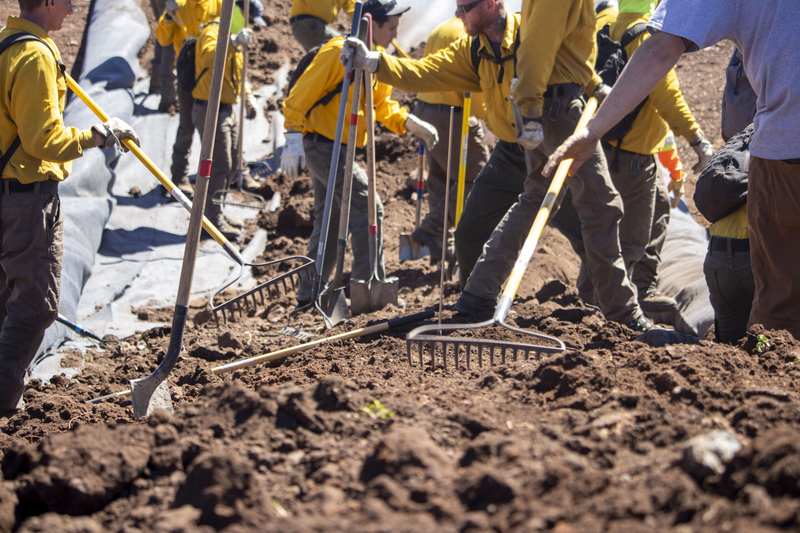
A van packed full of firefighters from the Arizona Department of Forestry assisted ARC volunteers and Game and Fish workers as they rolled out the massive tarp, laid down soil and created the pond all in a day.
“Everyone coming together to make water in the desert,” Biebighauser said with a big grin on his face before rushing to look at his survey equipment.
Of the six ponds, Pond 3 is by far the largest. One of the others will also have a well where water will be at it year round, while the rest will be filled naturally by rainwater, according to Biebighauser and ARC.
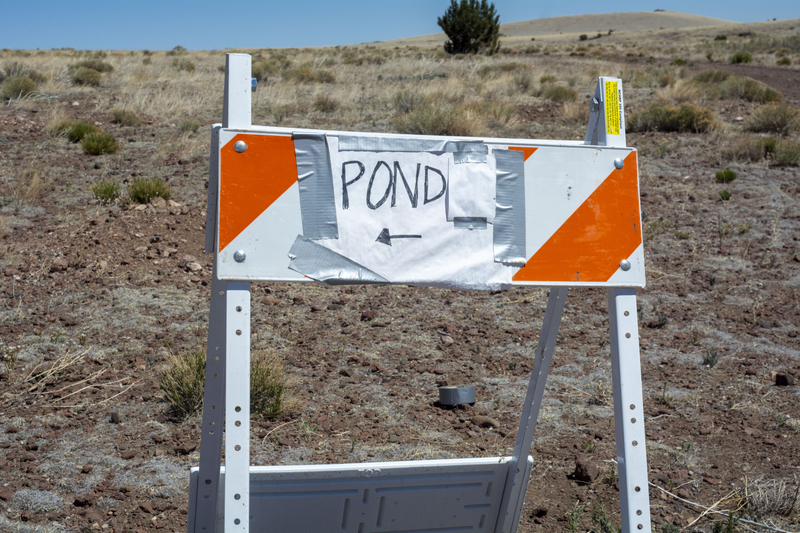
The exact location of the ponds is strictly confidential to prevent human-borne contaminants that could wipe out the endangered frogs that the project aims to help.
One of the biggest threats to the frogs comes in the form of a fungal infection called chytridiomycosis. It first started impacting frog populations in the early 1990s and has been attributed to the decline of amphibian populations worldwide.
Some studies have also suggested that climate change may be exacerbating the disease, making it easier for the fungus that causes it to survive. The fungus has also been attributed to the decline of at least 501 amphibian species, with some of them going extinct or having their numbers decreased by 90%.
Humans and other animals could easily bring the fungus to the frogs unknowingly. ARC and others said they don’t want people who may want to see a Chiricahua leopard frog for themselves to accidentally bring a fungus that could decimate the entire population.
And those who do love frogs seem to understand that logic.
“Not a lot of people think of frogs,” ARC volunteer Lauren Freeman, who was wearing frog earrings and had a frog hand sanitizer dispenser, told the Mirror.
Freeman came to volunteer after seeing one of ARC’s Instagram posts about the project. She told the Mirror her husband is currently in the process of becoming a volunteer, as well, after she “dragged him” up to the White Mountains with her.
“We are all out here doing this for the frogs,” Freeman said right before she had to run to help move a massive tarp into place. Creating a permanent habitat that makes it easier for researchers to monitor them means a lot to her.
The ponds will also be a place for other local wildlife to get water and will help the local ecosystem overall as it deals with invasive species, such as bullfrogs, which will eat just about anything and have also been known to be carriers of that deadly fungal infection.
But despite all those challenges, everyone is hopeful.
The populations of Chiricahua leopard frogs that do exist have greater genetic diversity than some other species that are threatened or endangered. In the 1990s, only about 35 distinct populations were known; the number of occupied sites has “quadrupled” in the past five years, according to Harris.
In 2022, the Phoenix Zoo helped release 228 frogs to the area where the ponds are being built, and it has released thousands more across the state. Most recently, the zoo released 4,000 tadpoles into an area in the Mogollon Rim.
“These frogs are an important part of Arizona’s natural heritage and Arizona’s food web,” Harris said, noting that they help keep certain insects and spiders in check — and, when their populations are large enough, they are a supply of food for prey animals, as well.
For volunteers like Freeman, the experience has also been a chance to learn about a possible new career. She said she is considering a career change into conservation.
“I just really love frogs,” Freeman said again before heading off to help.
Phoenix, AZ