There are two New Hampshires, and only one of them is real
Jun 15, 2026 | 4:55 am ET
Description
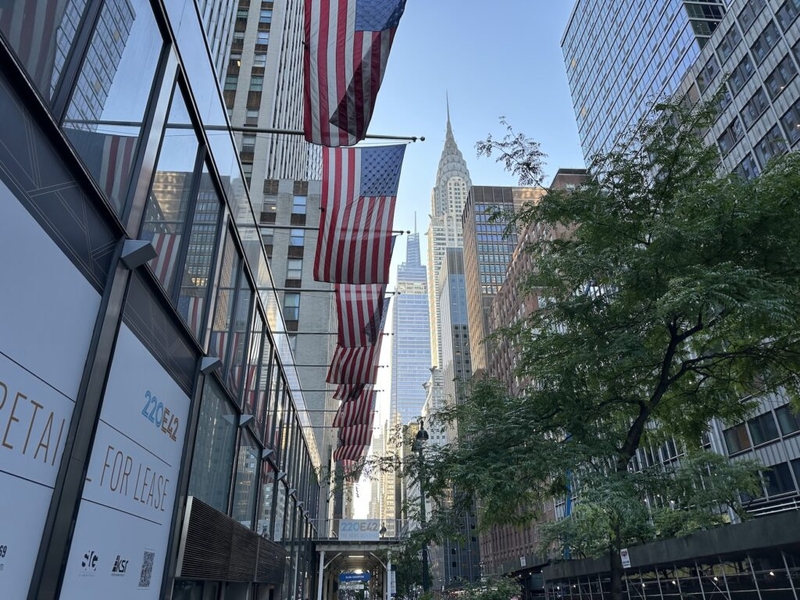
One of the many stunning views along East 42nd Street in Manhattan. (Photo by Dana Wormald/New Hampshire Bulletin)
On Tuesday afternoon, I was walking toward Vanderbilt Avenue in Manhattan when a $5 bill dropped from someone’s pocket and onto a crosswalk along East 42nd Street.
“Girl, girl,” a woman a few paces in front of me said, loud enough to rise above the din of the city. “You dropped your money.”
The pedestrian who was about to be $5 lighter expressed a thousand bucks worth of gratitude.
“Oh, my God. Thank you so much,” she said, bending over to retrieve the bill. The crowd bowed around her stooped form, and the good Samaritan could manage only an over-the-shoulder nod as the human wave carried her deeper into midtown.
I’ve witnessed scenes of reflexive kindness my whole life, in small-town New Hampshire and New York City, Boston and Minneapolis, St. Louis and D.C., South Carolina and Seattle. It’s a short list of places — I’m nobody’s idea of a traveler — but I have been around long enough to have observed a decent sample size of humans in action, and this is what I know: People are every bit as capable of goodwill as they are of cruelty, just as programmed for passion and joy as indifference and bitterness. Broadly speaking, the where, the when, and the who are irrelevant. There’s just people and behavior, which is dictated by a mishmash of habits, moods, past experiences, and present circumstances.
I know you know this about people, too, that nobody is an “other.” That there is just us.
This collective and undeniable wisdom we hold about each other is largely why this era of New Hampshire politics and policy feels so profoundly off to so many people. The state as described to us by those in charge or seeking our vote often bears little resemblance to the state we inhabit, except maybe for an extremely online population that prefers to see their neighbors through a dark imagination rather than open eyes.
As a result of that cultivated detachment, New Hampshire’s Republican majority pursues policies such as the targeting of immigrants and transgender people, as if they were blank canvases for applied bigotry rather than human beings.
They want you to believe that Social Studies teachers converting teenagers to Marxism is a problem that must be urgently addressed.
They suggest there are thousands of lazy poor people in New Hampshire who also happen to be experts at defrauding the government (which in any case would make them neither lazy nor poor).
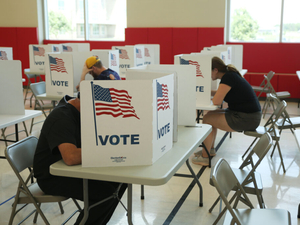
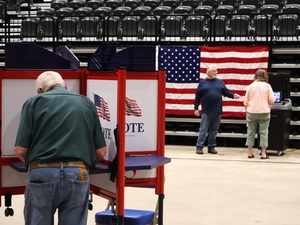
And they desperately want you to believe there is rampant voter fraud, despite the complete lack of evidence here or anywhere else in America.
The crazy thing is that, amid so many real and observable challenges in this state, there are plenty of Republican candidates in New Hampshire who run and win on imaginary issues. That points to something else that’s very human: People are often more comfortable tackling invented problems, especially those that play to their fears and insecurities, than wrestling with the real ones.
Our legislative majority rants about the state of public education and its costs, for example, but at the same time they take every evasive maneuver possible to avoid equitably funding it. But avoidance is only the half of it. Every session they also seek to divert, whether through universal school vouchers or open enrollment, the little funding our districts do receive. While they paint their efforts as part of a solution, they are better understood as the implementation of an ideology in which the potential for private profit replaces foundational concepts of public service. The problem they are actually trying to solve is one of taxpayer money being reinvested in communities rather than funneled to the corporate bank accounts of burgeoning private education enterprises.
And how do they sell their ruse to the people of New Hampshire? By setting up school districts and officials, all of them, as a bunch of careless, free-spending dolts who are perfectly fine with high local property taxes — as if those very school district employees aren’t paying local property taxes themselves.
Also, two years ago, the Republican majority Legislature and Republican governor celebrated the repeal of the Interest and Dividends Tax, paid largely by the wealthiest residents of this state and which in its last year brought in more than $180 million.
It seems Republicans believe New Hampshire has more than enough revenue, thank you very much.
Fast-forward to this session, and that same Republican majority has spent countless hours scrambling, unsuccessfully, to fund a $15 million childcare workforce grant program included in the current biennial budget. Their budget, mind you. They’ve also grappled with new problems at the Sununu Youth Services Center in the wake of their major cuts to the Office of the Child Advocate, the state’s youth-focused watchdog.
There is always a price to be paid when elected officials decide ideology is more important than people, and that bill has come due in New Hampshire.
All the while, our leaders offer us a binary option: We can destroy the systems (as many Republicans are trying to do with public education, regulatory frameworks, and social services) or build an unscalable wall around them (as leaders in both parties are doing with the state’s overreliance on local property taxes).
There is a third option that seems to be about as unpopular as it is daunting: an official, honest, and transparent investigation of where systems are failing the people they are meant to serve so the real repairs can begin. I am not holding my breath, however, and so those investigations must be conducted by people outside of the systems, which I can tell you is not easy.
That brings me to why I was in Manhattan on Tuesday to witness a small, brief kindness on East 42nd Street.
That same day, at the Yale Club of New York City, Bulletin reporter William Skipworth was named a Livingston Award winner — one of the most prestigious prizes in all of journalism — for his work investigating abuse and neglect in the state’s disability care system. There’s a lot of things the Livingston judges liked about William’s three-part series, but they especially appreciated how much effort it took, over eight months, just to extract information from state gatekeepers about a taxpayer-funded system that’s failing vulnerable people, often tragically, and thus failing all of us.
William’s award is for local reporting, one of three Livingston categories. Washington Post reporter Hannah Natanson’s investigation of the human toll of the Trump administration’s DOGE cuts landed her a Pulitzer Prize and a Livingston Award for national reporting. If you haven’t read her stories but recognize her name, maybe it’s because the FBI infamously raided her home back in January for the crime of doing her job well. The international reporting award went to a team of three journalists, Gerardo del Valle, Alejandro Bonilla Suárez, and Edwin Corona Ramos, for their video documentaries on three men who were detained by ICE and sent to a facility in El Salvador that has been accused of widespread human rights abuses. Torture, that is. Not one of the men detained had a criminal record or gang affiliation.
Three unique award-winning investigations and one common thread: Regular people being actively harmed by broken or corrupted systems that are supposed to serve and protect them.
We the people can do a lot better for ourselves, and I know with all of my heart that we’re worth it.
Concord, NH