Texas lawmaker vows to keep pushing for statewide emergency disaster response system
Sep 14, 2026 | 9:17 am ET
Description
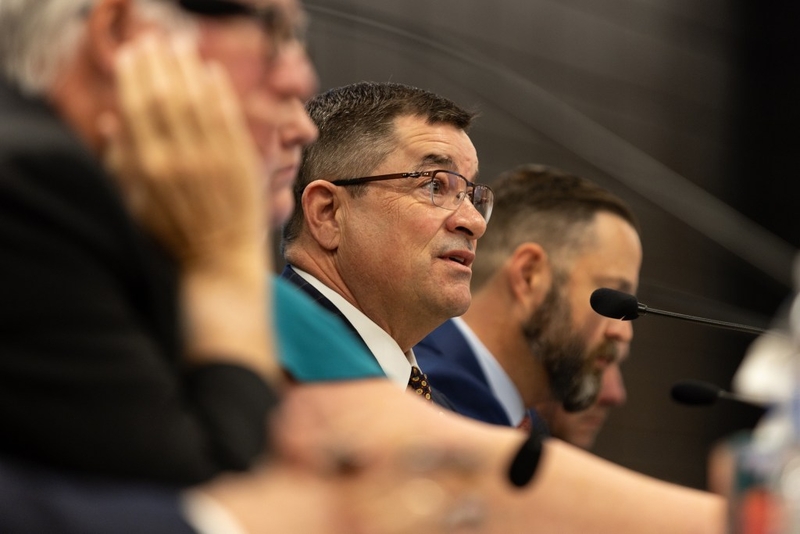
State Rep. Ken King, R-Canadian, chair of the House State Affairs Committee, speaks at a hearing in Pampa on the Panhandle wildfires on April 2, 2024. (Maria Crane/The Texas Tribune)
Texas Rep. Ken King said Monday he will keep pushing for the state to create a statewide system to connect all first responders and state and federal agencies during an emergency until the Legislature gets it done. His vow comes after two failed attempts to pass the system, which emergency experts say is needed in the aftermath of a multitude of disasters.
The proposed Interoperability Council, as the Republican from Canadian calls it, would be responsible for coordinating a statewide emergency communications strategy and setting standards for and improving how local, state and federal first responders work together while responding to a disaster. The council would also be tasked with supporting regional systems and ensuring there are reliable communications available during emergencies.
During a House State Affairs hearing in Austin on Monday, King heard from first responders and emergency management experts about disaster response in Texas. Nim Kidd, the chief of the Texas Division of Emergency Management, testified that when he joined the San Antonio Fire Academy about 34 years ago, he wasn’t taught what to do when multiple agencies respond to a scene together. He told lawmakers he doesn’t know if that has changed today.
“It seems like we’re taking micro steps in that direction,” Kidd said. “But today, if a fire department does not have its own EMS agency, there’s no guarantee those firefighters have any idea what the EMTs or paramedics are going to need when they show up on the scene.”
The idea of an Interoperability Council is not new. King proposed creating the council last year during the legislative session in response to the destructive wildfires that scorched the Texas Panhandle in 2024. More than 1 million acres burned, devastating the small town of Canadian, about 105 miles northeast of Amarillo, where King lives. Three people died, along with 15,000 head of cattle.
After the fires, lawmakers heard from witnesses and experts about what went wrong with the response to the wildfires, and one of the biggest issues was “ineffective communication and coordination among agencies, local governments and responders.” A report about the wildfires also states this was due in part to communications equipment that lacked interoperability, meaning the capacity to connect with other networks.
King later filed House Bill 13 to create the council, as well as improving alert systems and allocating grant money for counties to buy new emergency communication equipment.
“My goal is to ensure every first responder that puts their life on the line to battle these fires and other disasters have the tools to communicate effectively with those around them,” King told fellow lawmakers in 2025.
The bill passed the House, but died in the Senate without receiving a hearing. A few months later, the Hill Country floods occurred on July 4, 2025, in the district of state Rep. Wes Virdell, R-Brady, who voted against King’s bill. There, 137 people died, including 25 girls at Camp Mystic, along with two counselors and the camp’s executive director.
“I can tell you in hindsight, watching what it takes to deal with a disaster like this, my vote would probably be different now,” Virdell told the Tribune in the immediate aftermath of the disaster.
King filed the bill again soon after the flood. Like before, the bill passed the House but was never heard in the Senate.
More disasters have occurred in Texas since the bill failed the second time. In July, the Hill Country flooded again. In late August, one of the largest wildfires in North Texas’ recorded history has burned more than 90,400 acres across Palo Pinto and Jack counties. The Ross Fire is still active.
According to Kidd, who supported the interoperability council proposal last year, local governments requested state assistance to fight more than 1,200 fires since the start of the year. State efforts limited the damage to about 315,000 acres burned.
During the hearing, Kidd said it takes 36 hours before everyone in every agency is on the same communications plan. Inoperability is the top issue when responding to disasters, he said, and it exacerbates the events.
Kyle Mills, department head of planning and preparedness for the Texas A&M Forest Service, told lawmakers it’s important for responders to be able to communicate with each other in every facet before the emergency. He said there are cases where responders have to carry multiple radios to communicate with all the responding agencies.
“As disasters become more complex, ensuring responders can communicate and share information seamlessly across agencies will remain one of our highest priorities,” Mills said.
Austin, TX