Tension grows between state board and project opponents at hearing on uranium drilling permit
May 19, 2026 | 10:00 pm ET
Description
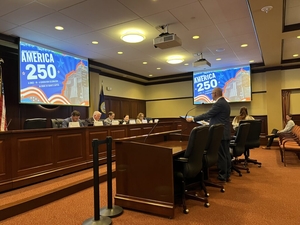
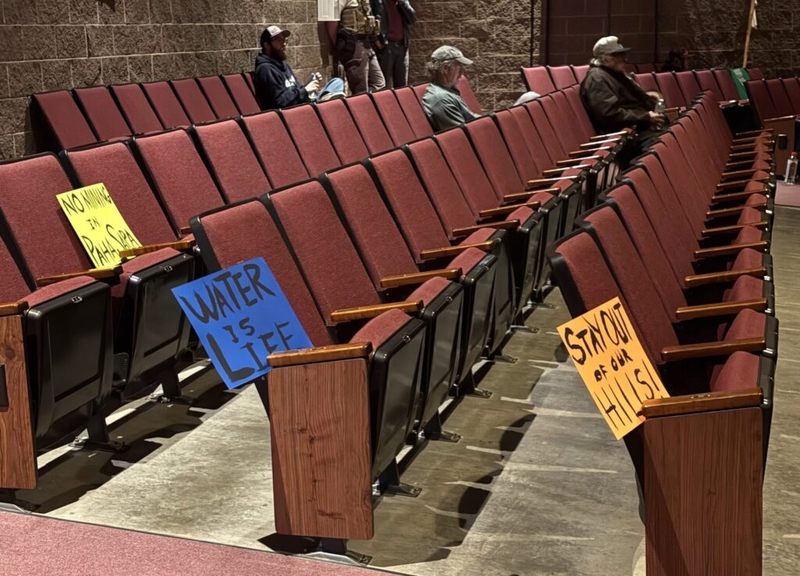
Signs are displayed on seats during a hearing about a uranium exploration permit application on May 19, 2026, at the Mueller Civic Center in Hot Springs, South Dakota. Dozens of people gathered to oppose the permit. (Photo by Meghan O'Brien/South Dakota Searchlight)
Listen to an audio version of this story by reporter Meghan O’Brien. For broadcasters: See below for a downloadable version with a script.
HOT SPRINGS — Frustrations boiled over as a state regulatory board weighed whether to allow underground uranium exploration along the southern edge of the Black Hills on Tuesday.
Clean Nuclear Energy Corporation and its Canada-based parent company Nexus Uranium applied for a permit to drill near Craven Canyon, 7 miles north of Edgemont, South Dakota. The canyon is marked with Native American petroglyphs, and the Black Hills were formerly part of the Great Sioux Reservation.
On the second day of a hearing that’s scheduled to last all week, audience members raised questions about the validity of process decisions by the state Board of Minerals and Environment, including when portions of the meeting proceeded without being interpreted by a Lakota speaker. Lakota is spoken by tribes in the western part of the state.
Historical, cultural and environmental tensions mount ahead of uranium exploration hearing
“This is institutionalized racism, and you are promoting it,” Elizabeth Lone Eagle said, standing from her seat in the audience.
She said the board was “forbidding” the translator “from doing her job, because you want your white colonizer sanitized way of doing things.” The audience cheered, and the board did not respond.
Two Lakota interpreters entered into a contract to translate spoken testimony and began Tuesday. The state Department of Agriculture and Natural Resources had failed to provide an interpreter Monday, despite having agreed to appoint one.
As examination of witnesses began Tuesday, attendees held up their phones for photos, videos and audio recordings. Some livestreamed the hearing on social media. Law enforcement officers were posted at the doors, in seats and around the outside of the Mueller Civic Center, where the hearing is taking place.
The use of Lakota interpreters made for a methodical pace.
Clean Nuclear Energy’s legal counsel, Matthew Naasz, posed questions to Mike Blady, an executive for Nexus Uranium. Lakota interpreter Leola One Feather translated the questions for the audience. Then, when Blady responded, One Feather translated his response.
Board of Minerals and Environment Hearing Chair Bob Morris commented on the time-consuming nature of interpreting testimony into Lakota, which is something he said the board has no experience with.
“We are going through a process that is unprecedented,” he said during the hearing.
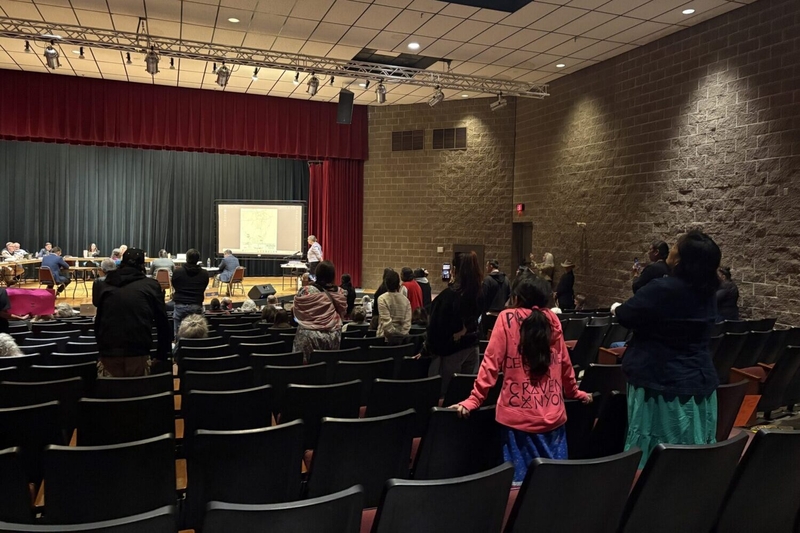
Tensions rose when some exchanges went uninterpreted, and project opponents in the audience called out to allow One Feather to translate.
Lone Eagle and other opponents voiced complaints that the company’s permit application, which spans several pages, had not been translated into Lakota. Others said the lack of translation is a violation of human rights.
Morris said the state contracted for spoken interpretation services, not written translation services.
The state Board of Minerals and Environment can deny an application to explore for uranium for several reasons, including negative impacts on historical, archaeological or recreational aspects of an area, if those impacts outweigh the benefits of the exploration. The board can also deny the permit if it will negatively affect the productivity of aquifers.
The company said it plans to use 38 sites to drill holes — not 50 as previously indicated — as deep as 700 feet on state-owned land. Each hole would take about two weeks to drill.
“We always try and leave the project in a better state than we found it,” Blady said during the hearing. Some attendees chuckled at the statement.
Clean Nuclear Energy worked with the state and contractors to compile cultural, geological, wildlife and hydrogeological studies, Blady said. He said the project would bring better understanding of underground resources and could contribute to economic development.
Edgemont’s City Council and Chamber of Commerce passed resolutions in support of approving the permit.
Opponents are raising concerns about negative effects on the nearby canyon and petroglyphs, as well as potential pollution of local groundwater sources by drilling and possible future mining.
The company has additional drilling plans on federally owned land. That portion of the project is under review by the U.S. Forest Service, which estimates it will issue a decision next month.
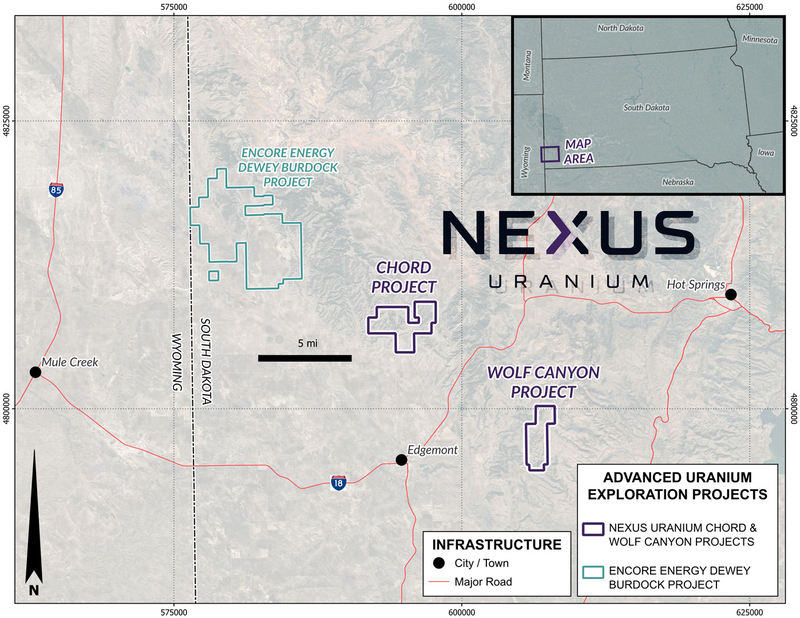
The proposed drilling near Craven Canyon is separate from another nearby proposal to mine uranium in the Edgemont area that’s been pending since the early 2000s. That proposal, from Texas-based enCore Energy, has met staunch opposition from Native Americans and environmental activists, and has been in regulatory and legal limbo. Last year, the federal government’s Permitting Council selected enCore’s project for inclusion in FAST-41, a process intended to improve coordination among permitting agencies and hold them to deadlines.
Uranium is a metallic, radioactive element used as fuel in nuclear weapons and power plants. Interest in uranium exploration and mining has risen recently in response to nuclear energy’s potential to meet the growing electricity demands of data centers.
The hearing in Hot Springs comes on the heels of a victory for people fighting another drilling project in the Black Hills. Rapid City-based company Pete Lien & Sons recently withdrew from an exploratory graphite drilling project that was underway near Pe’ Sla, also known as Reynolds Prairie, a sacred ceremonial site for Lakota people in the central Black Hills. The withdrawal came after two lawsuits and the formation of a protest camp at the drilling site.
The hearing in Hot Springs is scheduled to continue through Friday.
For broadcasters
- May 20, 202611:20 amThis story has been updated with a correction. The initial version incorrectly described the timing of an agreement to provide an interpreter.

Pierre, SD