Tennessee wants to be at the forefront of new nuclear energy projects. What does that mean?
Sep 09, 2026 | 5:59 am ET
Description
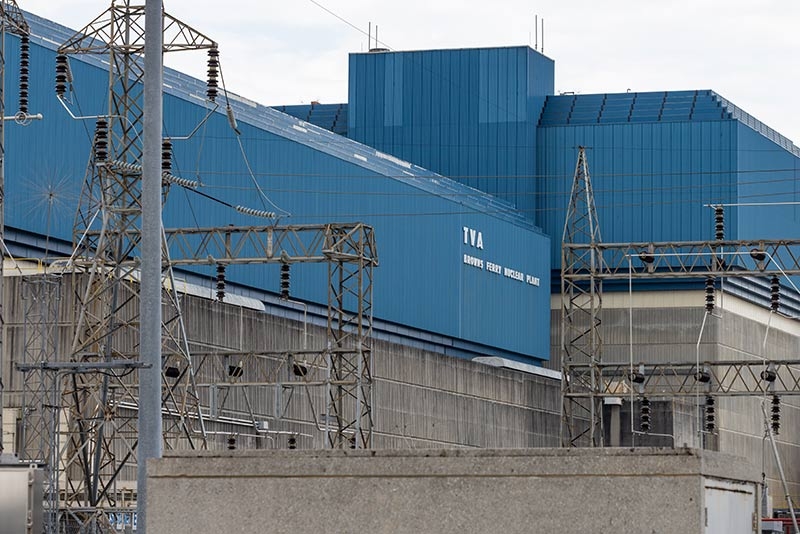
Tennessee is one of five states in the running for a nuclear power campus. The state has a history of nuclear power research and production, including by three Tennessee Valley Authority nuclear facilities. One of those, Brown's Ferry, is pictured here. (Photo: Tennessee Valley Authority)
Tennessee lawmakers want to lead the nation in nuclear energy and snag the economic development dollars that come with it.
Lawmakers have cleared the way with tax breaks, grants and a coordinated effort with the Tennessee Valley Authority, TVA, Oak Ridge National Laboratory, and the University of Tennessee to express interest in new nuclear-powered projects.
This effort has led Gov. Bill Lee to announce Tennessee is a finalist for the federal Nuclear Lifecycle Campus project and, with help from the U.S. Department of Energy, to approve Tennessee’s first Nuclear fusion research facility.
William Tindal, the director of the Tennessee Nuclear Network, said the goal of all these projects is to meet the state’s growing energy demands and that, unlike natural gas or solar, the price and ability to generate nuclear energy doesn’t fluctuate.
“Tennessee is one of the only states that has all the pieces of the nuclear supply chain already in place,” Tindal said. “It makes sense to expand here.”
For over a decade, Tennessee’s energy consumption remained flat as homes and businesses became more efficient. But now, those demands are growing, partly driven by a boom in data centers, a report released by the think tank ThinkTennessee earlier this year shows.
Data centers could consume as much energy as 661,000 households this year, according to the report, driving up energy prices and prompting TVA, which powers most of the state, to pursue new options to increase supply.
But the pursuit of nuclear power has its detractors. Republican and Democratic state lawmakers have sent Lee letters expressing concerns about the Nuclear Lifecycle Campus program.
State Sen. Heidi Campbell, a Nashville Democrat, asked Lee, among many things, for more details on the bid and whether the state would agree to take on nuclear waste in exchange for federal dollars.
“This isn’t just about today’s waste,” Campbell told the Lookout in July. “It’s about committing Tennessee to an energy future that includes more reactors, more spent fuel, and more radioactive waste. We deserve transparency before irreversible decisions are made.”
What is the Lifecycle campus program?
Tennessee is one of the finalists for the new program developed by President Donald Trump’s administration to convince states to take on radioactive waste in exchange for a large influx of federal dollars to spur new nuclear energy projects.
Tennessee named finalist for federal partnership involving nuclear energy sites
The partnership would allow Tennessee to build an industrial-like zone that could support “the full nuclear fuel lifecycle, including fuel fabrication, enrichment, reprocessing used nuclear fuel, and disposition of waste,” according to a news release from the U.S. Department of Energy.
The state has a long history with nuclear technology, with Oak Ridge serving as a federal research site for the atomic bomb during World War 2. TVA began operating nuclear power plants in 1966 and today runs three plants, two of which are in Tennessee.
What is nuclear fusion?
Nuclear fusion is a new type of energy technology that is still “technically challenging, but shows lots of promise,” Tindal said.
Tennessee approved Type One Energy to begin researching its long-term viability at TVA’s Bull Run Complex in Anderson County, across from Oak Ridge.
Fusion differs from traditional nuclear reactors. Nuclear fusion facilities carry little risk of meltdown and produce no high-level radioactive waste, according to the International Atomic Energy Agency. But the technology is new and still needs to be proven reliable.
Nashville, TN