Study warns of electricity shortages unless supply keeps pace with data center growth
Sep 16, 2026 | 5:56 pm ET
Description
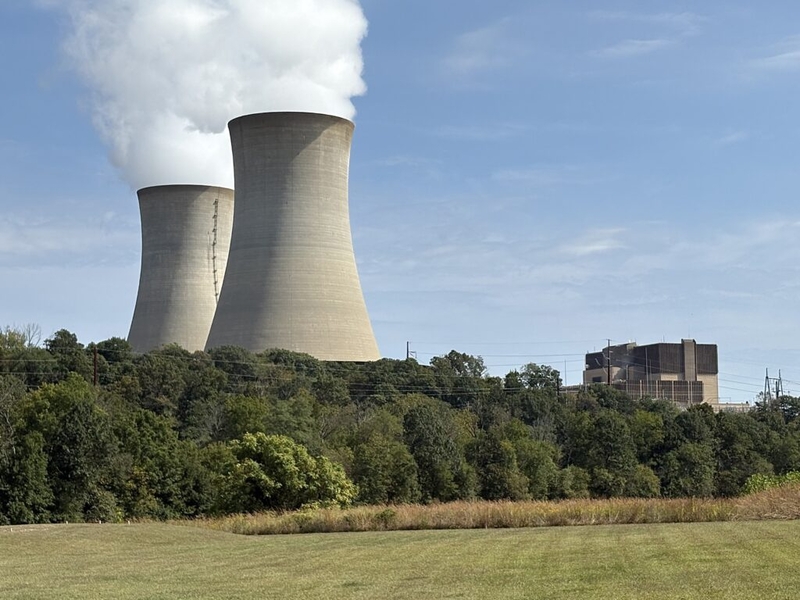
Constellation Energy's Limerick Generating Station, branded as the Limerick Clean Energy Center, in Montgomery County, Pennsylvania. (Photo by Peter Hall/Capital-Star)
Rolling blackouts would happen more than 13 days a year in a “worst case future” scenario, where data center growth is unrestrained and electricity supplies remain tight, according to a report commissioned by Pennsylvania utility regulators.
Even if new power plants are built over the next 15 years, as data center projects come online, the regional electricity grid would fall short of demands six times per decade, on average, according to the report.
“That means we’re running the grid at the red line,” Abe Silverman, a researcher at the Ralph O’Connor Sustainable Energy Institute at Johns Hopkins University, said.
The report also examines a third scenario in which no new data centers get built after 2026; it’s the only scenario in which PJM is able to achieve its reliability goal.
It delivers a blunt message, energy experts and policy makers said, that the electricity grid Pennsylvania shares with a dozen other states and Washington, D.C. needs more power quickly.
The Pennsylvania Public Utility Commission (PUC) released the report Monday. It examines whether sufficient electricity resources will be available to ensure the system is reliable as demand increases and older power plants retire.
“Pennsylvania is at an energy crossroads,” PUC Chairman Steve DeFrank said. “Data center development brings significant opportunities, but that growth cannot come at the expense of the families and businesses that already depend on reliable and affordable electric service.”
DeFrank added that the need to protect consumers and electric reliability is bigger than the commission.
“Pennsylvania’s energy system is changing dramatically, and our energy policies need to evolve with it,” he said, calling on policymakers, regulators, utilities, generators, consumer advocates and other stakeholders to work together toward solutions.
State lawmakers in the divided General Assembly called for swift action, but also were critical of political opponents for past decisions.
“A failure to address this growing reliability crisis will cost lives, put vulnerable Pennsylvanians at risk and cause enormous economic damage. We need to take this warning seriously and address it now,” a spokesperson for House Majority Leader Matt Bradford (D-Montgomery) said.
Spokesperson Elizabeth Rementer added the Democratic-led House passed a range of bills to speed new generation, improve efficiency and resiliency of the grid and protect consumers from additional costs.
“Unfortunately, Senate Republicans have neither considered any of these proposals nor sent meaningful legislation to the House,” she said. “We urge them to take up our legislation now to help address this impending crisis.”
Senate Majority Leader Joe Pittman (R-Indiana) meanwhile placed blame for the reliability crunch on former Democratic Gov. Tom Wolf’s decision to join a regional carbon trading program, which Pittman said resulted in years of uncertainty for the power industry.
“As we look ahead, we have been clear that all sources of power should be embraced to strengthen Pennsylvania’s power grid, and I am encouraged the PUC Chairman has expressed agreement on this front and wants to ‘put as many watts on the grid as we possibly can,’” he said.
Data center regulation and electric reliability has also become an issue in the governor’s race in November. Democratic Gov. Josh Shapiro is seeking reelection, facing Republican state Treasurer Stacy Garrity, who is critical of Shapiro’s early embrace of the industry.
Shapiro’s campaign, meanwhile, has hammered Garrity in TV ads over her calls for Pennsylvania to be more competitive in attracting data centers. Garrity now says she supports a pause on development and a requirement for data centers to bring their own power.
The Shapiro administration points to efforts to drive reform in PJM through public pressure, litigation, a settlement capping energy auction prices and an accord with the Trump administration on market reforms.
“Governor Shapiro is an all-of-the-above energy Governor, and he is laser focused on bringing more power to the grid while keeping costs down for the good people of Pennsylvania, who are among the 67 million consumers served by PJM,” spokesperson Rosie Lapowsky said.
Consulting firm Synapse Energy Economics found, based on grid manager PJM Interconnection’s forecast demand growth under the two scenarios, the system’s reliability would be between six and 100 times worse than PJM’s planning standard of one “loss of load” event per decade by 2030.
“PJM is lagging far behind all other U.S. grid operators in bringing on-line lower cost, quickly deployed clean energy and distributed resources that could be operational before 2030,” said Jon Gordon, senior policy director for the renewable energy industry group Advanced Energy United.
But PJM remains hamstrung by slow processes and long timelines for permitting and construction of new power plants and facilities, he said. And PJM’s “fast track” initiatives to bring new generation online quickly have focused on natural gas power plants, which face long lead times for crucial components such as turbines and transformers, he said.
“Time continues to tick away — It’s a race against the clock to try and get supply proposed, financed, permitted, and constructed, and the timelines just don’t add up right now,” Gordon said.
The report also raises the possibility that Pennsylvania could lose its status as a net exporter of electricity as more resources are retired here and new generating plants are built in other states.
Montgomery County-based PJM manages the grid spanning from New Jersey to Illinois and from the New York border to North Carolina. It is responsible for balancing supply and demand, ensuring the grid can supply the most affordable electricity available in a given location at any time. It also holds auctions for power plant owners to bid on contracts to keep power plants standing by to run when needed to meet spikes in demand.
In the last several years, it has come under criticism for allowing a backlog of electricity generation and transmission projects to pile up in its queue to connect to the grid.
At the same time, PJM forecasts its net energy load will increase 5.3% per year over the next 10 years, growing by nearly 66 gigawatts by 2036. That’s attributable partly to increases in electric vehicle use and greater electrification in industry but mainly to data center growth.
More than 80 hyperscale data centers planned to power artificial intelligence applications are planned in Pennsylvania, with about five under construction and another five with approvals. While data centers have existed for decades, housing computers that serve e-commerce, streaming and other online services, hyperscale data centers are larger, with energy and water demands that rival those of small cities.
PJM spokesman Jeff Shields told the Capital-Star the issues raised by the report have been on the organization’s radar since 2023 and that it is continuing to work with states to increase electricity supply.
Shields said PJM agrees with the PUC’s assessment that electricity demand is growing faster than the ability to build new generation and the grid’s reliability could be compromised over the next five years as electricity prices also increase. He added that the organization agrees the solution will take action at the state and federal levels and across the industry.
PJM has already embraced principles of the Trump administration’s Ratepayer Protection Pledge, in which it called on hyperscale data center developers to “build, bring, or buy all of the energy” they need and pay the full cost of additional infrastructure.
Pennsylvania has been an effective partner, Shields said, in efforts to streamline permitting and remove barriers for new power resources. Gov. Josh Shapiro’s administration also led litigation to establish a price cap and floor for capacity auctions; and Shapiro was among 13 state governors to join in a statement of principles in accord with PJM’s reform proposals to the Federal Energy Regulatory Commission (FERC).
“PJM believes these combined, focused efforts can preserve reliable electrical service in the near and long term without unfairly burdening regular ratepayers,” Shields said.
FERC is expected to rule this month on PJM’s proposal to hold a “reliability backstop auction,” in which data center operators and other large load users would be matched with investors willing to build new power plants with guaranteed buyers for their energy, Silverman said.
The commission is also expected to decide in October, Silverman added, on PJM’s proposal for a framework to connect new data centers to the grid when they have secured an energy supply in accordance with the Ratepayer Protection Pledge. Under PJM’s proposal, data centers that don;t have their own power supplies would be cut off first if demand exceeds supply.
“If the grid is stressed, data centers are subject to curtailment unless you bring your own capacity,” Silverman said. “We’re not going to cut off grandma if the grid gets stressed, we’re going to cut off you.”
Harrisburg, PA