Steve Erdman: Nebraska must overhaul tax system to prosper
Oct 03, 2026 | 6:45 am ET
Description
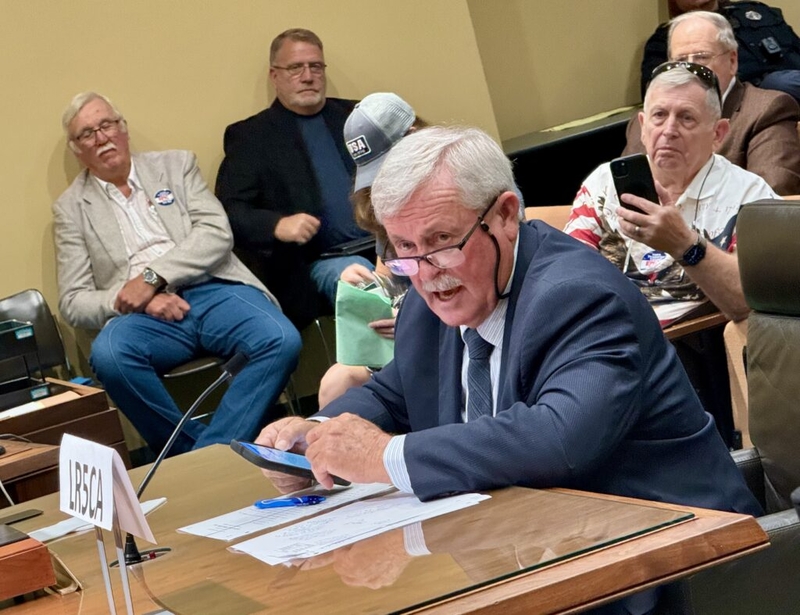
State Sen. Steve Erdman of Bayard testifies on behalf of Legislative Bill 16 and a pair of constitutional amendments to create and codify the EPIC option consumption tax Wednesday, July 31, 2024, in Lincoln. (Aaron Sanderford/Nebraska Examiner)
I read with interest Jon Cannon’s recent commentary in the Examiner. As noted in his information, Cannon is the director and lobbyist for NACO — the Nebraska Association of County Officials. During my eight years in the Legislature, I cannot recall a single instance in which NACO supported any property‑tax‑relief legislation I introduced to provide property tax relief in Nebraska.
One of the most significant bills I sponsored — and which ultimately passed — was the damaged‑property bill. This law allows property owners to have their valuation reduced when their property sustains at least 20% damage before July 1 of any year. That provision has saved Nebraska taxpayers millions of dollars over the last six years. Yet NACO opposed it, worried about potential revenue losses for counties. Their position consistently prioritizes government collections over the taxpayers who actually fund those budgets — the people who sign the front of the check, not the back.
Research shows the average household in South Dakota pays $12,300 annually in all taxes. In Nebraska, that number is $16,346 — a 33% higher burden on Nebraska families. Despite this, Cannon argues that “property taxes offer something especially valuable: stable, locally controlled and locally invested funding.” In practice, that means government buys whatever it wants and sends taxpayers the bill, with little regard for whether families can afford the increase.
He also claims that shifting funding to sales or income tax would introduce “budget volatility.” But when a household’s income drops, property taxes do not drop with it. Property tax is a mandatory tax — one you must pay whether you have the revenue or not. Sales tax, by contrast, is voluntary. You pay it only when you have the money to make a purchase. Sales tax is collected from those passing through or visiting Nebraska. Consequently, they help fund our government.
The state has already removed most community‑college funding from property taxes, and those institutions continue to operate with local control. It works.
Our state constitution is clear: “The Legislature shall provide for the free instruction in the common schools of this state…” (Nebraska Constitution, Article VII‑1)
Education funding is the responsibility of the state — not property owners.
Property taxes also penalize homeowners for unrealized gains. When your property value increases, you are taxed on that increase — even though you have not sold the property or realized any income. Yet when your 401(k) increases in value, the government does not tax that unrealized gain. Shouldn’t similar principles apply?
Cannon also warns about volatility in sales and income tax. When economist Art Laffer (the most renowned economist in the nation) visited my office, he made a different point: States that rely on sales tax perform better in good times than states that don’t — and they perform much better in bad times than states that don’t!
Cannon says broadening our economic base is a good idea. I agree. But he offers no plan. The real path to economic growth is to eliminate property tax entirely and give Nebraskans the freedom to decide how much tax they pay and when they pay it.
Since 1967, Nebraska’s property valuations have increased 400%. Total tax dollars collected have increased 267%, while the mill levy has decreased 46%. The numbers speak for themselves. Houston, we have a problem.
Nebraska’s current property‑tax system is broken. It needs structural reform — not excuses, not fear‑based arguments, and not continued reliance on a tax that punishes homeowners, farmers, and families year after year.
Thank you for reading.
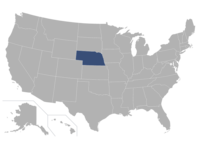
Lincoln, NE