State: Fridley Public Schools risks ‘debt spiral’
Oct 26, 2026 | 4:10 pm ET
Description
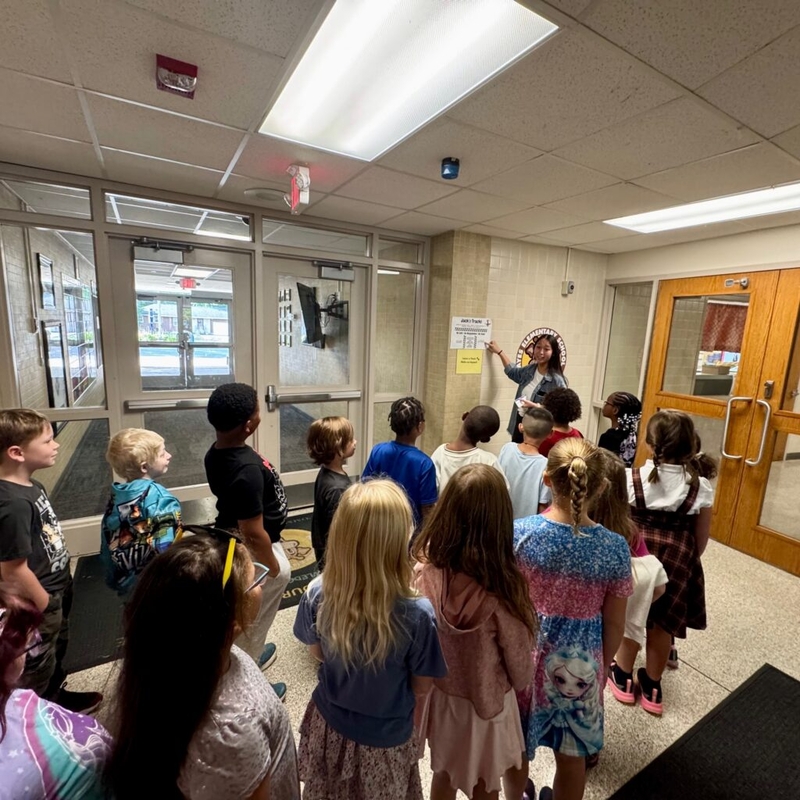
Fridley Public Schools' students on the first day of school this year. (Courtesy photo)
The Minnesota Department of Education is hiring an outside auditor to examine Fridley Public Schools, according to a letter sent to the district Oct. 20, signed by Commissioner Willie Jett and obtained by the Reformer. The letter details significant concerns about financial management and the potential for the district — whose bonds were downgraded to junk level earlier this year — to “continue into a debt spiral,” of issuing new debt to pay off old debt.
Fridley Public Schools was placed on the state’s list of school districts in financial distress in March, called statutory operating debt under Minnesota law. Despite warnings in 2024 by its then budget director and its auditor, Superintendent Brenda Lewis told the Reformer in an interview last month that the district was surprised in December when the state informed the district that the designation was coming.
At the same time, district leadership notified the school board that its fiscal year 2025 audit would not be completed in time to meet the Dec. 31 state deadline. Nearly ten months later, that audit is still incomplete, and may cause the district to miss its 2026 audit deadline, too.
Under statute, school districts in statutory operating debt, or SOD, must submit a plan for state approval that shows how they will rebuild their financial reserves. If the plan is not approved, the state can withhold aid payments to the school district. In the letter, MDE says it cannot approve the district’s current plan “because the draft is not based on concrete financial information due to the missing [2025] audit” and late and incomplete financial data the district is required to submit to the state.
The letter also says, “the plan does not show a realistic or committed effort to move the school district out of SOD.”
When Lewis was asked about the state’s letter, she responded with an emailed statement, which reads in part: “Fridley Public Schools recognizes the seriousness of our financial challenges and remains fully committed to working cooperatively with the Minnesota Department of Education. We welcome the opportunity for a thorough review of the district’s financial records and practices as we continue our work toward long-term financial stability.”
Board Chair Jake Karnopp referred questions to district administration.
The Minnesota Department of Education declined multiple requests in September and October for interviews about Fridley Public Schools and did not respond to emailed questions as of publication. It is not clear what recourse the state has to require changes in the district. Minnesota is one of 15 states without a legal framework for state takeover or intervention in school districts.
The fallout from the district’s financial woes has been accumulating all year. In January, the district borrowed $11.5 million in short-term bonds, called aid anticipation credits, to make sure it had enough cash available to pay its bills.
To pay back the $11.5 million, and to cover its cash flow for the current school year, the district issued $23.4 million in new bonds in September. Cash flow projections from its financial advisor indicate that the district will need to borrow again next fall, to repay the $23.4 million and to borrow more for the following school year. Under state law, those bonds are capped at 75% of a district’s expected state aid.
Moody’s downgraded the district’s bond rating to junk status in January, lowered the rating again in July and then withdrew its rating in September due to insufficient financial information. Most institutional investors, including mutual funds and pension funds, cannot buy bonds that are unrated. Fridley currently participates in the state’s credit enhancement program, which extends the state’s bond rating to participating school districts to lower their cost of borrowing.
The state says that in May Fridley’s bond paying agent notified the state it had concerns that the district would not be able to make future debt service payments.
The state says it made numerous attempts to work with Fridley to address its issues. In May, the state asked the district for a completed audit no later than July 13, recommending the district hire an auditor or accountant “well-versed in Minnesota school district accounting.”
After missing the July 13 deadline, the state and district met again in July, when the state expressed concerns about the possibility of a “debt spiral.” At that point, the state scheduled monthly meetings with the district related to its finances, operations, the unapproved SOD plan and the unfinished 2025 audit.
According to the state, at the September meeting the district said the staff working on the 2025 audit had changed. “The lack of experienced and consistent staffing has contributed to the district’s challenges completing the overdue audit, as well as the district identifying issues to solve for future audits,” according to the Oct. 20 letter.
Fridley’s financial situation isn’t unique in Minnesota or nationally. It has faced cost increases that exceed its revenue increases in recent years. And, its enrollment has declined in recent years because of a combination of lower birth rates and competition from open enrollment and charter schools. State aid is determined by enrollment — fewer students means fewer dollars.
The district’s financial outlook is worsening with time, according to Fridley’s own SOD plan to get out of statutory operating debt, which was approved by the school board in January. The district’s unreserved fund balance, a measure of its financial reserves, is estimated to be -16% at the end of fiscal year 2025. This is an estimate because the 2025 audit isn’t completed yet. Projecting out to 2029, the district’s plan estimates that -16% exploding to -81%.
Fridley’s operating revenue is currently around $50 million per year, and is expected to grow at around 1% per year. Its operating expenses are around $60 million per year. According to the district’s SOD plan, expenses would remain flat, but it’s unclear how they’ll achieve this given a contract with educators that granted a roughly 5% raise last year, and again this year. The result is a projected annual deficit of around 20% of its budget.
The district was required to submit additional details as part of its SOD plan to the state. A public spreadsheet outlines $2.9 million in budget cuts for the current school year, with $600,000 of the proposed cuts coming from school-level staff.
Lewis attributes the district’s financial challenges to a range of issues. She told the Reformer the district has had significant turnover in its finance department since 2017, which led to numerous errors in how the district codes its expenses and counts students. Those errors have been responsible for Fridley losing out on potentially millions of dollars in funding, according to Lewis.
During the 2024-25 school year — the year with the incomplete audit — Fridley hired the Center for Effective School Operations to run its finance operations. Lewis said at a May 2026 school board meeting that the district was dissatisfied with the services and did not renew the contract.
In response to questions from the Reformer, Lewis did not explain why numerous financial errors occurred during the 2024-25 school year while CESO was running finance operations. Nor did she explain why the audit was delayed, even though one of CESO’s responsibilities was supporting the audit process.
CESO is currently providing support to Minneapolis Public Schools finance operations. Its CEO, Stephanie Burrage, previously served as a deputy commissioner of education and as chief equity officer to Gov. Tim Walz.
In recent public updates, Lewis has pointed specifically to errors in coding special education expenses and missing out on subsequent state reimbursements for these expenses. It is not clear whether the district will be able to recoup any missed reimbursements from prior years, but Lewis has said this should improve the district’s finances in the future. Lewis has not provided an exact dollar amount for any potential new funding, however.

Saint Paul, MN