As state considers changes, new online tool eyes impacts of declining vaccination rates
Oct 07, 2026 | 8:49 pm ET
Description
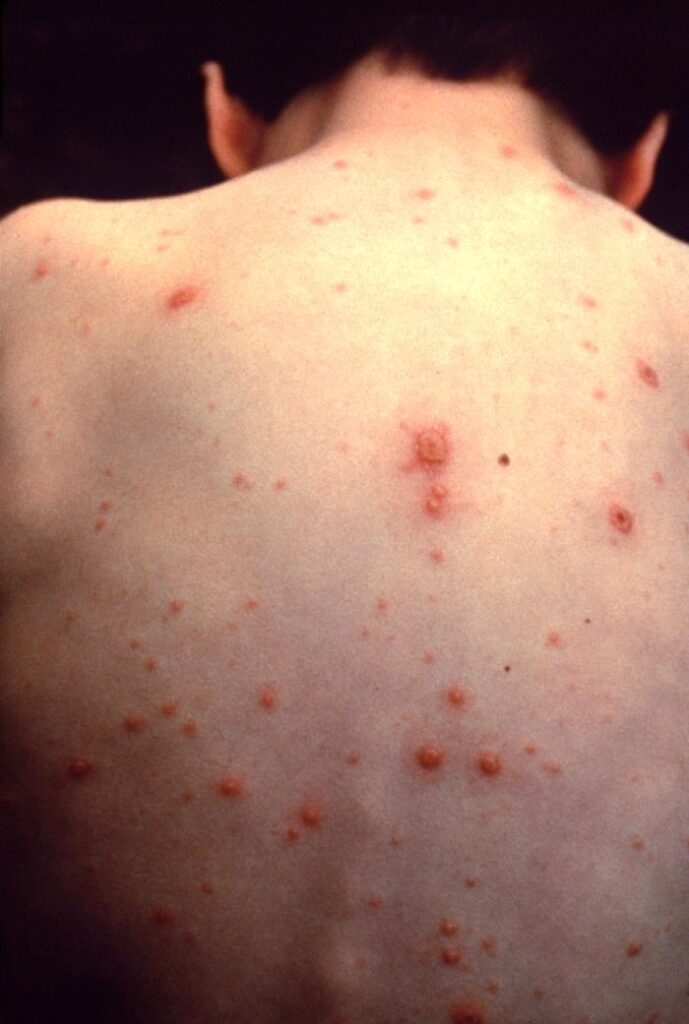
Chickenpox appears as a rash that turns into itchy, fluid-filled blisters that eventually scab over, according to the CDC.(Photo via the CDC)
What would result if Florida reduces the number of vaccines Florida children are required to receive to attend school and daycare?
The answers to those questions may be found on an interactive dashboard dubbed VaxImpactMap, published by the Emory Rollins School of Public Health at Emory University.
Lead developer Ben Lopman, a professor of epidemiology and global health at Emory Rollins, says he and other researchers at the university have been studying vaccine efficacy for more than a decade.
They’ve been working on the VaxImpactMap for about nine months.
The latest version comes as the DeSantis administration moves ahead with plans to eliminate four vaccines from the list of shots children are required to take to enter public school or daycare.
The Florida Department of Health will hold a rule-making workshop on the proposed new regulation Thursday in Lake Mary. Public testimony on vaccine mandates leans toward the passionate, with two general camps — people who support vaccines and those who are hesitant.
“The intention of the model was kind of not as an advocacy tool, but really just to to lay out, you know, what would be the real consequences in terms of health and economic impacts of of these potential declining vaccine coverages,” Lopman said, underscoring that the data behind the dashboard are “robust and well established.”
He added: “Our intention was … to provide tangible estimates to policymakers as well as the public of what vaccines do and what the consequences would be of declining coverage. And I hope that policymakers, when they’re weighing a decision like the Florida rule change, weigh the costs and benefits of their decisions.”
To date, he said, response has been positive.
“We’ve heard from state health departments that are using the tool. We’ve heard from professional organizations like the American Academy of Pediatrics using the tool, as well as parents and the general public,” he said.
Expanded tracker
VaxImpactMap initially was released in February but tracked only three vaccines. The expanded version released in September added three, allowing users to track six vaccines in all — rotovirus, pneumococcal conjugate, pertussis, varicella, Hib, and RSV.
The map shows and how percentage declines in vaccine uptake over time could affect the number of hospitalizations and deaths from disease; increase health care costs; and lower productivity across the nation.
“The reason we chose these initially is because these are vaccine-preventable diseases that cause acute disease in young children. And what that means is that if vaccine coverage declines, we’ll see pretty immediate impacts of that,” Lopman told the Florida Phoenix.
“But they are six different vaccine-preventable diseases, and they have their own epidemiology, they have their own vaccine coverage and their own kind of policy debates going on around them.”
The proposed rules under consideration in Florida would eliminate four vaccines the DOH now requires through rules and regulations that children receive to go to school and daycare: varicella, pneumococcal conjugate, haemophilus influenza type b (Hib), and hepatitis B.
VaxImpactMap includes information on all those vaccines except hepatitis B.
For Florida the map shows:
- Five years of a 10% decline in varicella uptake could result in 24,900 new chickenpox cases; 222 additional hospitalizations for chickenpox, two additional deaths, and a $54 million increase in healthcare costs and lost productivity.
- A similar dip in vaccination coverage for pneumococcal conjugate in Florida could result in 143 additional cases of that disease; 118 increased hospitalizations and four additional deaths; and an $8.3 million hit in healthcare costs and productivity losses.
- Five years of a 10% decline in Hib vaccination in Florida could result in one additional case of Haemophilus influenzae disease, one hospitalization, and an estimated $34,200 in additional costs.
Findings can be modified by the percentage decline as well as time horizons, allowing users to choose as little as a 1% decline over one year to as much as 20% decline over 20 years.

And I hope that policymakers, when they're weighing a decision like the Florida rule change, weigh the costs and benefits of their decisions.
What stood out to Lopman about the research, he said, were the costs associated with declining vaccination rates.
“Varicella is the cause of chickenpox, and while many people don’t perceive this as a severe disease, there are, like, many kids that have severe outcomes from this, require hospitalization, [and] that has impacts in terms of healthcare costs, but also parents and kids missing work and missing school. So, there’s this whole range of economic impacts that occur that go beyond or in addition to the disease itself,” he said.
He noted that the lower the baseline vaccination rate, the bigger the implications of declining rates.
For example, Texas’ vaccination rate for varicella during the 2025-26 school year was 92.9% and California’s was 95.4%. The national rate was 92.2%.
A 10% decline in varicella vaccination rates in Texas over five years could spike chickenpox cases by an additional 30,700, lead to 277 additional hospitalizations and three additional deaths, and cause a negative-$66.7 million financial impact.
By contrast, a similar decline in California’s varicella vaccination rates could mean 11,600 new chicken pox cases, 111 additional hospitalizations, one additional death, and a $25.5 million negative economic impact.
“Florida already has lower coverage than many other states, and because of the way vaccines work and herd immunity, the lower your coverage is, actually the more you have to lose. Because if coverage declines further, there will be more disease,” he said. “So, any decline in Florida actually might matter more than in other states because the coverage already is relatively low.”
Tallahassee, FL