Sportsbook that voided Iowa man’s $14.2 million payout says it acted properly
Aug 25, 2025 | 11:01 am ET
Description
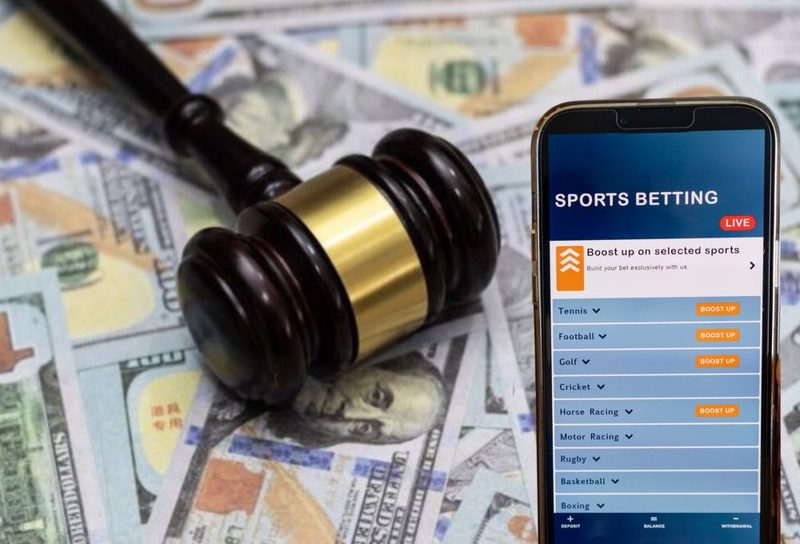
(Photo illustration by Iowa Capital Dispatch; photos via Getty Images)
An online sportsbook that voided an Iowa man’s golf-tournament wagers, denying him $14.2 million in purported winnings, says it retains the right to void any bets due to errors.
Nicholas Bavas, a resident of Dallas County, is suing DraftKings Inc., a sports gambling website, and its subsidiary Crown IA Gaming, which is licensed by the Iowa Racing and Gaming Commission to conduct sports wagering within the state.
Bavas claims DraftKings unfairly voided the bets he placed on the 2024 AT&T Pebble Beach Pro-Am golf tournament as rain threatened to cut short play after 54 holes. Aware there was a good chance of the final round being canceled, and with DraftKings still accepting bets on the tournament’s outcome, bettors around the country, Bavas included, put their money on all of the competitors who were then in the lead.
DraftKings has denied any wrongdoing in the matter and recently asserted 19 separate affirmative defenses in the case, including a claim that Bavas “knowingly accepted the risk that circumstances may arise related to the odds associated with any wager.”
The company argues that this risk was disclosed in the “house rues” to which Bavas agreed, including rules that expressly warn that errors may occur and DraftKings has the right to void wagers due to any such errors.
Attorneys for Bavas argue DraftKings applies a “dizzying array of interlocking sets of rules that may or may not govern each bet depending on the type of wager placed, the specific event, and the particular sport … However, when DraftKings makes an error or accepts a bet it should not have, or when unforeseen events occur that require an unanticipated large pay out by DraftKings, then it seems different rules apply.”
A trial in the case is scheduled for Sept. 28, 2026.
According to the lawsuit, Bavas placed five bets on the outcome of the Pebble Beach Pro-Am golf tournament in the late hours of Feb. 3 as historic rains and winds threatened to suspend all play.
Shortly after 10 p.m. on Feb. 3, 2024, Bavas allegedly placed a $100 bet, which DraftKings accepted. The bet was a “20 Picks” parlay, in which the bettor chooses multiple competitors who must place as designated for the bet to pay out. Bavas selected the leading competitor, Wyndham Clark, as the tournament winner, and his other picks for the top finishers aligned with their rankings at that moment.
At the time DraftKings accepted that bet, the lawsuit claims, DraftKings promised to pay Bavas $4,651,571 if every one of Bavas’ picks were correct.
At 10:18 p.m., Bavas wagered $25 on a different type of parlay in which he simply picked the top 20 finishers in no particular order, for a potential payout of $250,068.
At 11:22 p.m., Bavas placed a third bet, this time for $50, that otherwise was identical to the first bet. That bet had an alleged payout of $2,325,786.
At 11:59, he placed a fourth bet, identical to the first, for $100, with a $4,651,571 payout.
Two minutes later, at 12:01 a.m. he placed a fifth bet, for $50, identical to his third bet, with a $2,325,786 payout.
Later in the day on Feb. 4, 2024, PGA Tour referees continually delayed the scheduled start of the final round of tournament play due to rain and wind. At 9:15 p.m. that evening, the PGA Tour’s rules committees announced there would be no play the following day and so the tournament results would be considered final through the conclusion of the 54 holes already played — which, Bavas’ lawsuit claims, resulted in all five of his bets being winners, for a total potential payout of $14.2 million.
However, the lawsuit alleges, DraftKings “unilaterally voided” all five of his bets and refunded the wagered amounts, citing rules that say “futures bets” placed after the last shot of what is later determined to be the final round are voided.
Bavas’ lawsuit alleges the cited rule doesn’t appear to apply to bets on multiple players, as was the case with Bavas’ parlay wagers.
“Had Bavas wanted to place a bet on only the single individual ‘player’ who would ‘win the trophy’ and become the ‘tournament winner,’ he would have done so,” the lawsuit claims, arguing that even if DraftKings could “void” the portions of bets 1 through 4 that selected the tournament winner as Wyndham Clark, the odds should have been recalculated to reflect the remaining selections.
The lawsuit seeks damages for breach of contract and violations of consumer-protection laws.
Bavas’ attorney, Ben Lynch of Clive, said it’s worth noting that had Bavas bet on other golfers to win or place in a rain-shortened tournament, DraftKings would not have allowed him to cancel his bet after the fact and claim a refund.
“If he had lost the bet and said, ‘I want my money back because I didn’t think the weather was going to cancel things,’ DraftKings would have kept his money,” Lynch said. “The rules that DraftKings had in place at the time of the tournament did not allow them to void the bets. They changed the rules after this tournament.”
Bavas wasn’t the only person who guessed that weather would result in a rain-shortened pro-am. DraftKings sparked outrage on social media when it retroactively voided all bets placed after the close of play on Feb. 3, 2024.
Des Moines, IA