Spending in Alabama primary elections exceeds $40 million
Jul 06, 2026 | 6:01 am ET
Description
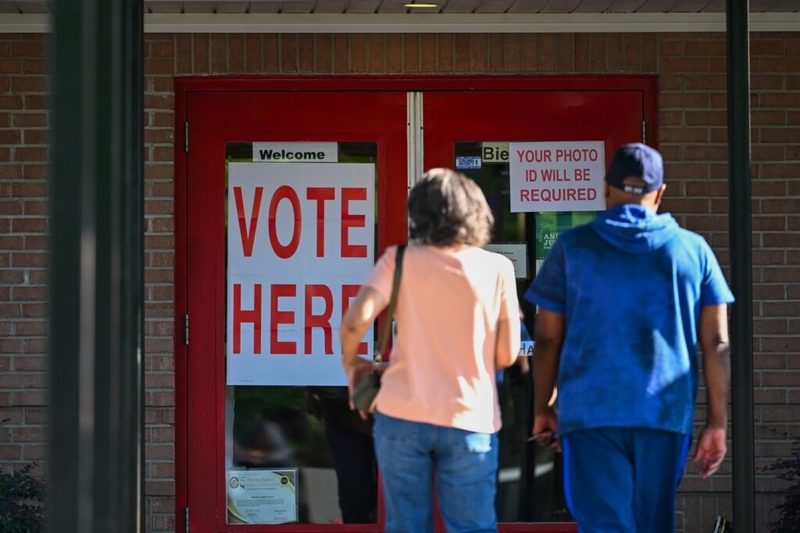
Two people enter a polling place at Messiah Lutheran Church in Montgomery, Alabama on May 19, 2026. Candidates running for federal and statewide offices spent over $40 million in the lead-ups to the May and June primary elections. (Anna Barrett/Alabama Reflector)
Alabama politicians spent over $40 million during the 2026 primary and primary runoffs for state and federal offices.
Richard Fording, a political science professor at The University of Alabama, said in an interview Wednesday the spending during this election cycle could be tied to a national shift against the Republican Party.
“I think what we have is a situation where Republicans nationally are very vulnerable, and because of historic low approval rates of President (Donald) Trump, and so that always affects midterm elections, and there are a number of indicators in other states that this is going to be a very bad midterm for Republicans,” he said.
According to a June poll by the Associated Press, 37% of Americans approve of Trump. That’s down three percentage points from when AP conducted the poll during his first term.
Fording said the surge in Democratic turnout and a more competitive slate of Democratic Party candidates have led to a more competitive election cycle.
“We’re not going to see Democrats win a bunch of seats in Alabama, but I think there’s a chance, and especially with the governor’s race, I think there’s, there’s a chance,” Fording said. “When you have a more competitive environment like we do now, right at this moment in Alabama, more competitive than it’s been in years, you do get more candidates running as well, and so that will certainly bring more money into the process.”
Federal offices
Republican Senate candidates spent a total of $7.2 million on the race through July 1.
In the U.S. Senate race, U.S. Rep. Barry Moore, R-Enterprise, led all candidates in spending at $2.6 million, according to his campaign filings with the Federal Elections Commission. Moore raised $3 million.
Republican ballot numbers drop, Democratic ballot numbers increase as voter turnout declines
Rodney Walker, a candidate for U.S. Senate who did not advance to the runoff, raised and spent $2 million for his campaign.
Jared Hudson, the runner-up in the Senate race, spent $1.2 million of the $1.7 million he raised, according to campaign finance reports.
Moore defeated Hudson in the June 16 primary runoff and will face Democratic nominee Everett Wess in November. Wess spent $75,200 in his campaign and has raised $73,800.
Candidates in Alabama’s 3rd, 4th and 5th Congressional districts spent a total of $3.4 million, with the 2nd Congressional District being the most expensive at $1.2 million.
In Alabama’s 3rd Congressional District, Rep. Mike Rogers, R-Saks, spent $1.2 million and raised $1.8 million in the May primary. Rogers will face Lee McInnis, the Democratic nominee who has spent just over $14,000 for his campaign, in November.
U.S. Rep. Robert Aderholt, R-Haleyville, has spent $1 million in his campaign for Alabama’s 4th Congressional District. Aderholt will face Democratic nominee Amanda Pusczek in November. Pusczek has spent $12,300 while campaigning.
Candidates in Alabama’s 5th Congressional District spent the least amount of money while campaigning. U.S. Rep. Dale Strong, R-Huntsville, spent $641,500. Strong will face Democratic nominee Andrew Sneed in the November election. Sneed has spent $341,200 during the May and June elections.
Spending calculations in Alabama’s 1st, 2nd, 6th and 7th races are uncertain due to changed boundaries stemming from the Alabama Legislature’s special session in May. Special primary elections in those congressional districts will be held on Aug. 11.
State offices
Candidates in races for statewide office spent a total of $30 million through July 2, with the attorney general race being the most expensive at $10.8 million.
Republican gubernatorial nominee Tommy Tuberville and Democratic gubernatorial nominee Doug Jones outraised and outspent all other candidates. Campaign finances show that Tuberville raised $13.2 million and spent $3.9 million, while Jones raised $2.5 million and spent $1.3 million. Jones and Tuberville will face each other in the November general election.
Spending in the Alabama lieutenant governor race topped $6.5 million. Alabama Secretary of State Wes Allen raised $2.6 million and spent $2.7 million to former Alabama Republican Party Chair John Wahl’s $3 million in contributions and $2.5 million spent on his campaign.
Wahl bested Allen in the lieutenant governor runoff and will face Democratic nominee Phillip Ensler in the general election. Ensler has spent $141,000 during the election cycle.
Doug Jones, Tommy Tuberville win gubernatorial nominations, setting up 2020 rematch
Republicans Katherine Robertson and Jay Mitchell spent millions of dollars in their respective attorney general campaigns. Robertson spent $5.8 million and Mitchell spent $4.6 million of the money he raised for the May and June elections.
Robertson defeated Mitchell and will face Democratic nominee Jeff McLaughlin in November. McLaughlin had not reported any campaign filings as of Wednesday afternoon.
Derek Chen, a candidate for state auditor, and Christina Woerner McInnis, a candidate for commissioner of agriculture and industries, both lost their races despite spending over $1 million on their campaigns.
Andrew Sorrell, who beat Chen in the state auditor election in May, raised $232,600. He will face Democratic nominee Violet Edwards in November. No other Democratic candidate qualified for the race.
In the commissioner of agriculture and industries race, Corey Hill, the winner of the June runoff, spent $527,800. He will face Democratic nominee Ron Sparks in the November election. No other Democratic candidate qualified for the race.
In the Public Service Commission races, both incumbents lost to Republican primary opponents. Incumbent Public Service Commissioner Chip Beeker, serving in Place 2 on the commission, spent over $568,000 but lost in the runoff to former State Auditor Jim Zeigler, who spent over $152,000 in his campaign.
Cullman County Sheriff Matt Gentry, who defeated Place 1 Public Service Commissioner Jeremy Oden, spent $660,900 on his campaign. Oden spent $416,400 and raised $767,900.
Gentry and Zeigler will face Democratic nominees James Gordon and Sheila McNeil in the November election.
Gordon spent $24,000 in the PSC Place 1 race, outspending his opponent Jeff Ramsey, who only spent $314. McNeil spent $4,400 in the PSC Place 2 race and was the only Democrat to qualify for that race.
Republican Caroleene Dobson, who won the GOP nomination for secretary of state in the May 19 primary, spent $586,700 on the campaign trail and will face Democratic nominee Wayne Rogers, who has only spent $16,200 in this year’s election cycle in November.
Dobson spent more than her opponents Christopher Horn and Glenda Jackson. Jackson spent $2,200. Horn did not have any filings as of Tuesday. Rogers was the only Democratic candidate to qualify for the race.
Alabama State Treasurer Young Boozer spent $715,000 during his campaign while Steve Lolley, the other Republican candidate in the treasurer race, spent $68,600.
Boozer will face Rosilyn Houston, the Democratic nominee, who has spent almost $1,300 on the campaign trail in the general election. Houston was the only Democratic candidate on the ballot.
The key points box was written by Andrea Tinker.
Montgomery