Small North Dakota town creates ‘sacred place’ to honor veterans
May 25, 2026 | 6:00 am ET
Description
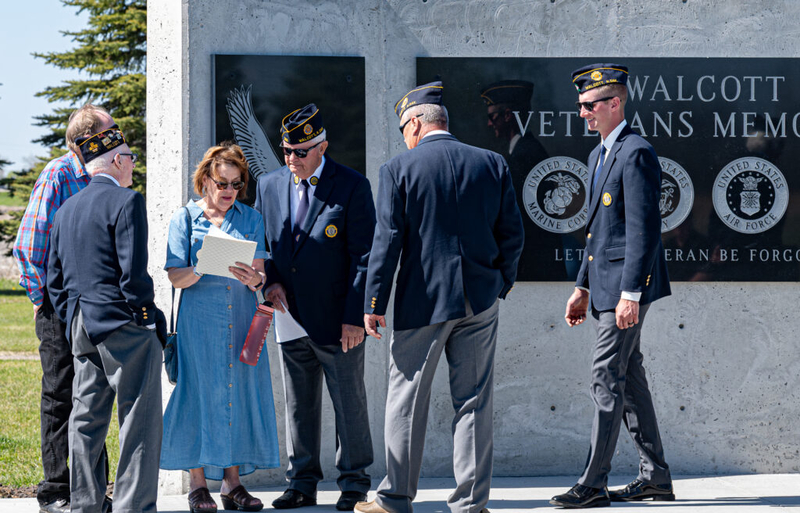
Project leader Cheryl Anderson talks with American Legion members about finishing touches to the Walcott Veterans Memorial on May 13, 2026. (Photo by W. Scott Olsen/For the North Dakota Monitor)
This year’s Memorial Day brings more than the traditional salute to fallen service members in the community of Walcott, North Dakota.
On Monday, residents will dedicate a new veterans memorial at the Walcott Cemetery. The memorial is designed to preserve the region’s military history and the future of a rural cemetery.
“We wanted to make it a sacred place for our community,” said Cheryl Anderson, the project’s lead organizer.
The memorial, which includes granite benches and walls, honors more than 300 veterans who are buried in 10 cemeteries connected to the Walcott area. It also recognizes members of the Walcott Legion Auxiliary.
Efforts to build a memorial began in 2021 as part of a cemetery restoration project. Members of Walcott Lutheran Church and Shepherd of the Prairie Lutheran Parish – both now closed – wanted to revitalize the grounds of Walcott Cemetery, which was established in the early 1880s.
“We knew we had a lot of unmarked graves there and a lot of families were no longer available to take care of headstones,” Anderson said. “We wanted to make sure the cemetery was cared for in the next generation.”
But as the committee began to raise funds to restore 300 headstones, the idea of a veterans memorial began to grow. The simple mission of “Let no veteran be forgotten” resulted in more than $180,000 raised through grants, corporate sponsorships and private donations.
For many, the memorial represents resilience in a town that has lost many institutions over the decades.
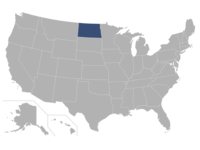
Walcott, which is in southeastern North Dakota, has a population of around 260. Over the years, it has lost its school, grocery store and gas station. In 2025, the town’s last remaining church closed its doors. Community members wanted a way to continue to honor the sacrifice and service of the region’s veterans, Anderson said.
The dedication ceremony, scheduled for Memorial Day, will include the postings of colors, musical performances and several recognitions.
Among those being recognized will be Orin “Bud” Nelson, whose family will receive the Congressional Gold Medal awarded to Merrill’s Marauders, an elite World War II unit that fought in Burma under brutal conditions.
Nelson died in 1977 and rarely talked about his wartime experiences, according to his daughter, Kelly Fowler.
“The history of the marauders was frightening,” she said. “He didn’t want to relive it.”
What Nelson did bring home was empathy for others. Fowler remembers her dad always doing something for others, whether it was giving a ride to a biker with a flat tire or listening to the patrons of the bar he owned.
His family purchased one of the memorial’s granite benches in his honor.
“It’s never too late to honor him and others who have served,” Fowler said. “Memorial Day is about the freedoms we have and the people who helped us keep them.”
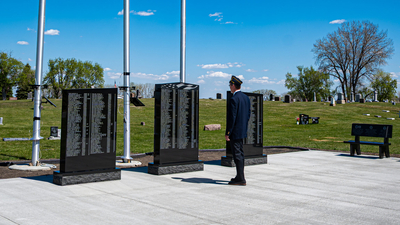
Another person who will be recognized at the dedication will be Linda Stone, who has served as president of the Walcott Legion Auxiliary for 36 years. Her service and the service of other auxiliary members is an important part of preserving veteran traditions, said Shelly Swandal, secretary of the auxiliary.
“The auxiliary members are the ones who keep veterans from being forgotten,” Swandal said. “This memorial is a way to honor those who keep those traditions alive.”
Another local family sees the memorial as a tribute to difficult wartime sacrifices.
Thorvald “Toby” Rockstad spent 17 months as a prisoner of war in Germany during World War II after being captured in North Africa. Like many veterans, he rarely discussed his experiences.
“He didn’t talk about it,” said his niece, Lianne Rockstad. “But we believe that every person who served our country deserves to be honored.”
Rockstad visited the site of the former POW camp in Germany where her uncle was held captive. The village historian helped her find the remnants of a barrack – all that remained of the camp. The experience reinforced for her the importance of preserving veterans’ stories and memories.
Her family donated a granite bench in memory of her uncle, who died in 1982.
“If you build a memorial, they won’t be forgotten,” she said.
The memorial project is designed to be as maintenance-free as possible so future generations can care for the cemetery more easily, Anderson said.
“When you think of our little community, we’ve lost a lot,” she said. “But this memorial is something lasting. It’s a legacy.”
Bismarck, ND