Should County Pay For Infrastructure Along The Rail? Voters Will Decide
Sep 22, 2026 | 6:01 am ET
Description
Photo courtesy of Honolulu Civil Beat
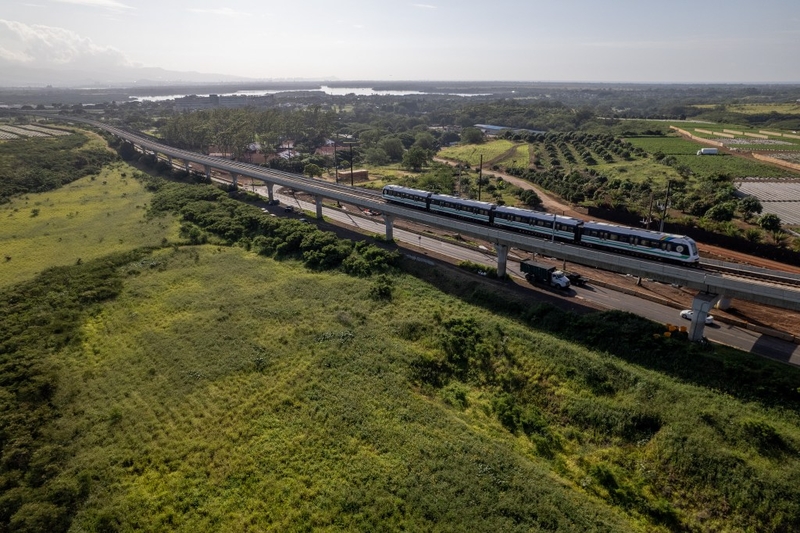
Policymakers and developers say hundreds of millions of dollars of infrastructure is needed to allow housing development along the Honolulu Skyline rail project. They’re proposing a way for the City and County of Honolulu to pay for it without spending a penny of existing property tax revenue.
The matter is now in the hands of the voters.
Four decades ago Hawaiʻi lawmakers passed a bill allowing counties to issue special bonds used in 48 other states to pay for infrastructure. The Hawaiʻi Attorney General says the Hawaiʻi Constitution needs to be amended before the counties can issue the bonds. Voters will have the final say on the November ballot.
The so-called “RISE” bonds — Resilient Infrastructure for Shelter and Equity — are viewed as a way for counties to pay for infrastructure, particularly along Honolulu's Skyline rail, without using existing tax revenue or increasing property taxes. The ballot measure has support from the state, counties, planners, public policy experts, developers and the construction industry.
The only substantive testimony opposing the proposed amendment has come from the Tax Foundation of Hawaiʻi, which said the amendment isn’t needed to begin with since the RISE bonds, a form of tax increment financing, are already allowed by statute. The attorney general argues the constitution needs to be changed because it doesn’t specifically allow the bonds.
A risk is that county taxpayers could be on the hook for paying off the bonds should a development supported by the bonds go sideways. Experts say there are ways to significantly lessen that risk.
The ballot measure comes amid a concerted push by the state and Honolulu governments to develop housing around Honolulu’s Skyline railway. Lawmakers pointed to transit-oriented development in the bill calling for the amendment, saying the bonds are needed to pay for hundreds of millions of dollars of infrastructure needed to support new housing around the $10 billion, taxpayer-funded rail.
The rail alone hasn’t been enough to spawn development in areas lacking things like roads, sewage, drainage and water systems needed to support big new housing developments, said Mary Alice Evans, director of the Hawaiʻi State Office of Planning and Sustainable Development.
“The rail is part of it, but not the whole ball of wax,” she said.
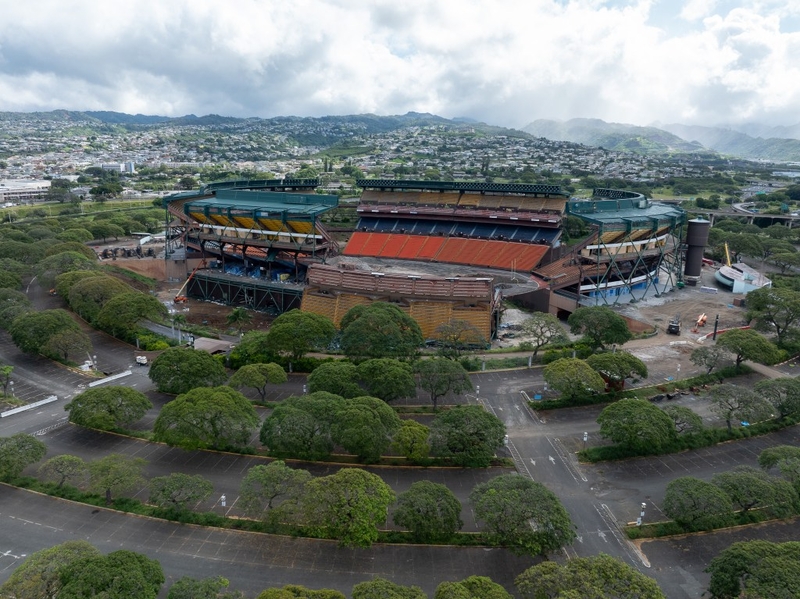
Among the proponents is Honolulu developer Stanford Carr, who is partnering with the state and The Cordish Companies to develop a mixed-use district of more than 4,000 new homes, museums, retail and a new public school on 88 acres of state-owned land surrounding a new Aloha Stadium. The stadium project, located at a Skyline rail stop, is one of Oʻahu’s most ambitious proposed developments linked to the rail.
The purpose of the RISE bonds is to lower infrastructure costs that developers usually pass on to buyers. Asked how the public could be assured developers would actually pass the savings to buyers, Carr said eliminating infrastructure costs from prices will translate into more, faster sales, which home builders want.
You can speed up sales, he said, “if you can lower the cost of the housing.”
Proponents Say System Now Isn't Working
The longstanding way of paying for infrastructure – where homebuilders foot the bill – isn’t working, particularly when it comes to affordable housing, said Evans, the state planning director.
The costs of building roads and regional sewer and water systems can be enormous, she said. Developers of market-rate homes typically can pass the infrastructure costs to buyers and renters, she said, although that raises home prices to a level many people can’t afford. When affordable housing and zoning policies limit what developers can charge, she said, developers often walk away and nothing gets built.
“It’s taken us too long to look at this pattern and realize that,” she said.
The RISE bonds would be similar to the bonds counties now use to pay for regional infrastructure: the county sells the bonds to borrow money from private investors and pays the loan back over time with property tax money from the general fund.
The envisioned RISE bonds are different because they would be used to pay for infrastructure in certain tax districts and paid off with property taxes from those districts.
The process of issuing RISE bonds would start with a county setting up a tax district, said Andy Kawano, director of Honolulu's Department of Budget and Fiscal Services. Before any new construction started, he said, the county would calculate what the property in the district is worth. That figure becomes the baseline.
When new development pushes property values up, the extra tax revenue above the baseline — known as the tax increment — would go toward paying off the RISE bonds. The county could still use the baseline tax collections for its general fund to pay for countywide services.
The concept is that, even though the counties pay for the infrastructure, the counties don’t lose anything. The increased tax revenue, the theory goes, exists only because the developer chose to invest in the district, building new housing and other amenities that drove up property values.
Tax increment financing is used in some form in every other state except Arizona, said James Merriman, a professor of public policy at the University of Illinois Chicago, although he noted California has dramatically scaled back its use.
It’s important for Hawaiʻi voters to understand what tax increment financing is and isn’t, Merriman said.
“It's not a tax break,” he said. “It's just a sequestering of the tax revenue.”
Could Taxpayers Be On The Hook?
Given its extensive use across the continent for decades, tax increment financing has faced widespread scrutiny. The most adamant critics point to failed TIF projects to question the overall policy. Others have taken a more balanced approach, examining failures for lessons on how to better use tax increment financing.
The Hawaiʻi Institute of Public Affairs in August published a study taking a hard look at Hawaiʻi’s proposal.
The study addresses perhaps the biggest red flag: What happens if a project fails?
If the bonds are defined as “general obligation bonds,” county taxpayers as a whole could be on the hook. The institute recommends making sure the bonds are backed by the district, not the county. That would put the district on the hook if the project went south: the bondholders, not county taxpayers, would take a haircut.
Another strategy, Kawano said, is to issue the bonds in phases as development moves along and property values in the district increase. That way the district doesn’t get stuck with a big infrastructure loan that can’t be paid off if property taxes don’t rise.
One of the biggest criticisms – that tax increment financing steers money from local school districts – doesn’t apply to Hawaiʻi, where the statewide school district is funded with state revenue, not property taxes.
When TIF districts have struggled, the institute found, it’s often because of factors such as overly optimistic assumptions about property value growth, economic recessions that reduced property values, natural disasters and dependence on a single developer.
Merriman outlines several failures in a 72-page paper on the pros and cons of tax increment financing and how government officials can better use it.
In one case, Merriman says, St. Louis government officials approved a plan to spend $2.5 million to demolish a former YMCA building and renovate a historic building to create new retail space. The project went sideways, Merriman reports, when the developer failed to obtain project financing. More broadly, Merriman says, some 80% of St. Louis’ tax increment districts were set up for retail developments, which didn’t produce much economic growth because it merely redirected already existing retail jobs and tax revenue.
A project to develop a business park in rural Montana similarly stalled because the district failed to attract new businesses to the park. As a result property values didn’t go up, so there was no incremental increase in tax revenue to pay off the bonds.
Still, Merriman views tax increment financing as among the few tools available for governments to unlock private investment for public infrastructure. The strategy works best, he said, when there’s a long-term commitment needed by both the government and a private developer.
“It only benefits the developer if the developer actually makes investments which result in rising property values, and it only benefits the government if the government does the things that it needs to do to facilitate the developer doing their investment,” he said. “It puts what I call golden handcuffs on the developer and the public sector to both do the thing that they're supposed to do.”
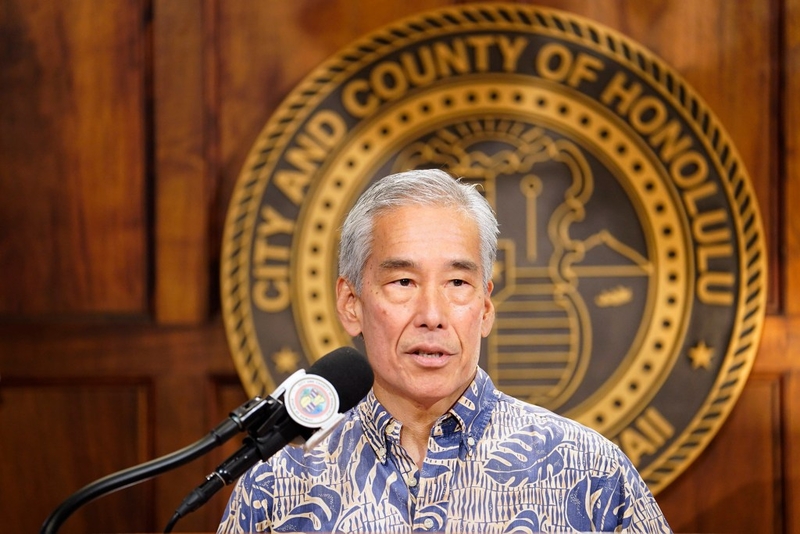
The key, he says, is for county governments to create guardrails. These include counties closely monitoring how district tax money is spent and making sure that information is easily accessible to the public.
Another guardrail involves counties conducting rigorous “but-for” analyses showing the development wouldn’t happen without the tax district. Otherwise, he says, the county could be giving up future tax revenue for something that would happen anyway.
Kawano and the public affairs institute point to another oft-cited, longer-term issue that can arise -- not if a district project fails, but if it succeeds.
The massive stadium project, for instance, would likely increase the need for additional district services like police officers, firefighters and trash collection. If the bulk of tax revenue from the district goes to infrastructure, that would put the rest of the county taxpayers on the hook for the district’s additional services.
The solution, Kawano and the institute agree, is to establish revenue allocations to make sure part of the tax growth pays for the increased demand for services.
But voters aren’t being asked about such details, which would be up to the counties to craft. Voters are being asked simply whether the counties can use the bonds at all.
Legislature Established Model Decades Ago
This isn’t the first time Hawaiʻi has considered using tax increment financing. The Legislature and former Gov. George Ariyoshi adopted Hawaiʻi’s tax increment financing law in 1985. At some point, a lawyer in the attorney general’s office decided counties couldn’t issue the bonds because the Hawaiʻi Constitution doesn’t explicitly allow them, although the constitution doesn’t explicitly prohibit them either.
Toni Schwartz, a spokeswoman for Attorney General Anne Lopez, wouldn’t say exactly when the AG’s office came to that opinion, who wrote it or who asked for advice on the matter. But the opinion has had the practical effect of blocking attempts to use the law without a constitutional amendment.
Lawmakers have introduced bills to amend the constitution to address the attorney general’s concerns at least four times, dating back to 2010. Former Honolulu Mayor Mufi Hannemann’s administration supported the 2010 measure to amend the constitution, making the same arguments advocates are now using.
“TIF bond financing affords the counties a tool to make improvements to areas which may not otherwise enjoy improvements,” Honolulu’s former deputy budget director, Mark Oto, testified at the time. “The policy theory is that, but for the improvements financed with the tax increment, there would be no increase in the assessed value and no tax.”
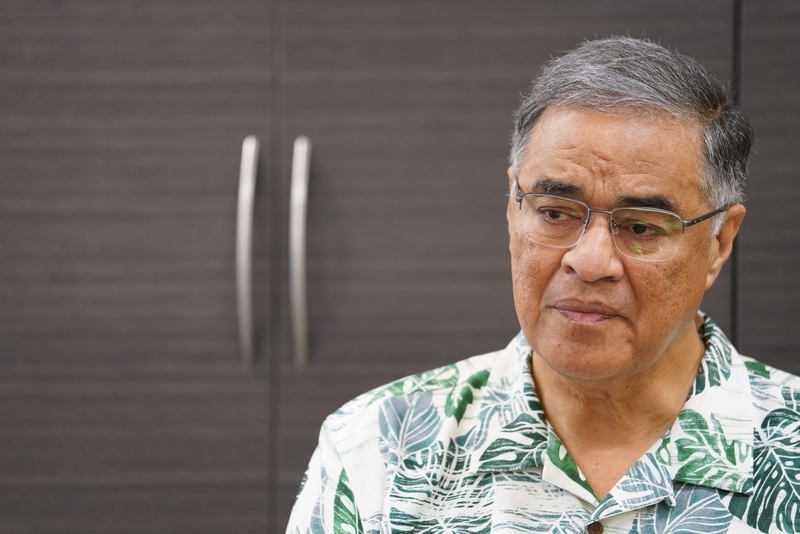
Two years later, in 2012, former Honolulu Mayor Peter Carlisle opposed a similar proposal.
“TIF has the potential to cause unfair and unequal burdens and benefits among real
property taxpayers, as real property tax money that would have been used for general
government services is redirected to special purposes,” Michael Hansen, Honolulu’s former budget director, testified.
Now Honolulu is firmly on board, along with Hawaiʻi, Maui and Kaua‘i counties and a groundswell of other supporters rallying around the call for more housing. In his testimony supporting the bill to bring the amendment to voters, Kauaʻi County Mayor Derek Kawakami called the RISE bonds a “powerful, self-financing tool to build the infrastructure that housing production requires.”
The measure, he said, “is grounded in the Legislature’s own commissioned research, carefully designed to protect fiscal health, and structured to let voters decide.”
A new political action committee affiliated with the construction industry, RISE Together Hawaiʻi, has been running television ads to persuade voters to approve the measure. A blank ballot counts as a “no” vote, so voter buy-in is key for the amendment to pass.
“If voters aren’t educated and they don’t vote,” Kawano said, “it definitely counts against this going forward.”
Honolulu, HI