Most residents think Massachusetts is a great place to live, and also unaffordable
Sep 22, 2026 | 9:06 am ET
Description
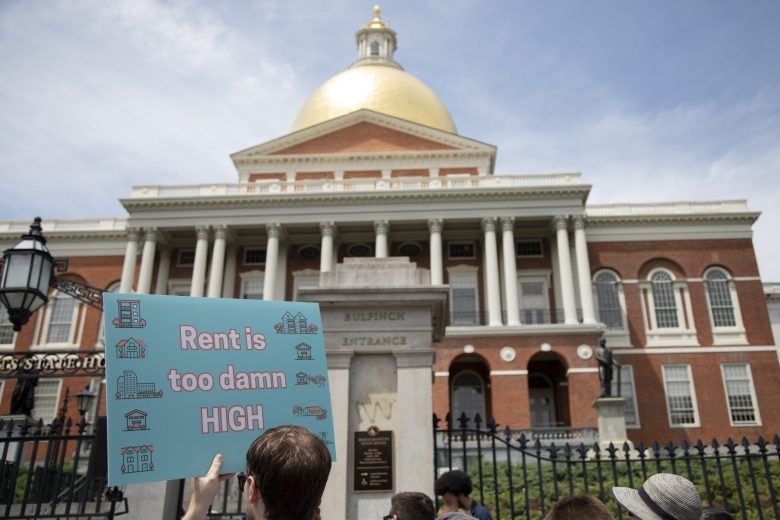
A rallygoer protests the high cost of rent in Massachusetts at an Abundant Housing Massachusetts event on May 27, 2026.
IF MOST MASSACHUSETTS residents had to come up with a new state motto, they could probably agree on something like: It’s a great place to live, if you can afford it.
Heading into an election season in which “affordability” is the defining issue, a majority of Bay Staters agree that Massachusetts is a better place to live than most other states and, simultaneously, that it remains too expensive, according to newly released polling data.
The latest survey from the MassINC Polling Group, conducted as part of the Massachusetts Taxpayers Foundation’s annual assessment of state competitiveness, builds on a well-established thematic foundation. The Bay State has some of the highest incomes in the country, but with the costs for basics like housing and utilities growing at a much faster pace, many families are feeling the pinch.
Sixty-three percent of respondents rated Massachusetts as “one of the best” places to live or “above average” compared to other states, a rate unchanged from when pollsters asked the same question a year ago. At the same time, only 19 percent dubbed the Bay State one of the best or above average on “overall affordability,” compared to 56 percent who said the state is below average or one of the worst for affordability.
Doug Howgate, president of the Mass. Taxpayers Foundation, said polling would likely find affordability to be a top concern in “49 other states.” But in the years since the COVID-19 pandemic, he thinks concerns about the high cost of living in Massachusetts have “ratcheted up a little more compared to other states.”
“When you look under the hood at how people feel and these cost pressures that are weighing on them, and weighing on their location choices, that’s why we need to keep our foot on the gas,” Howgate said. “This is not a mirage.”
People with higher incomes and higher levels of educational attainment tend to feel better about their home state, according to the poll of nearly 1,000 residents, which was conducted in June and July. Nearly eight in 10 respondents who earn $150,000 per year or more rated Massachusetts a better place to live than most other states, compared to 53 percent of those who earn $50,000 per year or less.
When pollsters asked about different ways of comparing Massachusetts to its peers, they found strong reviews for the services offered in Massachusetts. Most respondents think the state’s health care, education, and public services are top-notch.
There was one clear loser: overall affordability. Far more respondents said the state is less competitive on that front.
MassINC Polling Group president Steve Koczela pointed out that high costs are a unifying issue for Democrats and Republicans alike, both of whom were likely to name rising prices among the top issues facing the country.
Affordability concerns, he said, “show up everywhere.” (The Polling Group is partially owned by MassINC, the nonprofit that publishes CommonWealth Beacon.)
Democrats dominate electorally in Massachusetts, and the actions of the Trump administration and a Republican-controlled Congress seem to make a sizable number of Bay Staters happier about where they live. An even 40 percent of respondents said actions at the federal level make them feel better about residing in Massachusetts, the poll found, up from 29 percent a year earlier.
Another year-over-year change suggests businesses are getting a bit more anxious. Fifty-one percent of those polled said Massachusetts is among the better places to do business, down from 59 percent in 2025.
Other indicators have shown significant concerns among employers, too. The monthly business confidence index published by the Associated Industries of Massachusetts spent much of the year in pessimistic territory, and fell again in August amid fears of an escalating trade war with Canada.
About two in five residents are considering leaving Massachusetts in the next five years, most often due to the high cost of living, the poll found. That rate is roughly twice as high for people between the ages of 18 and 29, and those who are working on their education.
“We found a very strong relationship between thoughts or intent to leave Massachusetts and if you’re either currently working on education or recently finished it,” Koczela said.
For Howgate, who leads a business-backed think tank, the trend of Bay Staters being more likely to leave as or just after they finish education is at once “a cause for concern” and “an opportunity.”
“Smart people connecting to our economy has been the engine of Massachusetts, and we have always lost a lot of folks who come here for education and then leave afterwards,” he said. “If you’re on Beacon Hill, if you’re interested in economic development, we need to be laser-focused on how to change the math or change the perception for that population to keep more of those people in Massachusetts.”
The Massachusetts Taxpayers Foundation will soon supplement the survey data with the release of its latest Competitiveness Index, which assesses how Massachusetts fares on a host of metrics from venture capital funding to average child care costs.
Now in the third year of publishing the index, Howgate hopes to give policymakers a “baseline and common language” to better measure which areas need more attention.

Boston