Secretary of education says Virginia will ‘move the achievement needle forward’
Oct 30, 2026 | 5:28 am ET

Description
Secretary of Education Jeffery Smith and Del. Jessica Anderson tour the Peake Childhood Center in Newport News on Oct. 14, 2026. (Photo by Nathaniel Cline/Virginia Mercury)
Gov. Abigail Spanberger’s administration is focused on early education and college and career readiness, two of several academic priorities ahead of the state’s next legislative session.
Starting in January, the executive branch and lawmakers are expected to discuss a slate of K-12 topics, including school technology, expanding career and technical education and preparing children under five for kindergarten by closing the childcare affordability gap.
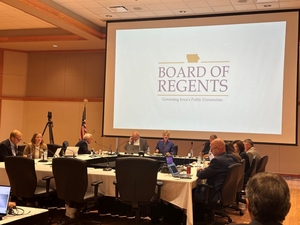
At Wednesday’s Board of Education work session, Secretary of Education Jeffrey Smith shared the foundation of the administration’s K-12 education plans, urging the board to continue partnering with the secretariat to strengthen instruction and improve K-12 processes and systems.
“Nothing is more important than the core business of teaching and learning, and how we set young people up for success, and the fact of the matter that there are no shortcuts to excellence,” said Smith.
Board members spoke with Smith about how to apply the priorities in practice.
President Mashea Ashton, appointed by former Gov. Glenn Youngkin, asked which initiatives the department should stop to avoid “initiative fatigue.” Smith said the focus must remain on teaching and learning, using evidence-based strategies to determine value.
Board member Jamelle Wilson and Vice President Kimberly Bridges, both appointed by Gov. Abigail Spanberger, highlighted the need for wraparound services, or a network of support for students, to address rising anxiety rates and support student well-being.
Questions also surfaced about how success will be measured. Smith said the agency will use student achievement indicators, including reading and math scores, attendance and overall student success outcomes.
The agency’s final strategic plan, which mirrors the secretariat’s priorities, will be released next month. The board reviewed a draft at its work session on Wednesday.
Smith said the secretariat is working with the Department of Education on a draft budget proposal and legislative items. He also said the administration is prioritizing early childhood care and education, including preparing young children for kindergarten and making affordable options available to all.
Virginia currently lacks at least 140,000 child care slots needed to support working families. State leaders are considering three funding options to expand access, raise educator pay and help providers cover costs.
The most expensive option, costing $4.5 billion annually over the next 10 years, would cap families’ child care costs at 0% to 10% of income. The plan would serve an additional 240,000 children and reach 66% of working families.
Smith said his K-12 education policy priorities also focus on improving instructional quality, strengthening the educator workforce and ensuring that schools have the resources and support necessary to improve student outcomes.
Key initiatives include expanding access to high-quality instructional materials, implementing evidence-based literacy instruction through tools called the Science of Reading, and advancing the Science of Math.
Strategies to recruit and retain effective educators, strengthen wraparound services that support student well-being and readiness to learn and address barriers to academic achievement are also on the to-do list.
Additional priorities include expanding dual enrollment, career pathways and postsecondary opportunities to strengthen college and career readiness.
On technology, education leaders support the safe, responsible integration of artificial intelligence and other technologies to enhance instruction and student learning. Smith’s approach to assessment and accountability emphasizes high academic expectations, school-level support and implementation of the latest School Performance and Support Framework.
Reforming the education funding formula, which helps the state determine how much it needs to fund schools, rounded out the list of priorities.
Lawmakers could partially replace the Standards of Quality formula by using student-based calculations for special education and English learner funding. Another option would be to fully replace the staffing-based formula with a new student-based formula.
Smith thanked the board for its contributions to K-12 education, emphasizing the importance of building on existing schools’ and school systems’ strengths rather than treating them as damaged.
“Our schools and school systems, they’re not broken,” Smith said. “It’s how we build from those places of strength and ensure they have the resources, processes, and systems needed to focus on continuous improvement.”
He highlighted the need for continuous improvement, adequate resources, and effective processes and systems that support students and families.
Smith also stressed the importance of establishing durable systems that will outlast current leadership and sustain progress for future generations. These priorities align with the governor’s mission to “build a durable future with opportunity for all Virginians.”
“We’re going to move that achievement needle forward and make certain that, at the end of the day, young people can decide where they want to go and what they want to do,” Smith said.
Smith said the agency and secretariat reviewed more than 200 bills during the last legislative session and provided technical support on more than 100 education bills that passed into law.
Lawmakers will convene in Richmond starting on Jan. 13 to discuss education legislation and other issues.
Richmond, VA