Now in charge, state Democrats plan climate agendas that focus on affordability
Nov 19, 2026 | 8:38 am ET
Description
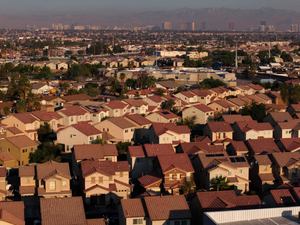
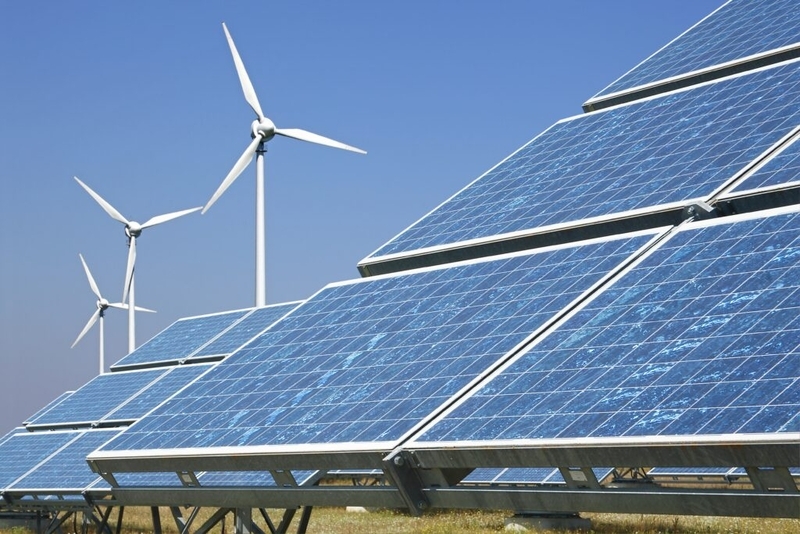
With newfound power in many state legislatures and governor’s offices, Democrats say their focus on climate and clean energy can deliver on their campaign promises to help residents with cost of living concerns. (Photo by Marga Buschbell-Steeger/Getty Images)
Climate change was largely absent as a campaign topic during this year’s midterm elections. Democrats gained power in many states by focusing on issues such as the cost of living and healthcare.
But many state lawmakers believe environmental policies will be key to delivering on those promises.
Democrats want to use their newfound power to promote clean energy, rein in data centers and regulate utilities — priorities they believe could help with voters’ skyrocketing electricity bills. And they want to enact new safeguards for clean air and water, pointing to the healthcare burden caused by pollution.
“Affordability absolutely does tie into our climate and energy agenda,” said Arizona state Sen. Priya Sundareshan, who will serve as Senate president next session after Democrats gained a majority. “I’m excited to see what we can do now that Republicans are no longer able to block any action.”
Across the country, Democrats flipped control of 12 legislative chambers and six governorships. They will hold trifectas — controlling both chambers of the legislature as well as the governor’s mansion — in at least 22 states. And in several other states, the party will have newfound leverage with a majority in at least one legislative chamber or a Democratic governor.
“Even though environment and climate did not reach the top level for most voters, they were deeply embedded in affordability conversations,” said Dylan McDowell, chief executive officer of the National Environmental Caucus, a collaborative forum for state lawmakers. “There is a higher sense of awareness around how energy and climate and environment are tied to kitchen table issues.”
Tackling energy costs
Lawmakers in newfound positions of power say they want to accelerate their states’ transition to clean energy — but with a message focused more on utility bills than carbon emissions.
“Clean energy is more affordable and healthier,” said Pennsylvania state Sen. Carolyn Comitta, a Democrat who served as minority chair of the Environmental Resources and Energy Committee during the previous session.
With Democrats now holding a trifecta in the state, Comitta expects lawmakers to craft an update to the state’s clean energy law to accelerate the buildout of renewable power. Other priorities include giving residents more access to rooftop, balcony and community solar projects, as well as promoting battery storage projects to bolster the electric grid. Comitta has also called for a moratorium on data centers amid concerns about rising energy costs.
Some Republicans have sought to blame rising energy prices on Democratic climate policies. Pennsylvania state Sen. Gene Yaw, who will lose his chairmanship of the Environmental Resources and Energy Committee when the Democratic majority is sworn in, said during the campaign that the Biden administration’s pollution rules were driving up electricity bills.
“Pennsylvania families should not be asked to sit in the dark so someone else’s climate timeline can be met on paper,” Yaw said in a statement at the time.
In Georgia, Democratic state Rep. Eric Bell said lawmakers want to regulate electrical utilities to promote efficiency, instead of the current system where they earn returns from building costly infrastructure. One approach could include the use of grid-enhancing technologies, which allow more power to flow through existing infrastructure.
As energy demand rises, Bell also said lawmakers will consider bills to regulate the power and water use of data centers to ensure they don’t drive up costs.
Bell, who serves as Georgia’s state lead with the National Environmental Caucus, said he is also focused on restoring an electric vehicle tax credit, as gas prices remain high.
While Democrats now control the Georgia governor’s office and state House, Republicans have a slim majority in the state Senate.
In Arizona, where Democrats have a newfound trifecta, lawmakers are also looking at regulating utilities. Sundareshan, the incoming Senate president, wants to consider limiting utilities’ political spending.
“We said we would be holding corporations accountable and lowering costs for people,” she said. “Is it appropriate to use ratepayer money for things like lobbying and campaign contributions?”
Arizona Democrats will also focus on limiting data centers’ impact on energy bills and improving residents’ access to solar energy programs, she said.
Utility spending was also a major issue in Michigan, where more than 81% of voters approved a ballot proposal to prevent electric and gas utilities from making campaign contributions.
“We saw a real repudiation of utilities,” said Ben Poulson, state government affairs director with the Michigan League of Conservation Voters. “Michiganders are really concerned about rising energy bills, and they see those political contributions as standing in the way of reforms.”
Environmental activists there are pushing Democrats, with a new trifecta in state government, to realign utilities’ investor incentives to be tied to reliability and bill savings rather than capital spending, while opening up more customer-owned generation such as community solar projects.
Meanwhile, Michigan Gov.-elect Jocelyn Benson has pledged to put a moratorium on data center construction until the state issues rules requiring them to pay for their own power and restricting their tax breaks.
Michigan Democrats were able to retake control of the House from Republicans, who had argued that state climate policies were the real culprit in driving up energy costs. Republican state Rep. Pauline Wendzel, who will lose the chairmanship of the House Energy Committee, proposed legislation earlier this year that would have repealed the state’s clean energy mandates.
States are counting on battery farms. Some towns don’t want them.
“For too long, energy policy has focused on restricting what we can produce instead of making sure families have the power they need at a price they can afford,” Wendzel said in a statement last month.
In Minnesota, lawmakers need to make sure the state is on track to meet its target of 100% clean electricity by 2040, said Democratic state Sen. Nick Frentz, who chairs the Energy, Utilities, Environment, and Climate Committee. He noted that severe weather caused by climate change is already driving up insurance bills.
“Minnesotans are saying, ‘I can’t have my costs go up, but I do think it’s a priority to reduce carbon emissions,’” he said. “We’re spending billions of dollars right now on climate change through property insurance.”
Frentz said Democrats may use their new trifecta to advance battery storage projects, facilities that can harness surplus electricity and redeploy it when demand is high.
And in New Hampshire, Democrats now hold majorities in the House and Senate, while the governor’s office will continue to be held by Republican Kelly Ayotte. State Rep. Peter Bixby, a Democrat who serves on the Environment and Agriculture Committee, said lawmakers are likely to propose bills to increase solar access, battery storage and energy efficiency incentives. The legislature will also consider a moratorium on data centers, he said.
Air and water protections
Many lawmakers are also focused on air and water issues, from pollution to drought to flooding.
“Voters were telling us that water is one of those top three to five priorities,” said Sundareshan, the Arizona lawmaker. “Water sustainability is really a concern for a state like Arizona.”
She said legislators will seek to enact a new groundwater management plan for the state’s rural areas, where some residents have seen their wells run dry, while strengthening groundwater protections for urban areas.
In Georgia, Democrats will seek to expand cleanup efforts for per- and polyfluoroalkyl substances, the “forever chemicals” commonly known as PFAS. Bell, the state legislator, said he was hopeful that priority will earn bipartisan support.
“Whether you’re a Trumper or the president of Al Gore’s fan club, you don’t want to breathe dirty air or drink contaminated water,” he said.
Bell also plans to advocate for an extended producer responsibility bill, an approach that forces manufacturers to take responsibility for the disposal and recycling of plastic packaging.
Comitta, the Pennsylvania lawmaker, and Frentz, the Minnesota lawmaker, said state investments in pollution regulation programs have become increasingly important as President Donald Trump’s administration has rolled back federal rules for a variety of pollutants.
“Pennsylvania has been that backstop protecting our citizens and we will continue and expand that work,” Comitta said.
Minnesota lawmakers will likely consider a number of proposals to protect the Boundary Waters Canoe Area Wilderness, Frentz said, following congressional Republicans’ vote this year to rescind a mining ban in nearby national forest land.
In Michigan, environmental advocates are pushing lawmakers to invest in water infrastructure.
“We have a severe investment problem when it comes to all types of water infrastructure, whether it’s lead service line replacement, dam failure or old septic systems,” said Poulson, with the Michigan League of Conservation Voters.
Meanwhile, New Hampshire lawmakers need to invest in dam repairs and flood protection, Bixby said. He’s also hoping to see bills supporting an extended producer responsibility program and PFAS cleanup.
Iowa Gov.-elect Rob Sand, a Democrat, made water quality a major campaign issue, tying the state’s agricultural runoff and high levels of nitrates in drinking water to its fast-growing cancer rate. His proposals include investments in water quality monitors, manure management plans and restoring wetlands to harness their natural filtration benefits.
McDowell, with the National Environmental Caucus, said voters are recognizing how environmental issues are linked to public health.
“We’re not just saying this is bad for fish and wildlife, this is bad for people,” he said. “There’s very clear data and it’s scary. People are understanding the realities.”
Stateline reporter Alex Brown can be reached at [email protected].