School librarians hesitant to discuss books, order more amid Texas battles to restrict titles, they say
Sep 04, 2026 | 6:00 am ET
Description
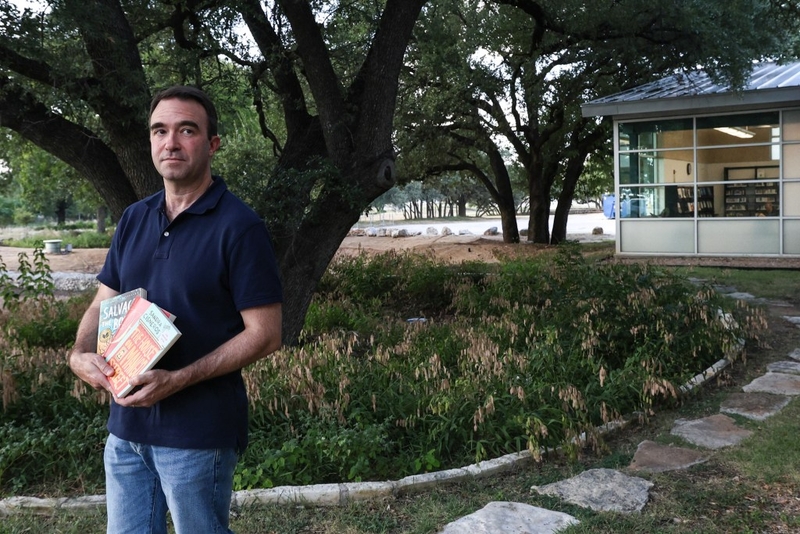
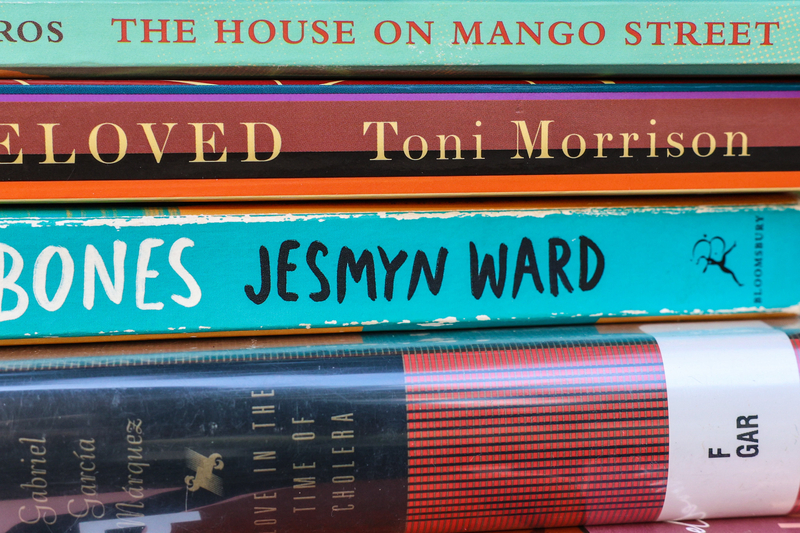
Frank Strong, an English teacher at a charter school in Austin, poses with books Lt. Gov. Dan Patrick recently urged Texas public schools to remove from libraries. on Aug. 31, 2026. (Jacob Lujan/The Texas Tribune)
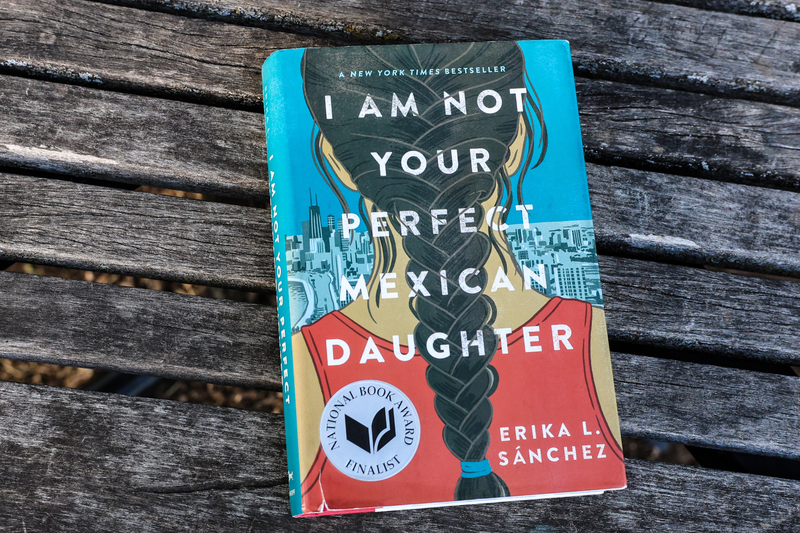
Seven years ago, Frank Strong stocked 20 copies of the book “I Am Not Your Perfect Mexican Daughter” in his classroom library.
Then, one by one, the coming-of-age novel about a Mexican immigrant girl started disappearing from his shelves. Just two remain, and it makes him chuckle.
It’s a sign, he said, that Erika Sánchez’s book about grief, loss and young love resonates so much with his students that they keep it.
“This happens when you’re a teacher,” said Strong, who recently began his 12th year teaching English at an Austin charter school. “Students borrow the book. They get so attached to it. They can’t bear to return it. So you lose books and, to me, that’s a tax I’m willing to pay.”
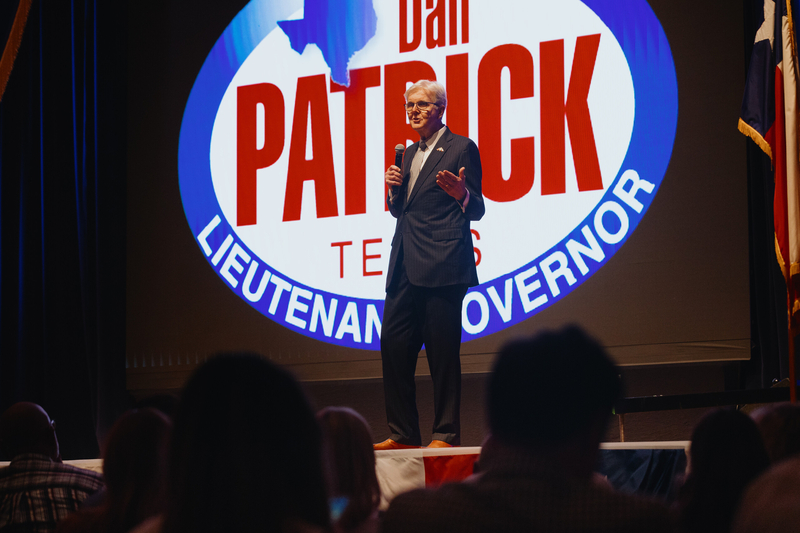
Now Strong worries that soon, he won’t be able to keep any copies of the beloved book in his classroom as it’s among nearly 2,200 books Lt. Gov. Dan Patrick recently urged schools to remove from libraries for being “vulgar.”
In August, Patrick pressured administrators to take down the materials from schools — referencing an extensive list compiled by Recover America, a Christian conservative activist group. He said the list is filled with books that were “filthy” and “so pornographic.”
But librarians and educators say rather than filtering out inappropriate content for students, this latest push on censoring the themes kids are exposed to and the constant barrage of book ban lists makes their job — fostering the joy of reading among kids — difficult.
Many are scared of buying new books and hesitant to encourage students to read certain novels, which for many is the very reason they decided to become librarians.
“When you put your finger on every single book in order to type it into a spreadsheet, you really do think, ‘Am I willing to lose my job over this particular book?’” Strong said. “And I think that is a real concern for teachers around the state.”
Some books on Recover America’s list have been part of Texas lessons for years, such as “Hatchet” by Gary Paulsen and “I Know Why the Caged Bird Sings” by Maya Angelou. Others are popular classics, such as “The Picture of Dorian Gray” by Oscar Wilde and “Flowers for Algernon” by Daniel Keyes. There are stories centered on historical events, such as “Night,” which is about the Holocaust.
But some are titles schools would not dare to carry, such as “Lolita” by Vladimir Nabokov and “Fifty Shades of Grey” by E. L. James, librarians said, leaving them wondering why they’re on the list.
Patrick’s call for tighter restrictions on what books students have access to at schools comes as conservative activists and lawmakers work to reshape students’ education experience in Texas by filtering out what they describe as progressive ideals while weaving in Christian-based lessons.
Earlier this summer, the State Board of Education overhauled required reading lists for public schools, mandating some Bible stories. Last year, new Texas laws required public schools to display the Ten Commandments in classrooms and to set up processes to challenge library books.
Libraries are increasingly targeted by some Republicans who want a bigger say on what titles are — and aren’t — within students’ reach. Various book ban lists have floated around, centering largely on queer novels and books about racism. Patrick’s threat to school districts is the latest chapter of a larger, years-long battle over what kids read.
Senate Bill 13 gives school boards the authority to approve and remove books based on complaints. Now librarians face a longer and more tedious process of cataloging and procuring books, they said.
To avoid conflict, some districts paused purchasing new books altogether, according to responses from public information requests by Carolyn Foote, who co-founded Texas FReadom Fighters, a grassroots group of librarians from across the state who fend off misinformation about their profession.
Foote reached out to nearly a dozen school districts across the state to see what effect the new state law has had on the number of books purchases they have made.
Lubbock ISD, for example, did not make any book orders from August 2025 to February 2026, according to a copy of the district’s response to Foote’s public information request that she provided to the Tribune. School officials noted the pause was “because of the implementation of SB 13.”
The risks are just too high, librarians said.
Foote co-founded Texas FReadom Fighters five years ago when debates about book bans heated up, and she said there has never been a more important time to band together.
“It’s like librarians have become the whipping boy to stir up votes and elections and become the scapegoat for everything,” she said.
She pointed to Lubbock ISD as an example of how districts’ are tip-toeing around new law and being scrutinized.
The day before Patrick’s announcement, Lubbock’s chapter of the conservative group Turning Point USA held a news conference condemning the district for having books such as “Crank” by Ellen Hopkins and “Me and Earl and the Dying Girl” by Jesse Andrews, according to the Lubbock-Avalanche Journal. The school board later held a special meeting on books to address an appeal to remove the books they deem inappropriate for young adults.
During that meeting, Lubbock ISD Superintendent Kathy Rollo defended the books, specifically Andrews’ young adult novel about rekindling childhood friendships and dealing with a friend diagnosed with cancer. Rollo said it was deemed a “legacy book” by a local committee before the new law was passed last year. It was removed from the district’s elementary and middle schools but kept in high schools.
“This policy is based on current law, and parental rights and transparency are a dominant theme,” Rollo said.
Shirley Robinson, executive director of the Texas Library Association, said districts statewide have been inundated with similar appeals, consuming administrators’ time.
Some advocacy groups, she said, “file hundreds of book challenges in their libraries, so it’s really changed the climate of what it means to be a librarian in the state of Texas.”
Patrick, who is up for reelection in November, is pushing for a new law that would downgrade a school’s annual academic accountability ratings — which are largely based on how students perform on STAAR. Failing multiple years can prompt the state to seize control of a district.
“It’s the law, and we expect you to follow the law,” he said of SB 13. “So we’re coming for the books.”
Patrick insists that the move is not a ban as books are available elsewhere. However, he said tax dollars shouldn’t be spent on them for kids to access.
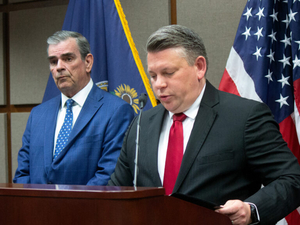
Standing next to Patrick during his news conference at the Texas Capitol announcing his policy push was Bonnie Wallace, Recover America’s legislative liaison.
The lieutenant governor says he does not have a list of books he wants schools to take down, but he referred to Recover America’s list as a guide for schools to abide by state law. Days before his announcement, Patrick discussed school libraries with Wallace for nearly half an hour on his podcast.
Patrick, in the episode, said the books are “the undermining of family values that’s going on in the left.”
Wallace agreed: “They hate God. They hate family. They hate men to be heads of the family.”
They called the books “horrific,” “so ugly” and “extremely sexually explicit.” Patrick said he would not let his two kids and eight grandkids read the materials.
But Strong and others said many of the books on the list aren’t lewd but appear to be included instead for political messaging.
“These were supposed to be dirty, filthy books, but a lot of them are very clearly not on there for their sexual content,” he said.
Similar to other conservatives’ list of objectionable books, Recover America’s list includes those exploring LGBTQ+ and race issues. But to some librarians’ surprise, it also includes popular books, such as “A Tree Grows in Brooklyn” by Betty Smith, and “The Poet X” by Elizabeth Acevedo.
Smith’s coming-of-age book, considered an American classic by GoodReads, follows a young girl’s struggle growing up with an alcoholic father. And the main character in Acevedo’s young adult novel faces having her body objectified while growing up in Harlem, so she channels her frustration in poetry.
Alcoholism and sexualization are tough issues, said Foote, a retired Central Texas librarian of 29 years. But they’re challenges many teenagers deal with.
Relating to characters in books not only helps students feel validated and seen, Foote said books often walk readers through difficult problems.
“Most young adult novels have a resolution at the end, a positive outcome,” Foote said. “The person survives the experience. They learn from it. They grow. If a student is looking up sexual assault on the internet, there’s no helpful character in there helping them.
“There’s no guide on the side going, ‘This will work out for you or your friend who experienced this,’” she continued. “And that’s the power of a book.”
She worries that the attacks on certain books and the added pressure on librarians, many will be reluctant to add new materials to shelves and, in worse cases, leave the profession.
“They’re hesitant about putting new titles on the shelf that explore difficult topics. They’re also hesitant to keep books on the shelf that explore difficult topics,” she said.
And buying books is only part of a librarian’s long list of responsibilities, Foote said. They also balance hosting multiple classes a day and teaching students about reading comprehension. In Texas, librarians are required to have a master’s degree and two years of teaching under their belt.
Matching kids to “the perfect book” is the most joyous part of the gig, she said. But the added protocols mean librarians spend less time talking to students about books.
“Instead, you’re spending hours and hours and hours, poring over these titles, making sure you’re complying with the law,” Foote said. “Then there’s another law, and there’s another law.”
Librarians specialize in pairing students with books they might enjoy. Even so, retired Mesquite ISD librarian Mary Woodward said, “We know that not every book is for every person.”
And that’s a conversation between librarians, students and their parents — not politicians, she added.
“You have elected officials that seem to imply that you are putting things in kids’ hands that are bad for them, that are going to be harmful,” said Woodward, who was president of the Texas Library Association in 2022 and 2023. “You know, nobody went into this profession to harm kids. That is not what we’re about, and that makes librarians afraid to do their job.”
Strong in Austin has invested hundreds of dollars from his own pocket to stock his classroom’s library as his campus does not have a library.
His school is composed of mostly immigrant students, and he said he’s seen the importance of students being able to see themselves — and their experiences — in books and characters.
When a book sparks interest among students, “You can just see their eyes opening, and you can see the discussion become more lively, and you can see the writing become an easier task,” he said. “To me, that’s one of my favorite things that happens in the classroom. And I do think that a lot of developments in Texas right now are making that harder.”
Disclosure: Texas Library Association has been a financial supporter of The Texas Tribune within the past five years. The Texas Tribune is a nonprofit, nonpartisan news organization that is funded in part by donations from members, foundations and corporate sponsors. Financial supporters play no role in our journalism. Find a complete list of them and more information about our financial and disclosure policies here.
Austin, TX