SC GOP bars 3 candidates from primary ballot, leaving 9 to compete for US Senate
Jul 29, 2026 | 4:00 am ET
Description
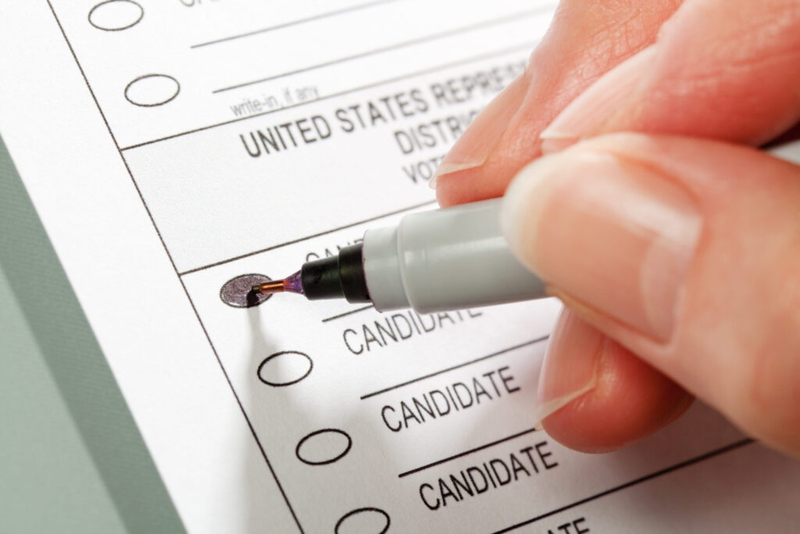
After the filing deadline ended at noon Tuesday, July 28, 2026, the South Carolina Republican Party decertified three of the 12 candidates who turned in paperwork to run for the Aug. 11 special GOP primary for U.S. Senate. (Stock photo by Yin Yang/Getty Images)
COLUMBIA — The South Carolina Republican Party on Tuesday decertified three candidates vying to replace the late Lindsey Graham as the GOP nominee, shrinking the Aug. 11 ballot to nine candidates.
One candidate didn’t qualify because he doesn’t live in the state, said party spokesperson Grace Short.
Clark Neilson used his Charlotte, North Carolina, address in his filing paperwork. He plans to build a house on land he owns in Charleston County, The State newspaper reported.
But under state GOP rules, a candidate must be a “bona fide resident of the State” at the time of filing and a registered South Carolina voter. He’s neither, Short said.
The other two candidates deemed ineligible just ran in statewide GOP primaries: Danny Ford II, who lost a GOP runoff June 23 for state agriculture commissioner; and Darius Mitchell, a self-described “hip-hop Republican” who placed fifth June 9 among challengers trying to unseat Graham.
Their ineligibility is due to a new rule adopted at the party’s convention in June. Starting July 1, anyone wanting to run as a Republican must have voted in at least two of the last three statewide GOP primaries.
Ford, the son of legendary Clemson coach Danny Ford, said he knew the party was “looking to keep Democrats out” of GOP primaries. He acknowledges not voting as often as he should, saying he was busy with family and work. He thought he could get a waiver. When he did vote, he participated in Republican primaries, he said.
“I’ve never voted Democrat,” Ford told the SC Daily Gazette. “It’s very, very odd.”
In the agriculture commissioner’s race, “I thought I did a great job representing the state and party,” he said, noting he received more than 160,000 votes June 9. “It’s a sad day when an American taxpayer can’t run for office.”
He was among two candidates who signed up to run for U.S. Senate in the final hours of filing.
After losing his bid for agriculture commissioner, the Upstate farmer decided the state’s largest industry — agribusiness — needs an advocate on Capitol Hill.
Bills to close SC’s party primaries stall amid GOP ‘civil war’
“I know South Carolina’s No. 1 industry better than anyone in the race,” Ford said hours before he was barred from the ballot. “Food security is national security.”
In South Carolina, voters don’t register by party. They can vote in either the Democratic or GOP primary, just not in both. And they can’t cross over to the other party in a runoff.
The Republican Party has unsuccessfully pushed for years for a closed primary system. The party sued earlier this month in an effort to accomplish in federal court what it hasn’t through the GOP-controlled state Legislature. The two-out-of-three rule was part of legislation the party backed that never made it out of subcommittee this year.
As for the Aug. 11 primary, the state Election Commission decided it qualifies as the same election cycle as the June contests, so no crossover voting is allowed. People who voted in the Democratic primaries can’t participate in the special GOP primary to replace Graham on November ballots.
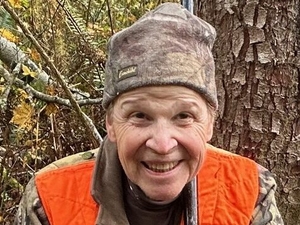
The other candidate who filed Tuesday, Glenda Gail Parker of Myrtle Beach, moved to South Carolina in August 2024. But Short said she met the two-out-of-three voting rule through another state’s elections.
Parker, who retired from the Air Force Reserve in 2002 after 24 years, told the Gazette her campaign is about “positive, commonsense solutions.” She highlights working with administrations of both parties over her nearly four decades total as a federal employee.
A self-described conservative independent who leans Republican, Parker said investing in transportation is a key part of her platform. She wants to see high-speed rail along the Interstate 95 corridor in South Carolina and light rail service in the Myrtle Beach region, according to a release about her campaign.
She touts rail as a way to reduce traffic congestion and boost safety in the tourism-dependent Grand Strand. That would be a different approach than the still nonexistent Interstate 73, which has been on the wish list of Myrtle Beach-area officials for decades.
2 SC congressmen launch bids for US Senate, as Darline Graham says ‘I’m in’
She’s run unsuccessfully for multiple offices in Virginia, including U.S. Senate in 2006 and 2008 as an independent.
In this Senate race, she joins a field that includes Graham’s sister, a former governor, two current congressmen, a former mayor, and another candidate who tried to unseat Lindsey Graham in last month’s GOP primary.
Candidates have little time to campaign before voters make their choice. Early voting begins Aug. 5 for the primary six days later.
A runoff is expected. If no candidate receives more than 50% of the vote, the top two vote-getters will face off Aug. 25 to determine the GOP nominee.
Candidates already running TV ads include former Gov. Mark Sanford, who briefly jumped into the 1st District race earlier this year to regain the U.S. House seat he lost in 2018; U.S. Rep. Ralph Norman, who lost his bid for governor in last month’s GOP primary; and Upstate businessman Mark Lynch, who placed a distant second to Graham among his five challengers June 9.
U.S. Rep. Russell Fry touts endorsements from 40 Statehouse Republicans. Norman’s endorsers include U.S. Rep. Nancy Mace — who also lost her bid for governor last month — and members of the uber-conservative Freedom Caucus he helped launch in the state House. Both Fry and Norman are former legislators.
Newly sworn-in U.S. Sen. Darline Graham, who was appointed to fulfill her brother’s term that ends in January, entered the race for the next six-year term at the urging of President Donald Trump. But she’s paused her campaign until Thursday for her brother’s funeral services in Washington, D.C., and Columbia. Besides getting Trump’s full endorsement, her supporters include U.S. Rep. William Timmons.
Critics of Darline Graham’s decision to run have questioned whether she meets the state GOP’s new two-out-of-three rule. The state party says she does. Prior to last month’s GOP contests, she voted in a 2024 GOP primary runoff. That counts for the statewide primary election cycle. No waiver was required, Short said.
Others in the race are Duke Bukner, a Walterboro attorney who’s twice unsuccessfully challenged U.S. Rep. Jim Clyburn; former Myrtle Beach Mayor Mark McBride, and Lexington businessman Sam Shepherd.
The winner of next month’s contests will face Democrat Annie Andrews, a Lowcountry pediatrician, in November.
Columbia