Rural Hawaiʻi Island Candidates Want More Say — And Resources
Jun 22, 2026 | 6:01 am ET
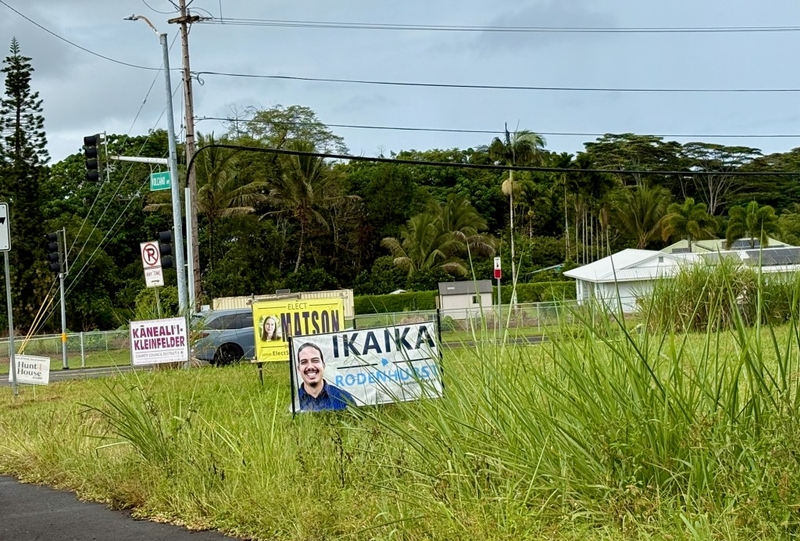
Description
Photo courtesy of Honolulu Civil Beat
Three of the most rural districts on Hawaiʻi island will be changing hands this November, as County Council members in South Kona, Kaʻū, and Puna term out. The candidates, most new to politics, are motivated to change the districts where they live — and to bring more attention to the raft of environmental challenges they’re facing.
As some of the most affordable places to live in Hawaiʻi County, the districts on the southern end of the island are attracting more residents every year. Puna is among the fastest growing areas in the state; some estimate its population could rise from 45,000 in 2020 to 75,000 by 2030. Ocean View Estates is also growing, and one of several places on the island that function like bedroom communities for the distant Kohala coast resorts.
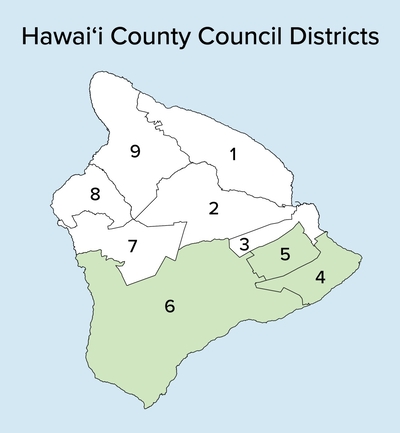
These districts can be harsh places to live now — and the candidates say they’re likely to need even more support from the county and the state as the climate warms. Although there is ample land, and many residents want to farm, access to water is challenging and getting crops to market can be difficult. Invasive plants push up against the highway. Old tires, abandoned cars and other garbage piles up due to a lack of sanitation services. And while some tourists — and their funds — make it out to these areas, their numbers have shrunk since improvements to Saddle Road made it easier to travel directly from Kona to Hilo.
“We find ourselves in these places, because they're the last places that we can actually hold onto in Hawaiʻi,” said Zed Ka'apana Aki, a resident of Ocean View who is running in District 6. “This is the end of the road, and we can't keep getting pushed out. We face all these greater disparities because of our remoteness, our rurality.”
All the candidates Civil Beat spoke with want to see more investment in their communities. Below are break outs of their thoughts on several environmental issues at play in these rural districts.
To learn more about the candidates, read their answers to our Q&As, in our 2026 Elections Guide, which start today with District 6.
Local Agriculture
Most of the rural candidates put a strong emphasis on the need to invest in local, sustainable agriculture in Kaʻū, South Kona and Puna.
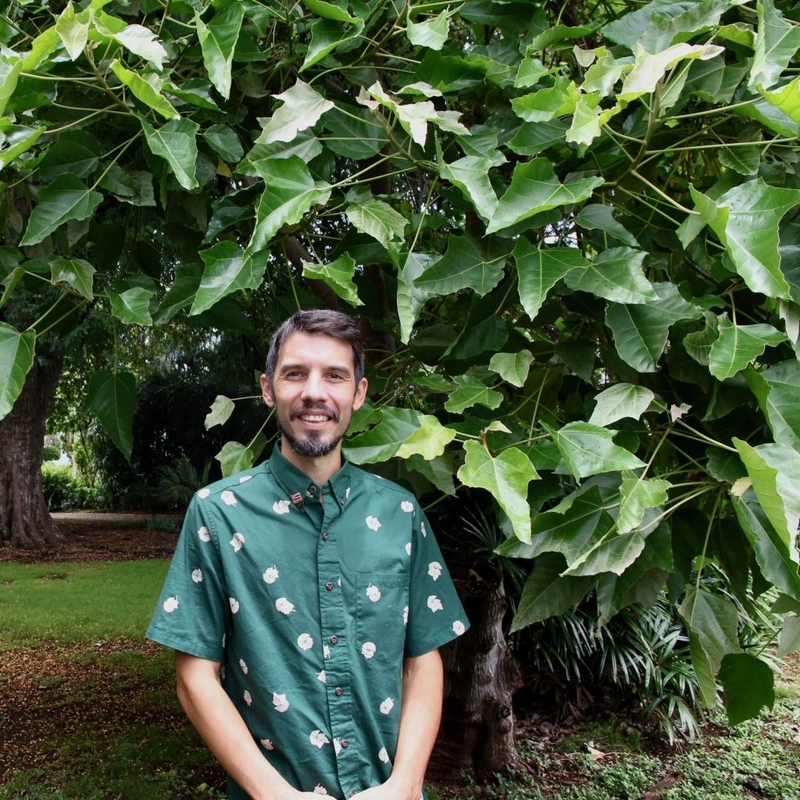
Justin Calenas, also running in District 6, is a farmer who along with his wife grows more than 80 different fruits and vegetables and herbs on an organic operation in Nāʻālehu. He said caring for the environment goes hand in hand with agriculture. He wants to see more support for farmers like him in producing and distributing food to island residents.
“My wife and I have to have full-time jobs in order to keep the farm going, and I know that's true for a lot of farmers on the island,” he said.
Canelas finds the fact that the county doesn't have a department of agriculture or a centralized database to track who is growing what and where “baffling.” He wants to see the county help small-scale operations become profitable via more distribution infrastructure and a food hub, such as the high-profile one being built on Oʻahu, that would allow them to produce value-added, shelf-stable products like jam, herbal teas and salsa.
“Why is the state doing that on Oʻahu?” he asked. “The Big Island is where most of the food is grown.”
As the operations director for Recycle Hawaiʻi and a member of the county’s Environment Management Commission, Canelas has developed a plan to increase composting on the island and sees it as key to supporting sustainable farmers.
“At any time the global economy could shut down and fertilizer could stop coming, we could just make our own fertilizer by composting all our food waste, which is the biggest contributor to our landfill — where it’s incorrectly decomposing and carrying methane — then you’d have set up the food systems to actually process the food and feed the people,” he said. “For me it's all interconnected.”
Aki is also a part-time farmer who spent 20 years working as a policy analyst for the Office of Hawaiian Affairs and other groups on Oʻahu before moving to Ocean View. He’s growing 3 acres of ʻulu there, in part as a model for others trying to grow food on top of a relatively recent lava flow.
“I guess the future of agriculture really depends on figuring out how to turn a lava desert into bountiful ag, and I'm trying to figure out the riddle right now,” he said, adding that there are challenges because breaking through a thick layer of rock and bringing in mulch is expensive, and water in Ocean View isn’t exactly bountiful.
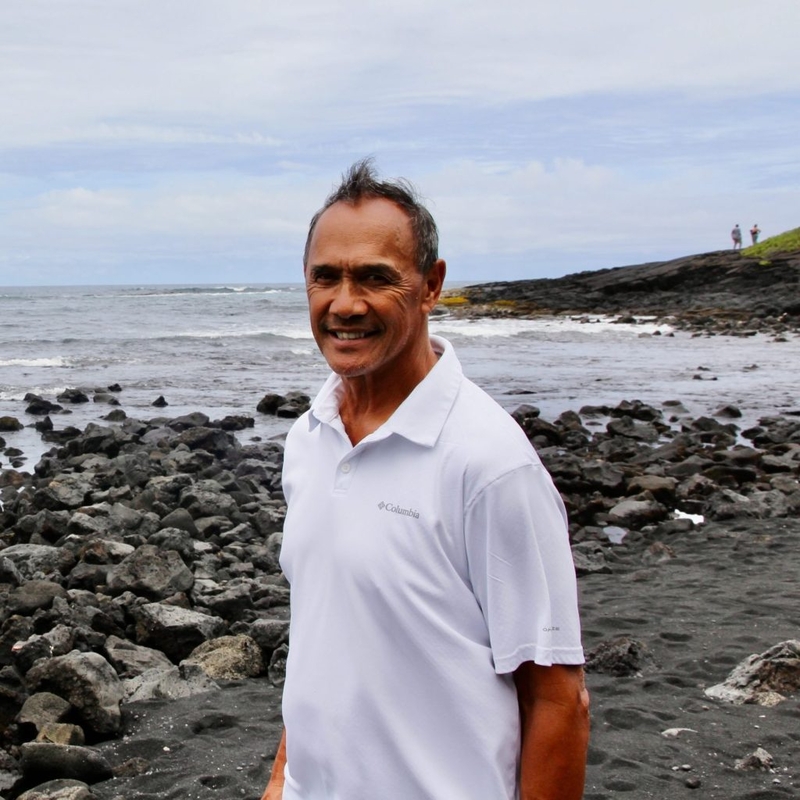
Guy Enriques, a volleyball coach and fisherman who is running in District 6 for a second time, having served from 2008 to 2010, said that boosting distribution and agritourism is at the center of his plan for agriculture.
“I want to create a committee that helps us consolidate and sell all of our stuff — from fishermen, farmers, ranchers, fruit, honey, flowers,” and get it to market, he said. “If I catch ono, and there's an app that we put them on, ‘Hey, got 10 ono in Kaʻū, who wants it?’ You need more ways to get to market, more ways for people to know that the food's available.”
District 6 challenger Jason Masters, a trained urban planner who grew up in Pāhala and now lives in Waiʻōhinu, saw Kaʻū undergo the transition away from sugarcane in his childhood and says he also wants to see an approach that centers local agriculture for tourists as well as local people.
“Places like Kaʻū and Miloliʻi were kind of the last strongholds of old Hawaiʻi. It'd be nice to be able to bring back a real place-based approach through community planning,” said Masters, who was chairperson of the action committee that created the Kaʻū community development plan. He sees value-added agriculture as key to that plan: “I’d rather see people make macadamia oil than sell macnuts to a large company for a few pennies a pound, for instance.”
Lloyd Enriquez, who is running in District 4, is concerned about how development in Puna could put agricultural land in jeopardy. His family has lost multiple homes to the volcano, but he says even after a lava flow or a flood, “the land is still there,” whereas “once we start building more and more homes, or we start commercializing more in that way, we can never get that land back.”
And of course agriculture, like so much else, is inexorably tied to water.
Water
The agricultural rural subdivisions in Puna could be producing much more food if the residents had reliable access to county water and didn’t have to rely on catchment tanks, according to Shannon Matson, who is running in District 5.
“We're dependent on the seasons and we’re experiencing longer dry periods and wetter wet periods,” she said. “It's really challenging for farmers to plan for that, and nobody can afford to bring in the amount of water they would need for reliable livestock or crop production, even when we live on these 3-acre, 5-acre, 20-acre parcels.”
Matson added that keeping the water in the tanks can also be a significant issue. “We don't get guidance from the county and the state, because I don't even think they want to wade into it,” she said. “But we could use guidance on safety, free testing opportunities to check our water, and free classes on how to maintain our catchment tanks properly.”
Water was front and center for many of the candidates.
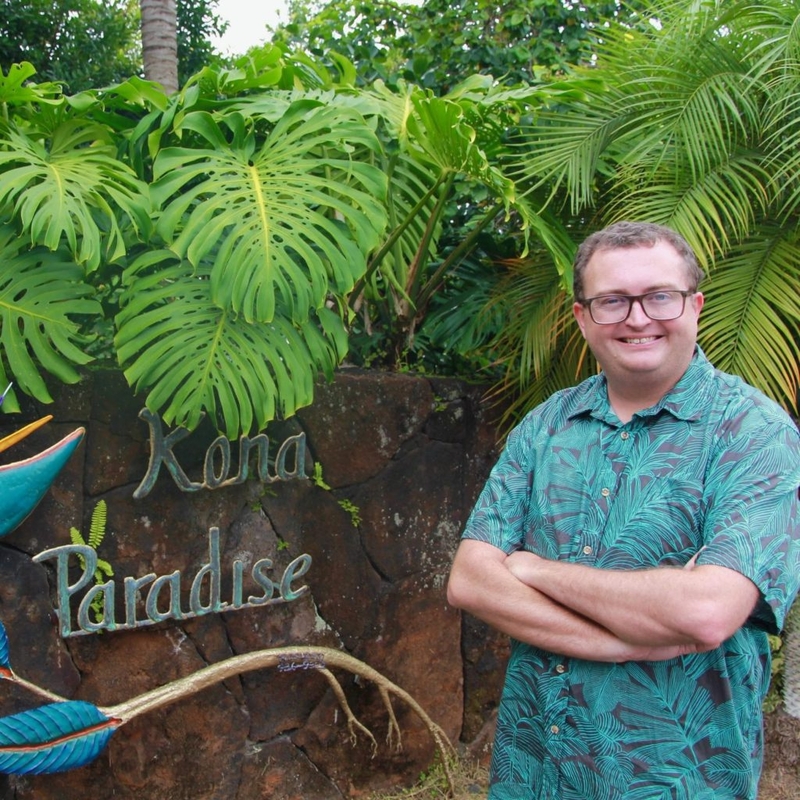
Kyle Kepana Jones, a substitute teacher, former congressional intern for Sen. Brian Schatz and second-time candidate in District 6, just saw a number of water catchment tanks in his neighborhood, Kona Paradise, get destroyed in the recent earthquake and he also wants to address the lack of water for rural residents.
Enriquez wants to see the groundwater in Puna monitored much more closely. “There really isn't much data on it, but what we do know is common sense: we need to maintain our groundwater,” he said.
Zed Aki said the county water spigots in Ocean View — the only source of water aside from water tanks, which often run dry — is “usually just jam-packed with folks.” He worries about kūpuna, and others who aren’t able to carry heavy jugs on a regular basis. “Are they getting adequate water?” he asked.
Aki also wants the county to put more focus on helping protect the water supply there from volcanic pollution. “The sulfur, the gasses, they just dump right on top of us all the time, and you know, these cause major health issues, especially over the long-term,” he said.
If Canelas is elected, he said he hopes to push for more water re-use in the county. It would be a sizable investment up front, but he thinks having more water — especially non-potable water.
“There is a need for, for R2 water, to water grass and ornamentals, and things that you know aren't going in our food supply,” he said, adding that doing so would preserve other water for drinking and irrigation.
Sustainable Development
Development on the island has often happened without community input, a fact that has led many residents to take a hard-line against it, despite what many see as a crippling lack of critical infrastructure.
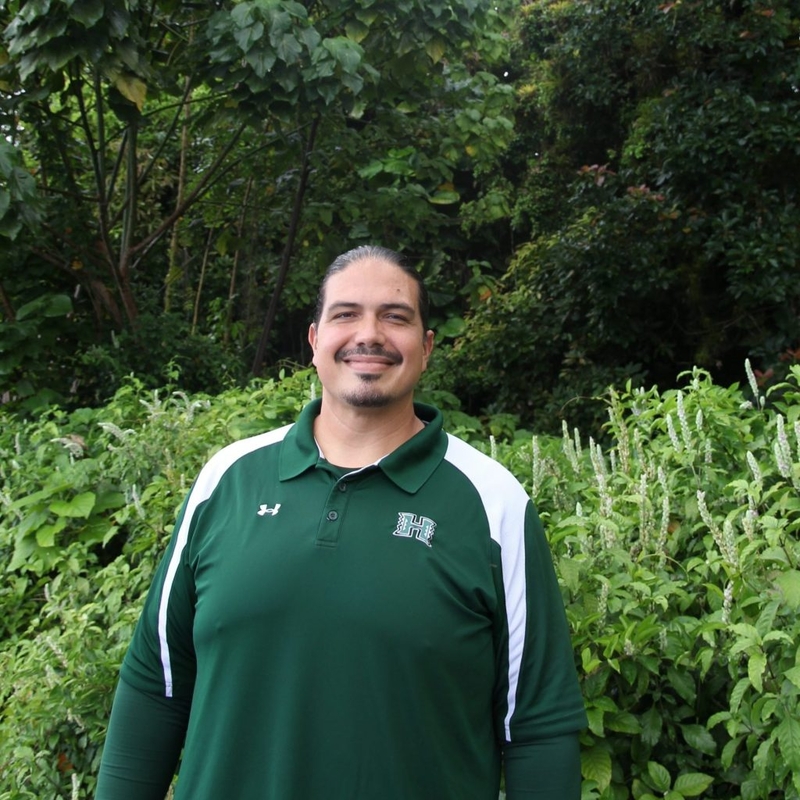
Ikaika Rodenhurst, a civil engineer living in Puna who is running in District 5 for the second time, said one of the questions he would take on as a member of the County Council is, “How do we address the needs of our people, for infrastructure, for power, roads, water, wastewater, and yet work with our environment and take care of it and preserve it?”
Rodenhurst, who Like Aki and Enriquez, is Native Hawaiʻian, says “It's very important we have Kanaka in leadership roles making decisions that will impact us today and can provide a future for our keiki, and seven generations forward.”
He pointed to the delicate balancing act of “protecting our culture and our heritage, which is tied so directly with the ʻāina, and at the same time address these needs that we see every day.”
Aki also sees development as an unavoidable part of living in a place with a growing population. “So many people say we have to “keep Kaʻū country” and it makes sense, but why don't we have any jobs here? I think it's hard to even accept the fact that you have to build infrastructure for jobs,” he said.
Enriques, who has publicly opposed the development of a resort at Punaluʻu Black Sand Beach, where his family runs a T-shirt stand, says he wants to see a different kind of investment in Kaʻū.
“I want to push very hard for a Billy Kenoi outdoor play court,” he said. The former mayor pledged to put sports complexes in all the districts but it didn’t ever happen in District 6. “That is my big goal. South Kona really needs one for the youth because right now they have to go to downtown Kona to compete in sports,” Enriques said.
Localizing youth sports might also help cut down on driving, a significant source of emissions on the island.
Geothermal Energy
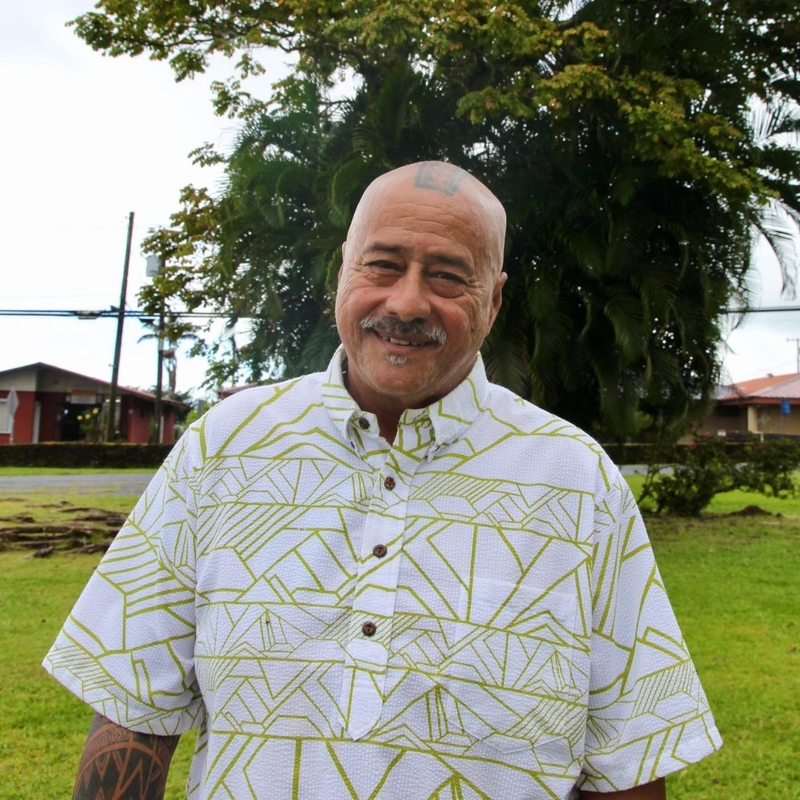
With multiple state agencies hoping to expand geothermal power production in Puna, and ongoing opposition from the Hawaiian community, most council candidates are reluctant to take a side. But several agreed that getting off imported oil is a priority.
“Other island nations use geothermal, and it works well. Is there a way we can make it work well here?” Rodenhurst asked. “That conversation needs to be had with all the different agencies and organizations that are involved with that. We need to have an honest dialogue.”
Enriquez said he was, “getting input from everyone that lives in my area” but that he still didn’t have enough information to weigh in on one side or the other. “I want to base my decisions on facts, and I’m trying to keep an open mind,” he said.
Jones, however, was unequivocal in support of expanding the program. “I think it's the cleanest way to make power, because right now about 60% of our energy comes from fossil fuels on this island,” he said.
Disaster Response and Prevention
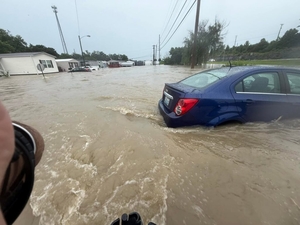
In the wake of the recent floods, several candidates have pledged to prevent future flooding and other disasters.
Enriques said he wanted to see an engineer inspect the areas above where the flooding took place in South Kona and Kaʻū to better understand the source. Even when it’s not a big storm, he said, the roads in Kaʻū can still get blocked fairly often in the rainy season — causing people to miss work, drive long distances and even sometimes sleep on the side of the road. Enriques worries about medical emergencies in those moments, and wants to see the county find a solution.
“It's probably best to go up there when it's really stormy, but I think with some educated guesses you can figure out where the water is coming from,” he said. The loss of native forest and other vegetation could be to blame, or “it could be something as simple as a clogged gulch, where trees get blocked up and it diverts the water.”
Masters also wants to see more transparency about what’s taking place on private land, high above the island’s residential zones.
“People were doing stuff up mauka, and we don't really know what it is,” he said. “We don't know if they're changing the water flow or the stream beds, if they’re clear-cutting or bulldozing acres upon acres. One way to create jobs is to have people from the community doing some kind of oversight up there.”
Invasive Plants
Jones is campaigning in part on better controls of invasive plants and animals, which have had a significant impact on agriculture on Hawaiʻi island, not to mention residents’ more immediate quality of life.
He points to the fact that the county no longer provides citric acid to those looking to control noisy coqui frogs in their own yards. “They got rid of that program because they thought it was just too big of a problem. I don't really like that approach,” Jones said.
Waste
All the rural candidates interviewed by Civil Beat were in agreement that Hawaiʻi island residents would need significant help from the county — as well as the state and federal government — to convert their cesspools to septic systems by 2050. Most want to see coastal areas prioritized first and inland rural areas converted after that.
“It's definitely needed to protect our environment,” Rodenhurst said. “But how do we do that in a way that doesn't put families at risk of other issues and hazards? I mean, we can't afford to house our families, and now we’ve got to pay to house our shit? It's bananas.”
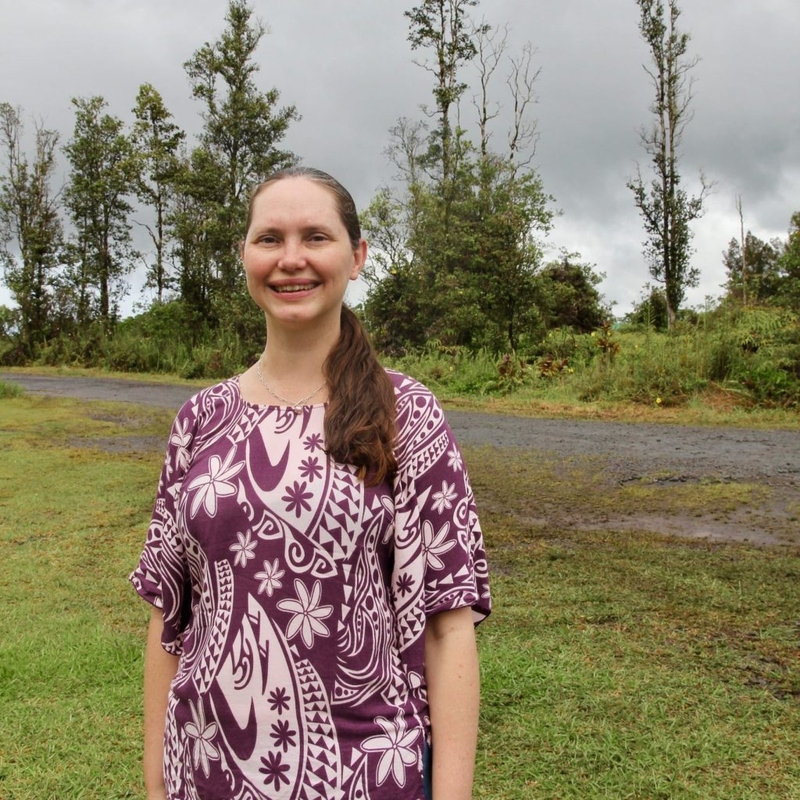
Matson is also worried about the cost to homeowners and landlords, and sees home sales as low-hanging fruit. “It kind of needs to be something that’s baked in when a home is sold, maybe the buyer and seller each pay half of the cost, or something, on all new sales,” she said.
Other forms of waste management are also on candidates' radar as a series of problems that need solutions.
“We're doing the bare minimum on recycling and composting,” Matson said. “There's a variety of contracts in place, and things that have fallen apart over the years, but we really need a champion to lift us up in that regard, because we live on an island, and there's only so much space we have in the landfill.”
She also wants to see regular collections of toxic and hazardous household waste, including old tires — which have been a problem in rural areas of the island for decades.
At the core of many of these issues are questions about what responsibility the county has for people in rural areas, as the environment in these districts becomes increasingly challenging.
Part of the challenge is that the areas are also often home to marginally housed people struggling to make ends meet. In Ocean View the official population count is 5,000, but many people are transient, making it difficult to get an accurate count, according to Aki. And Matson said a lack of official post office boxes in Puna is responsible for a similar challenge in her district.
“So many county officials have told our residents that we're just not a priority, and I don't see how that can be right,” Aki said. “We're a vulnerable, struggling population. We're a growing population. With the size of us — we're gonna be an incredible burden if somebody doesn't address our issues.”
In Puna, Matson said, “a lot of these things just become a way of life in our rural communities, but they really add up to a huge inequity that there really is no way to quantify.”
Civil Beat’s coverage of climate change and the environment is supported by The Healy Foundation, the Marisla Fund of the Hawai‘i Community Foundation and the Frost Family Foundation, its coverage of environmental issues on Hawaiʻi island is supported in part by a grant from the Dorrance Family Foundation and Hawai‘i Grown" is funded in part by grants from the Stupski Foundation, Ulupono Fund at the Hawai‘i Community Foundation and the Frost Family Foundation.
Honolulu, HI