Rural areas of the state have few school options
Jun 22, 2026 | 4:30 am ET
Description
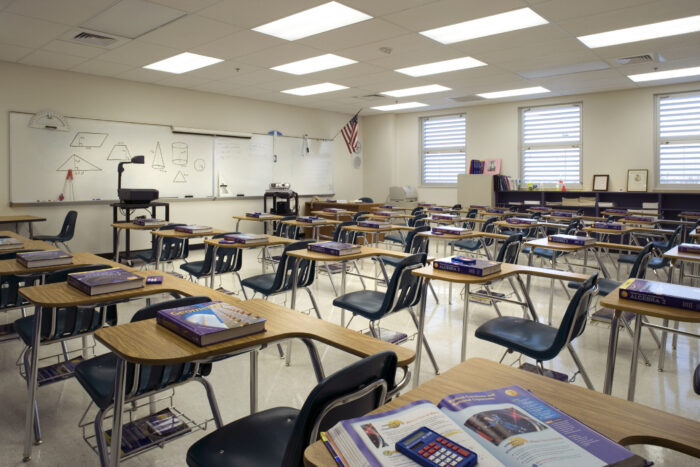
The impact of school choice on the state’s rural education has raised alarm not only among supporters of public schools but supporters of school choice as well, including the Indiana Chamber of Commerce. (Getty Images)
Indiana’s school choice program leaves its nearly 300,000 rural public school students with fewer options and fewer resources while funding the private education of others. More than one in four Indiana school students, or 28%, reside in rural areas.
A recent analysis of each of Indiana’s 82 rural counties found that only eight, or fewer than 10%, have a charter or non-religious private school to attend. Families in other rural counties — such as Brown, Crawford, Newton, Ohio and Union – have no alternatives at all.
Standing charter schools tend not to open in rural areas because low student enrollment fails to bring in sufficient revenue and geographical isolation prevents cost-sharing among schools. Indiana’s judiciary defines as rural any county with a total population less than 40,000, a density of less than 100 people per square mile, and a largest city less than 10,000.
The impact of school choice on the state’s rural education has raised alarm not only among supporters of public schools but supporters of school choice as well, including the Indiana Chamber of Commerce.
“As choice expands, we must be honest about the challenges facing many smaller and rural school districts. Our focus should remain on ensuring every student – no matter their ZIP code – has access to a high-quality education that prepares them for success and economic prosperity,” Indiana Chamber President Vanessa Green Sinders wrote in an email.
In some instances where declining enrollment has forced the closure of rural public schools, local parents have opened their own charter schools. Under state law, public schools must sell their closed and unused facilities to charter schools for just a dollar. Charter schools also have the economic advantage of paying lower salaries and providing fewer benefits to teachers. A request to the Indiana Department of Education for data on how many rural public schools in the state have closed in the last five years and how many were replaced by charter schools went unanswered.
Students in Indiana’s smallest schools struggle as enrollment continues to decline
“Competition makes you improve. I don’t think anybody would say that’s a bad thing,” said Chris Lagoni, executive director of the Indiana Small and Rural Schools Association. “We just ask that there be a level playing field” for all schools, public and private.
Seventy-two rural counties offer religious school alternatives, with numbers ranging from a single school in counties like Fulton and Switzerland to as many as 10 in LaGrange where there is a large Amish community. The state’s universal voucher system will pick up most of the tab for those students and other non-public schools, adding $492 million to the state’s school expenditures.
Vouchers provide either 90% of a student’s local public school funding or the full amount of their private school tuition and fees, whichever is less. While the average award in 2024-25 was $6,536, participating private schools reported an average tuition of $8,369. Of the 76,000 students receiving vouchers, only about 28% received full support.
Indiana public schools are primarily state funded. In the 2022–2023 school year, the most recent year of available data, about 57% of Indiana public school funding came from the state. Another 30%was generated locally and the federal government kicked in the remaining 13%. All told, Indiana public schools received $16.7 billion in funds, or $16,200 per student. Indiana ranks 37th of 50 states in education spending per pupil, according to the Education Data Initiative.
By funding its schools per pupil, Indiana’s strict “money follows the student” policy is especially hard on rural districts when their enrollment declines. Losing just a few students to private schools or local population decline can dramatically impact their school budgets. That’s because rural schools usually serve fewer students to begin with, reducing their economies of scale and increasing the cost of instruction per pupil.
As a fixed cost, for instance, schools must still pay one teacher’s salary whether a grade level has 10 or 15 students. Other fixed costs include transportation, building maintenance, and administrative staff. That leaves staff and educational programs such as extracurricular activities, art and music classes, and after-school programs vulnerable to cuts.
Meanwhile, with few means to increase their local revenue, traditional rural public school districts are being pinched as the state’s school choice program expands. If 2022–23 voucher funds were returned to the public education funding pool, South Adams Community Schools would have received nearly $600,000 in additional funding for that year alone, according to an analysis by the left-leaning Center for American Progress, a public policy research organization in Washington, DC. The district’s annual budget is about $22 million for 1,312 students.
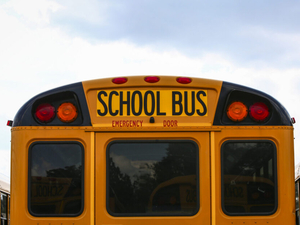
Budget constraints last year forced South Adams to cut two bus routes, five instructional assistants and two custodians, said Superintendent Michelle Clouser-Penrod.
As the cost for student and teacher supplies continue to rise, she said the parent-teacher organization has stepped up its fundraising efforts to make sure “we have a fully stocked supply closet” as well as “providing many other supports for students and teachers as needed.” Half the students in the district come from families living below the poverty line, she added.
We may be forced to increase class sizes in the future if costs continue to rise and funding continues to be inadequate.
The district’s 1,312 students have no alternative except remote learning through a virtual charter school. When students unhappy with virtual schooling return to the district during the same school year, South Adams often loses the state money that would have followed them, Clouser-Penrod said.
“We work very hard to be conservative and live within our means,” she said via email, “but costs of operating schools continue to rise. Property casualty insurance has gone from approximately $100,000 in 2021 to $217,000 in 2025. Health insurance and utility costs also have a tremendous impact on budgets.”
To make up the difference in state funding, rural districts can raise local tax revenues through voter referendums, but success is not guaranteed. Farms mean fewer property owners must take on a larger tax burden that can’t be offset by the value added to their homes through better schools.
“The cost benefit for the voters is not there,” Lagoni said. And unlike wealthy suburban districts, he noted, rural towns and cities seldom have the strong industrial and commercial property tax base to levy additional operating funds.
Starting this coming school year, Indiana families will be able to qualify for private and religious school vouchers regardless of their income, making Indiana one of the few states in the country to reimburse parents for religious and private school tuition regardless of the family’s wealth.
“I think people want their tax dollars to go to their public schools to support public school students, and I think that’s especially true in rural communities where they rely so heavily on public schools as an important hub in their community,” said Paige Shoemaker DeMio, author of the Center for American Progress’s 2025 report “How the School Choice Agenda Harms Rural Students.”
A 2025 Harvard University study found that rural adults were the least likely to support school vouchers.
Clouser-Penrod said in an email that South Adams is already planning cuts for 2027: “We are looking at all of our utility expenses and (have) begun deeper monitoring and working with a team to determine ways to reduce costs.”
The district is also discussing offering a retirement incentive for higher-salaried veteran teachers next year, she said.
“We may be forced to increase class sizes in the future if costs continue to rise and funding continues to be inadequate.”
Indianapolis, IN