Rising prices may be here to stay, but poverty doesn’t have to be
Oct 08, 2026 | 5:00 am ET

Description
The bipartisan Gateway to Careers Act, which has been referred to the U.S. Senate HELP Committee, would help expand access to workforce training programs and ultimately help families make ends meet. (Getty Images)
For millions of Americans living in poverty, rising prices are a threat to their wellbeing and the wellbeing of our communities. These prices often result in painful choices — like rationing groceries, skipping meals, or not sending your children to extracurricular activities. Those choices are everywhere these days, with one recent poll showing that half of all Americans are struggling to afford gas and groceries.
The Padua program, an initiative of Catholic Charities Fort Worth, uses holistic, intensive case management services to address barriers faced by families in poverty. It’s launching a new site in Chicago this fall.
One participant described the hardships this way: “I’m only buying a small amount of food at the time. I am rationing items — things like milk. I stopped buying bacon altogether. It is so expensive now.” Another said: “I’ve had to hunt down the lowest gas prices near me more than ever to just afford the gas.”
Amid these challenging circumstances, researchers, service providers, and policymakers all play a critical role in expanding economic opportunity. We have evidence that can guide us, and we need to use it. In drawing on what works, we can head off an influx of families slipping into poverty and instead create the conditions for more families to thrive.
When prices rise, they rarely come back down. Instead, they simply stop rising as fast. While there may be some volatility among individual items — everything from gas to raspberries to electricity — once prices are up, they generally stay up. Given this, it’s critical to target our efforts toward poverty intervention, so fewer struggle when prices soar.
At the Wilson Sheehan Lab for Economic Opportunities at Notre Dame, we believe rigorous research in close partnership with service providers — like the Padua program — can identify the innovative, effective, and scalable programs and policies that help people move permanently out of poverty. Through our work, we’ve identified solutions that policymakers should consider in this economic moment. They should lean on our evidence so that fewer Americans are faced with the painful choices that come with living in poverty.
Inside Meta’s Indianapolis bootcamp for data center technicians
For example, we studied the Padua program and found it significantly improved labor market outcomes. It was particularly effective for those who were unemployed at enrollment. For this group, Padua led to a 67% increase in the probability of working full-time and 46% increase in monthly earnings. Those who lacked stable housing before enrolling saw a 64% increase in housing stability. Due to its success, Padua has been replicating nationally, including to Indiana, Michigan and, starting this fall, Illinois.
We also studied the Goodwill Excel Center, a tuition-free, charter high school in Indianapolis for adults. Goodwill of Central and Southern Indiana noticed that most of its job training program clients lacked a high school diploma. Building this school was a direct response to that — it offers flexible schedules, free on-site childcare, transportation assistance, and a life coach. Graduates saw a nearly 40% increase in earnings within five years — roughly $80,000 more in their pockets in their lifetime. The program has expanded to 12 states and Washington, D.C.
Those are just two examples of replicable, rigorously researched interventions that policymakers can consider as they work to cope with the impacts of rising prices on their constituents.
And fortunately, some are already making strong steps forward. Indiana U.S. Senator Todd Young, Maggie Hassan (D-N.H.), Susan Collins (R-Maine), and Tim Kaine (D-Va.) reintroduced legislation to help Americans advance in the workforce.
The bipartisan Gateway to Careers Act, which has been referred to the U.S. Senate HELP Committee, would help expand access to workforce training programs, which we know is one avenue to help families better make ends meet. It would provide grants to support partnerships between community or technical colleges and workforce development partners — like the promising work happening at Goodwill Excel Center and Catholic Charities Fort Worth.
Rising prices may be here to stay, but poverty doesn’t have to be. By investing in proven, scalable interventions — whether that means providing holistic, intensive case management services or offering flexible adult education to boost lifetime earnings — we can shift from managing the symptoms of financial stress to solving them.
There is evidence to help us do this. Our leaders should look at the data, invest in what works, and scale these solutions. If we want families to do more than just tread water in a high-cost world, we must expand opportunity, backed by evidence and designed to help more struggling families thrive.
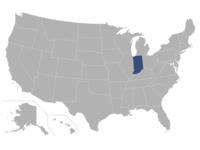
Indianapolis, IN