Republican congressional candidate opposed bipartisan-backed housing bills, including Lombardo’s
Jul 29, 2026 | 7:59 am ET
Description
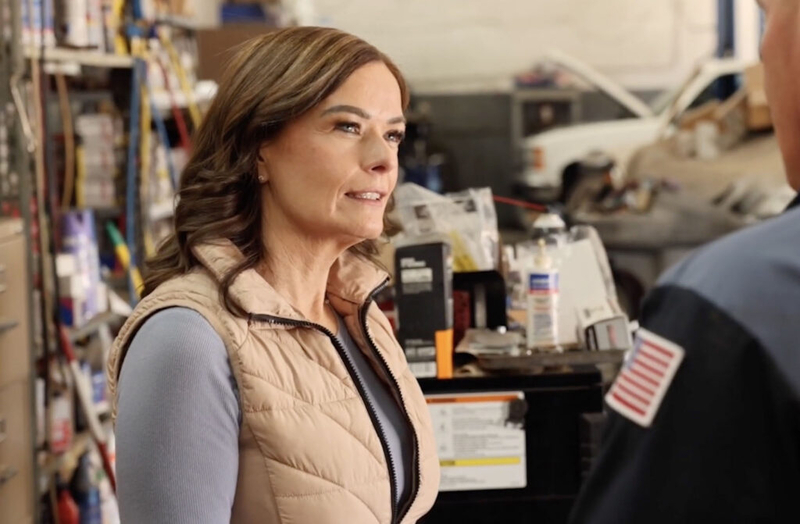
Republican congressional canddiate Carrie Buck has voted (Image from Carrie Buck for Congress campaign video)
Housing affordability is expected to be a key issue this election year, ranking as a top concern in surveys of voters, especially younger ones who feel home ownership is simply out of reach.
In her campaign for Nevada’s 1st Congressional District, Republican Carrie Buck suggests addressing housing issues would be a top priority, and she has railed against “elites” controlling the housing market. But a look at her tenure so far in the Nevada State Senate shows a pattern of voting against bipartisan housing legislation, including an effort championed by Republican Gov. Joe Lombardo that directly supports a new housing subdivision in the very congressional district Buck hopes to represent.
Buck was one of six Republicans in the Nevada State Senate to vote against Republican Gov. Joe Lombardo’s housing bill, Assembly Bill 540, last year. The bill dedicated $133 million to supporting single and multifamily housing for middle-income families. While much of the bill focused on supporting home builders and developers, some money was dedicated for downpayment assistance programs.
The first development to receive this consumer-level assistance was in Congressional District 1 — Paradise Trails, a new 29-house subdivision in central Las Vegas. Lombardo, Clark County Commissioner Tick Segerblom, and developers celebrated the ribbon cutting of Paradise Trails earlier this spring.
Buck also voted against a 2025 bill to allow local municipalities to create “tax increment areas,” which leverage future property tax growth to back bonds for affordable housing and transportation projects without raising taxes. That legislation, Senate Bill 28, passed without much attention, received bipartisan support, and was signed by Lombardo. Buck was one of four Republican senators to vote against the bill, and she was, across both chambers, the only legislator representing part of the Las Vegas Valley to oppose the legislation, which the City of Las Vegas pushed for.
Buck also voted multiple times against legislation designed to restrict the number of single-family homes corporations can purchase. The legislation, sponsored by state Sen. Dina Neal (D-North Las Vegas), was introduced during the 2023 and 2025 regular legislative sessions, as well as during the 2025 special session. All three times it failed, either because it didn’t have the votes to pass the Legislature or because it was vetoed by Lombardo.
Nearly all Republicans in the state Legislature opposed the effort. State Sen. Ira Hansen (R-Sparks) was the notable exception.
Still, Buck’s vote is notable because on the campaign trail she has emphasized wanting to help people access home ownership.
“Nevada families are getting screwed,” she opined in one post. “Elites scoop up homes while young couples can’t even afford a starter.”
Buck and her husband are landlords themselves. According to her state and federal campaign finance disclosures, they own and rent out properties in Las Vegas and Carson City.
Buck’s campaign did not respond to the Nevada Current’s request to comment on her legislative history on housing policy and articulate her housing platform, if she has one.
Buck told Fox News in an interview earlier this month that she will “ensure that Nevadans have access to lower-cost housing” while also “driving down interest rates so that people can buy whatever house that they want to.”
In the same interview, she blamed Biden-era immigration policies for Nevada’s housing crisis — “they allowed all these people into our country and that drove up [the cost of] all of our low-income housing.”
“It depleted it. And, so, now that we’re seeing people end up getting deported and going back to their original country, I know that it’s definitely driving down prices here.”
Buck, like elected officials on both sides of the aisle, have emphasized “freeing up” federal land for development. When U.S. Housing and Urban Development Secretary Scott Turner visited Nevada in March, Buck posted on social media that it was “time to unlock federal land, cut the red tape and start building homes for Nevadans again.”
Legislative losses, fundraising wins
Buck flipped her Nevada State Senate district red in 2020, winning in an open race by half a percentage point.
She has since served in three regular legislative sessions. None of the dozens of bills she has been the primary sponsor of in that time have made it to the governor’s desk. According to an analysis by The Nevada Independent, all 20 bills Buck sponsored in the 2025 session failed to meet the first major legislative deadline, which happens just after the halfway point of each 120-day session.
It is a stark contrast from Titus, who prior to being elected to federal office in 2008 spent two decades in the Nevada State Legislature. Titus quickly became a caucus leader and built a brand as a fiery legislator.
Nevada’s 1st Congressional District is considered by most political observers to be safely Democratic, especially with Titus at its helm, but Buck has been characterized by some as a potential disruptor.
Buck comes into this year’s race with the endorsement of President Donald Trump and better fundraising than Titus’s last Republican challenger, Mark Robertson.
Titus defeated Robertson by 5.6 and 7.5 percentage points in 2022 and 2024, respectively.
Buck’s Nevada State Senate term is not up until 2028, which means if she loses to Titus this November, she will remain a senator and can return to Carson City for the 2027 Legislative Session.
Las Vegas, NV