‘The rent is too damn high’: Housing advocates rally for rent relief, homeless shelter funding
Mar 13, 2024 | 12:23 pm ET

Description
A group of renters, advocates and some lawmakers formed a human chain of paper keys outside the State House on March 13 urging legislators to fund homeless shelters and rent relief in the $71 million supplemental budget. (Jim Neuger/Maine Morning Star)
Maine renters, housing advocates and even some lawmakers equipped with cowbells and other noisemakers gathered in Augusta Wednesday morning to remind legislators that together they hold the keys to solve Maine’s affordable housing crisis.
About 50 people were in attendance as the group formed a human chain of paper keys outside the State House urging legislators to fund homeless shelters and rent relief in the $71 million supplemental budget proposed by Gov. Janet Mills. The event was organized by Maine Equal Justice, the Maine Center for Economic Policy, Maine People’s Alliance, Penquis and other advocates.
“Mainers all over the state are suffering under the weight of rising rent and utilities,” said Katie Spencer White, chief executive officer of Mid-Maine Homeless Shelter & Services. “Those who can least afford these cost increases — our seniors, single mothers with children under the age of five, young adults leaving the foster care system, seniors and the disabled on fixed incomes — are the ones who are always hit the hardest.”
In 2023, more than 5,500 Maine households faced eviction, up from about 4,000 just the year before, according to state court records.
“When evictions go up like we’ve seen in Maine, that deserves our attention in Augusta,” said Rep. Ambureen Rana (D-Bangor), who sits on the Legislature’s Joint Select Committee on Housing.
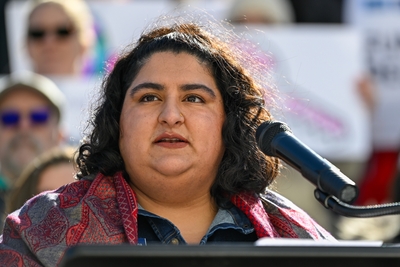
Rather than stashing away dollars from the state’s projected $373 million surplus into an “overflowing rainy day fund” — a reference to the state’s maxed out Budget Stabilization Fund — Rana said Mainers need rent relief now. For the thousands of people facing evictions, “it’s raining now,” Rana said.
As Rina Rengouwa, a member of the Maine Equal Justice Housing Leadership Team and president of the Gabonese Community in Maine, put it, “People in Maine are paying too much for rent.”
Rengouwa said it took her family almost a year to find an apartment they could afford in Freeport. She described it as a stressful and uncertain time, as they were living in hotels until they could find something more permanent. Even with two working parents, she said it was difficult to think about paying $2,000 a month in rent on top of food, healthcare and other bills.
Last month, housing advocates asked the Appropriations and Financial Affairs and Housing committees to include rent relief in the Legislature’s budget proposal, specifically LD 1540, which seeks to create a $300 a month rental assistance pilot program. That bill passed the Senate last session, but failed the House and has been on the special appropriations table since last June.
“Rent relief for families with low income can be an effective, efficient way to stem the rising tides of evictions and homelessness,” said Josie Phillips, state priorities partnership fellow with the Maine Center for Economic Policy, at an earlier public hearing for the budget.
The Legislature’s Joint Standing Committee on Housing has supported a proposal (LD 2136) to increase funding for homeless shelters from $2.5 million to $12.5 million, with additional money specifically for low-barrier shelters. Originally, the low-barrier funding was a separate bill, but the committee combined the two and added a study group to investigate the root causes of homelessness.
That bill has yet to be voted on by the House or Senate.
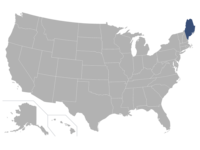
Augusta, ME