Refinery has paid millions to Delaware City for promise not to annex
Sep 01, 2026 | 6:00 am ET
Description
Photo courtesy of Spotlight Delaware
Why Should Delaware Care?
Delaware City’s drive to develop Fort DuPont turn what was once protected state park land into a RV park is fueled in part by the need to make up over 10% of the city’s budget over the next decade as the nearby Delaware City refinery phases out a payment in lieu of taxes agreement that has provided the city’s coffers with millions over the years.
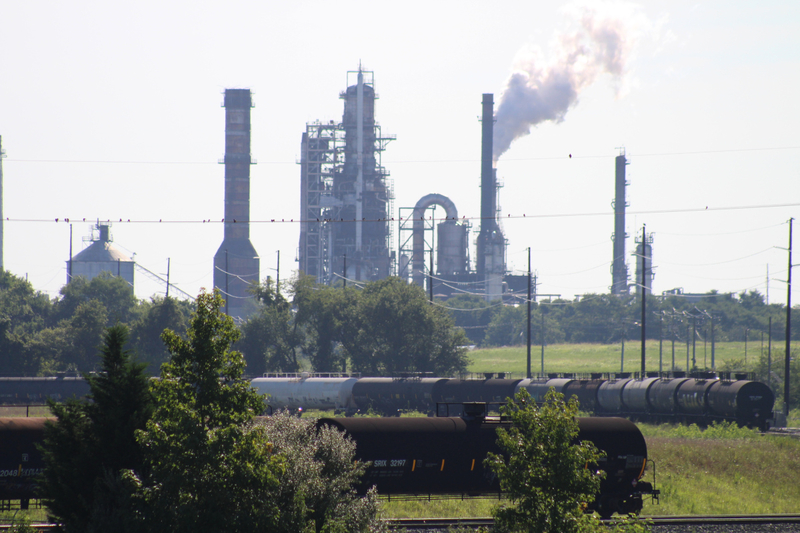
For nearly two decades, the refinery on the outskirts of Delaware City has paid the local government millions of dollars in exchange for officials promising not to annex the massive industrial complex.
This year, a $300,000 “voluntary contribution” from the Delaware City Refining Company as part of that agreement accounted for nearly 14% of the town’s 2026 budget.
The current agreement, enacted in 2023, governs how much the refinery will put in Delaware City’s coffers through 2037. Previously, the contracts were called PILOT, or payment in lieu of taxes, agreements — made in exchange for the government’s promise to not annex parcels owned by the refinery that are currently in unincorporated New Castle County.
By the time the current agreement expires, the refinery will have paid some $5.2 million to the city since 2008. Over the years, annual payments have varied from $50,000 to a maximum of $300,000.
According to the 2023 agreement, payments taper down starting next year. From 2027-2031, the refinery has agreed to pay Delaware City $200,000 annually, with payments reducing down to zero by 2038.
The contract notes that it was “on the request of the City” that the refinery “contribute greater amounts during the initial years of this agreement to meet the more immediate revenue needs of the city.”
Mayor Paul Johnson Sr. said that when the agreement was recently up for renegotiation, the refinery’s owner, PBF Energy, wasn’t exactly interested in continuing to pay the town hundreds of thousands of dollars. But without that funding, the city would have to find another way to cover over 10% of its annual operating budget. The agreement predates Johnson’s tenure, which began in 2019.
To ease that pain, the refinery and city officials ultimately agreed to de-escalate payments, with more money coming up front to help build out Fort DuPont and the nearby resort campground to increase the city’s tax revenue to make up for what the refinery has been contributing over the decades.
Johnson estimates the city will have to increase its tax base by about 25% to cover the refinery’s longstanding contributions.
In exchange for the tapered payments over the next decade, according to the 2023 agreement, the city “agrees not to pursue annexation with respect to any lands outside the City’s limits on which the Refinery is located or that are otherwise owned” by the company without “prior written consent.”
That would include another parcel that had been eyed as potential for the massive Project Washington data center.
But whether that agreement is left to expire come 2038 will be up to the company and Delaware City’s future mayor and council.
“And it probably won’t be me in 2038,” Johnson said, adding that the city currently has no interest in annexing any part of the refinery because of the associated costs that would come with regulating such a complex industry.
Why exactly the refinery wants to avoid being in Delaware City’s municipal limits remains unclear, as it is nearly impossible to calculate what their potential taxes might be if parts of the facility were subject to city taxes. A company spokeswoman did not respond to requests for comment.
Multiple Delaware-based professionals familiar with land use, legal contracts and PILOT agreements who were consulted by Spotlight Delaware said generally that they were not aware of any other such arrangements between local governments and private interests in the state.
The state government, however, has for years made payments in lieu of taxes to the three county seats — Dover, Georgetown and Wilmington — to offset the lack of taxes generated from a slew of state government buildings in those locales. According to reporting by Delaware Public Media, the University of Delaware for decades also made payments in lieu of taxes to the City of Newark, until the General Assembly last year gave the city the power to impose a per-student tax on UD instead.
The first PILOT agreement between the refinery and Delaware City was signed June 13, 2008, by Premcor Refining Group and government officials. It notes that in 2006, the city included the idea of annexing the refinery’s parcels on the outskirts of town in the comprehensive plan. From there, a dispute between the city and one of its biggest employers arose.
And thus, it was out of “the parties desire to amicably resolve the dispute and to foster long-term stability in their relationship” that the city began to promise the refinery it would not be annexed, and therefore not subject to city taxes, as long as a PILOT agreement is in place.
In addition, in 2002, Delaware City and the refinery’s owner at the time, Motiva Enterprises, renewed an agreement to only tax the refinery’s pier properties at the 2001-2002 assessed value of about $14.9 million, subject then to 3% increases for inflation.
Johnson said the company is subject to paying regular city taxes on those properties; no special taxation agreement exists today for those parcels.
Dover