Refinery appeals a nearly $1M fine, setting up a fight with a stricter DNREC
Aug 11, 2026 | 6:00 am ET
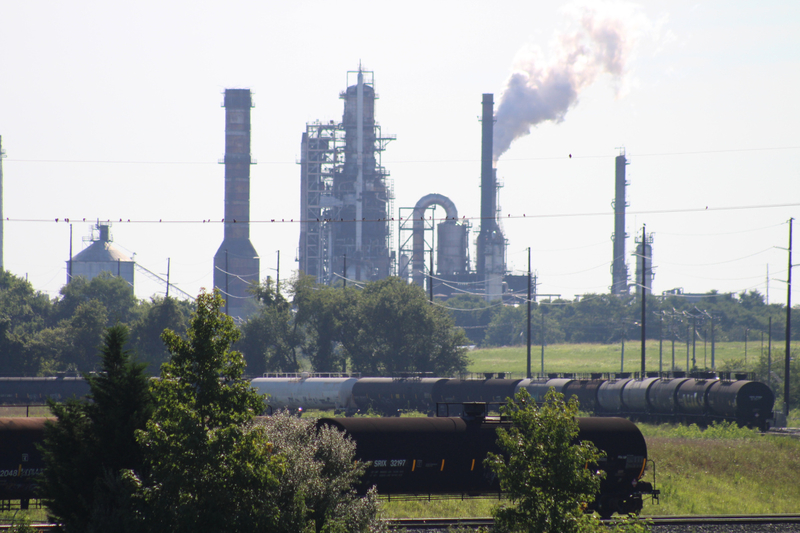
Description
Photo courtesy of Spotlight Delaware
Why Should Delaware Care?
Over the past two years, the refinery on the outskirts of Delaware City has emitted hundreds of tons of hazardous air pollutants above permitted levels. But at the same time, Delaware regulators under Environmental Secretary Greg Patterson appear to be taking a stricter approach toward such violations, leading to a new legal challenge.
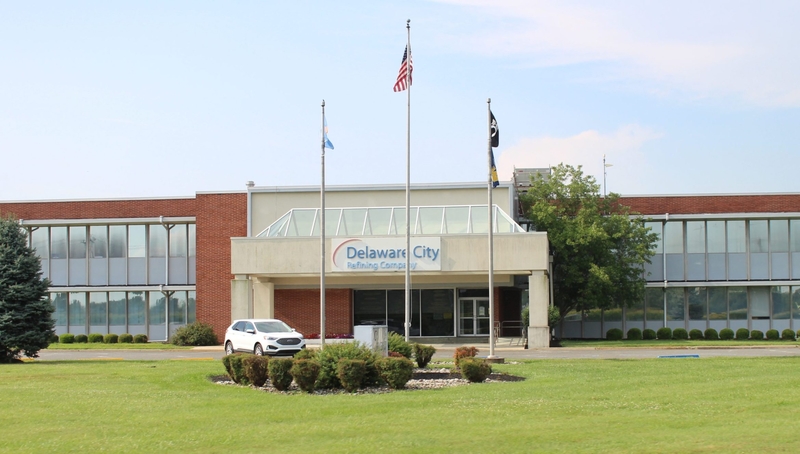
The Delaware City refinery has appealed a nearly $1 million fine that state regulators imposed earlier this year following what they called an “uncontrolled” release of air pollution.
The fine was the maximum amount the state could issue for violating environmental permits under a new law that increased penalties on industrial polluters.
In the appeal, attorneys for refinery owner PBF Energy called the state order imposing the penalties an “abuse of discretion,” and said regulators ignored the company’s efforts to collaborate with them ahead of the offending emissions last spring.
The pollution was linked to equipment repairs that required workers to temporarily circumvent emission control devices at the Delaware refinery.
PBF also alleged in the appeal that the state wanted the refinery to shut down its “coker” equipment during the repairs — a suggestion that the company said reveals the state’s “gross misunderstanding or disregard for the technical complexities of the refinery industry.”
PBF further said DNREC’s additional demands to speed up the repair work “would cost tens of millions of dollars.”
The appeal follows last month’s order from Delaware Environmental Secretary Gregory Patterson that sanctioned the refinery for a release of sulfur dioxide and nitrogen oxides between May 7 and May 30.
The releases into the atmosphere exceeded allowable limits by 745 tons for the sulfur dioxide and 50.5 tons for nitrogen oxides, according to the Delaware Department of Natural Resources and Environmental Control.
In his order, Patterson assessed a maximum $40,000 daily fine for the 24 days of pollution. The $960,000 total is one of the largest fines the state has issued the refinery in recent years.
Patterson noted a history of similar violations by the refinery, and his belief that PBF Energy has the ability to pay the penalty.
“The nature, circumstances, extent, and gravity of the violations are significant,” Patterson said in his order.
In an emailed statement to Spotlight Delaware, Patterson also pointed to a portion of his order asserting that decisions by PBF Energy to keep certain equipment online during maintenance at the refinery “resulted in an economic benefit.”
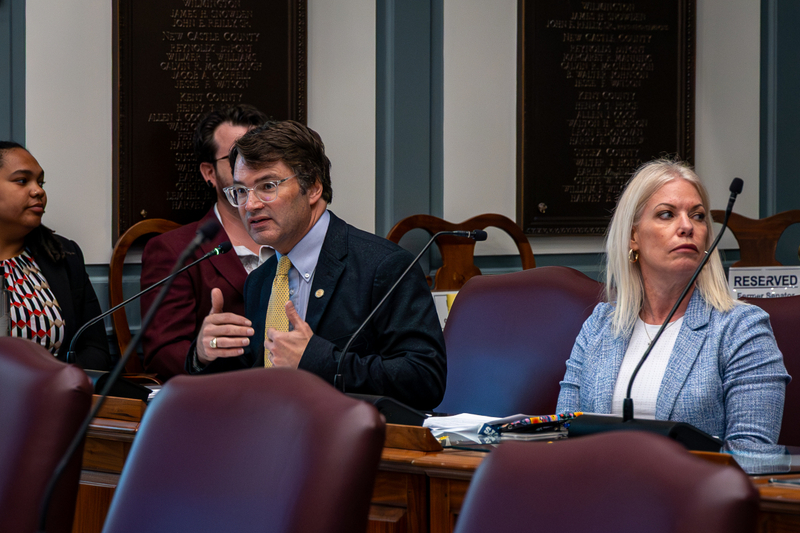
“The refinery made that decision and so that is a factor in the assessment of the maximum possible penalty,” Patterson said.
On July 30, PBF Energy reported a $915 million profit for the second quarter of 2026, up from a loss of $5.1 million during the same period of 2025.
The company’s stock price has more than tripled during the previous 12 months.
Long-term exposure to high levels of sulfur dioxide can cause a range of respiratory issues, according to the American Lung Association, while short-term acute exposure can exacerbate conditions like asthma.
Company and state officials say the pollution during the incident was dispersed into the atmosphere and likely did not cause direct harm to residents.
Still, the smell of pollution was noticeable at times last May to drivers along nearby Route 9, Route 72 and Route 1.
A company spokeswoman did not respond to a request for comment.
No date has been set yet for the refinery’s appeal to be heard by the state Environmental Appeals Board.
Pollution violations of past years
The state’s recent sanction follows a $300,000 penalty imposed in 2025 for a similar pollution incident from the refinery. The refinery also appealed that fine.
The refinery has faced dozens of additional state citations over the prior decade, including one incident in which the company was caught skirting crude oil shipment guidelines completely.
Despite the past years’ citations, Delaware City Mayor Paul Johnson said DNREC has become a stricter regulator under Patterson, who took over the department in early 2025. Johnson said he believes the state is trying “to encourage the refinery owners to take a more aggressive approach to capital improvements and equipment upgrades.”
“There has been a change that’s been more supportive of protecting the surrounding communities,” Johnson said.
Under Patterson’s lead, state regulators notified the public this past spring that there would be a temporary increase in emissions while the Delaware City refinery took equipment offline for repairs.
The refinery also said then that it would reduce its production levels to limit emissions during the repairs. The changes cost the company an estimated $4.3 million, PBF Energy said.
The refinery may also have to invest additional dollars to avoid future pollution incidents. In its recent appeal, PBF Energy noted that DNREC has increased pressure on the company to address equipment failures “through comprehensive repair” of specific components.
Finally, the refinery incurred additional expenses earlier this year when it agreed to install five fenceline air monitors, and to launch a website for the public to access real-time air quality data.
A backlash from neighbors
Last year, Delaware lawmakers held public meetings after a similar pollution incident occurred at the refinery, also in the springtime. There, many residents called for immediate action from regulators.
In the wake of the outcry, the state set aside $500,000 in taxpayer dollars for another air monitoring project near the refinery.
Months later, a Delaware City mother sued the refinery and its owners on behalf of her asthmatic son. She claims the pollution cost over $18,000 in medical bills and expenses, and that the refinery’s owners have “breached their duty to operate … in a reasonably safe and prudent manner” and that continuing operations with known equipment failures “constitutes reckless, willful, and wanton conduct under Delaware law.”
That case is now pending in Delaware Superior Court.
In all, New Castle Councilman Kevin Caneco said last summer was “a boiling point” for residents who had seen repeated patterns of problems at the refinery.
“We can’t have this pattern of misconduct because it’s not a one-time incident and it continues to happen,” he told Spotlight Delaware.
In the refinery’s recent appeal, the company acknowledges that the state has issued at least a dozen separate violation notices to the company between 2013 and 2025 specifically for unpermitted releases of sulfur dioxide.
The Delaware City oil refinery is one of the most complex on the East Coast, according to PBF, in part because it refines both light and heavy crude oil. During the process, which includes the use of extremely high heat, certain “undesirable” components are burnt off creating hazardous gases, such as sulfur dioxide and carbon monoxide.
The Delaware City refinery is one of six sites operated by PBF, and one of three owned by the company that can process a variety of crude oil types.
Currently, at least two other PBF refineries — one in Ohio and the other California — are also currently subject to state and federal environmental investigations.
The California facility temporarily shut down last year after a fire injured at least one worker. PBF recently reported to shareholders that the company has so far received $1.25 billion in insurance payments that will cover repairing and restarting the facility.

Dover