Questionable testing waivers put KY’s licensing of optometrists under scrutiny
Dec 11, 2025 | 5:50 am ET
Description
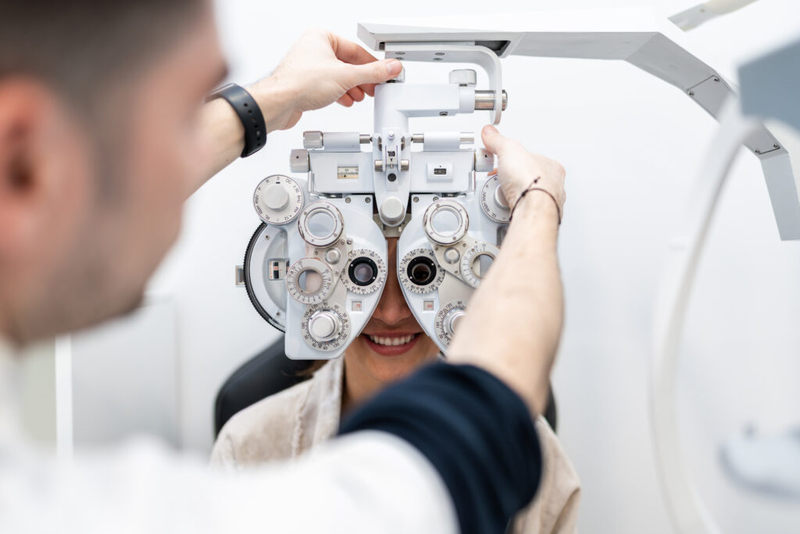
Unlike most states, Kentucky allows optometrists to perform expanded eye care including some eye surgeries, thanks to a 2011 change in state law that expanded the range of services optometrists may provide. (Getty Images)
Kentucky relaxed licensing standards for almost two dozen new optometrists over a recent three-year period, triggering alarm from a national board charged with testing to ensure optometrists have met qualifications to begin treating patients.
Among those who appear to have been licensed without completing a required exam is the daughter of the current president of the Kentucky Board of Optometric Examiners, according to a list compiled by the National Board of Examiners in Optometry or NBEO.
A May 23 letter from the national board to the state board said its records show 21 optometry graduates in Kentucky obtained licenses from 2020 through 2023 without having passed “one or more” parts of a state-required three-part exam the national board administers.
The letter, marked “confidential,” said that passage of exams is important to “uphold the integrity of Kentucky optometric licenses and protect the public from practitioners who have not demonstrated competency.”
“NBEO is trying to understand how this could have happened,” said the letter which the Lantern obtained through the Kentucky Open Records Act.
The Kentucky optometry board has yet to respond to the May 23 letter from the national examining board. It also has not responded to questions from the Lantern.
Meanwhile, the board, which meets Friday, has said it is working on a response to a recent state attorney general’s opinion that found it had circumvented state law in order to waive some testing requirements. The opinion issued Oct. 1 cited two such instances.
But the granting of testing waivers was far broader and more frequent than the two instances identified by the attorney general, a review of records by the Lantern reveals. In addition to a part of the test that would have required travel during the COVID-19 pandemic, the waivers also appear to include another more rigorous portion of the exam that the Kentucky board has acknowledged some graduates have had trouble passing.
Sen. Stephen Meredith, R-Leitchfield, who sought the Oct. 1 attorney general’s opinion, said he has questions the board has yet to address, including whether some optometrists could be providing eye care in Kentucky without valid licenses — a question also raised by the attorney general.
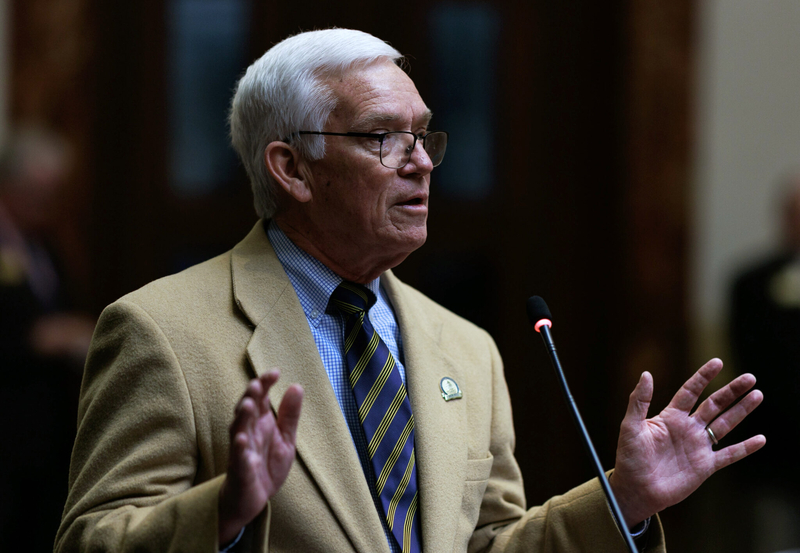
Meredith, chair of the Senate Health Services Committee, said he will seek answers when the General Assembly meets in January.
“I think that when we come back into session, I’m going to invite them to come in and testify,” Meredith said. “It’s very disturbing that any agency can just ignore state law. I think we need to have some continuing dialogue.”
Trust but verify
The stakes are higher in Kentucky because, unlike most states, Kentucky allows optometrists to perform expanded eye care including some eye surgeries thanks to a 2011 change in state law that expanded the range of services optometrists may provide. Optometrists hold a four-year doctorate of optometry but are not medical doctors, like ophthalmologists.
Kentucky optometrists have “one of the broadest scopes of practice for optometrists in the United States,” according to the national board.
The attorney general’s opinion says the optometry board maintains that “in the board’s opinion,” all Kentucky optometrists have met licensure requirements.
Meredith, the legislative committee chair, said he’d like more details.
“I’m like Ronald Reagan,” he said. “I trust but need to verify.”
Among the 21 Kentucky optometrists who the national board said had not passed one or more parts of the test, according to a list the NBEO provided: Dr. Hannah Ellis, daughter of Dr. Joe Ellis, the current state board president and a prominent optometrist in Benton. Her license was issued in November 2021, according to board records, two months after her father was appointed to the board by Gov. Andy Beshear. Hannah Ellis works at Clarkson Eye Care in Benton, the same optometry practice as her father, according to its website.
Neither Joe Ellis nor Hannah Ellis, a 2020 graduate of the University of Pikeville’s College of Optometry, responded to requests for comment from the Lantern.
Several of the other 21 candidates listed by the national board also are graduates of the Pikeville University College of Optometry, which opened in 2016 as Kentucky’s only optometry school.
Joe Ellis, a supporter of the new college and former member of the Pikeville University Board of Trustees, served on the advisory committee to establish it. He also served as the keynote speaker at the optometry college’s 2018 ceremony where members of the first class scheduled to graduate in 2020 were awarded their white coats to mark their roles as future optometrists, according to a university press release.
At a special meeting Oct. 10, the board agreed to consider how to best address issues raised by the attorney general.
Meanwhile, the board’s only public comment has been a brief statement on its website that says in part that “protecting the public will always be the highest priority.” It adds that during the COVID-19 emergency the board “resolved” to reduce out-of-state travel for Part 3 of the test by accepting evaluations from optometry schools of how students performed in a clinical setting.
“There’s got to be some dialogue here. There’s got to be some accountability.”
“Although the board acted in accord with the guidance it received at the time, the recent attorney general’s opinion indicated the board should have acted through the formal regulatory process,” it said. The board “intends to take timely and appropriate action.”
It makes no mention of the board’s apparent decision in December 2023 — after the COVID-19 state of emergency had ended — to waive Part 1 of the exam for some candidates. Part 1, which focuses on science and medicine, is considered the most rigorous and was required in all 50 states until this year when the Kentucky board enacted a controversial change to allow candidates to substitute an easier, Canadian version of the exam.
Joe Ellis told a reporter at the October meeting he would have no further comment until the board decides on a response.
Meredith said further explanation is warranted.
“There’s got to be some dialogue here,” Meredith said. “There’s got to be some accountability.”
What board minutes show
An examination of the board’s minutes shows that the board acted on testing waivers on at least six dates between 2020 and 2023.
The attorney general’s opinion cited only two instances when the board, citing the COVID-19 pandemic, agreed to waive one part of the three-part exam, the test for patient skills, which requires travel to an out-of-state testing center to determine how applicants perform in a clinical setting examining patients.
But board minutes show other actions. Minutes from Dec. 13, 2023, state without elaboration that some optometry school graduates unable to pass Part 1 of the national exam — which tests students on science and medicine and is considered the most rigorous — “will be allowed licensure with additional education requirements.”

The attorney general’s opinion deemed such actions “invalid” if authorized through a board vote or resolution rather than going through the public process of enacting a change in state regulations.
At that same Dec. 13, 2023 meeting, Joe Ellis was elected board president.
Meredith said he was not aware the board had decided to waive other parts of the exam. If that’s the case, he said, it’s very concerning.
“They don’t have the authority to do that,” he said.
The board has since enacted regulations allowing candidates to take a Canadian optometry exam, considered easier, in lieu of the national Part 1 exam. It did not respond to a question from the Lantern about whether any Kentucky candidates have taken that exam, which became an option around August after the board enacted a change in state regulations.
Testing ‘insurmountable?’
The state attorney general found the board has the authority to change testing requirements as long as it follows the process spelled out in state law to create a new regulation — a change enacted in 2011 amid a lobbying blitz by Kentucky’s politically influential optometrists.
“The board shall have the sole authority to determine what constitutes the practice of optometry and sole jurisdiction to exercise any other powers and duties,” says the change in the law.
KY optometrists, among few allowed to perform surgery, now want an easier, Canadian licensing exam
“No state has ever accepted a foreign licensure exam as a valid substitute for initial licensure,” Dr. Rich Castillo, dean of the optometry school at the University of North Carolina Pembroke, testified at a legislative hearing in April. “They are not interchangeable.”
But Kentucky’s board said in written comments to the legislature that the change in state regulations was needed because a “number of optometry students” could not pass the national exam.
Ellis testified at the April hearing before the legislative Administrative Regulation Review subcommittee that the tougher, national test might discourage young people from entering the profession in Kentucky and lead to a shortage of providers.
“If they see that testing seems insurmountable, they may not choose this profession down the road,” he said.
Meredith, the state senator, said that the attorney general’s opinion makes clear that the state board has the authority to change regulations to permit the Canadian exam — but not to waive requirements for licensure without enacting regulations.
“I think the more pressing issue here is granting licenses to people who have not passed the exam,” he said. “We need to protect the public.”
‘A matter of procedure’
At the October meeting, Ellis appointed a committee to review the findings of the attorney general and report back to the board.
He didn’t set a deadline for the committee report but said: “This board will take timely and appropriate action as required.”
“It was a matter of procedure,” Ellis said, describing how the board decided to waive one part of the national licensing exam for students during the COVID-19 pandemic by agreeing to do so at a meeting rather than enacting a change in state regulations, a more time-consuming step.
Ellis also is a former president of the Kentucky and the American optometric associations and a regular donor to Kentucky Gov. Andy Beshear, a Democrat. The Lantern reported that while Ellis has made contributions to Republicans, he’s one of Beshear’s bigger financial backers, giving $4,100 to his reelection campaign, $28,000 to the Kentucky Democratic Party during Beshear’s reelection campaign and $5,000 to Beshear’s super PAC, In This Together.
Beshear appointed Ellis to the optometric board in September 2021.
Ellis, at the October meeting, said he was not on the board in 2020 when it first decided to grant waivers to some applicants. It did so, he said based on the advice of the board’s former executive director who also served as legal counsel.
At the time, Ellis said, “there was a lot of confusion” about how to proceed during the COVID-19 state of emergency declared by Beshear that imposed limits on public gatherings and eased restrictions on some boards and agencies.
Ellis said it was his understanding that the board, when it first voted to waive Part 3 of the national exam, decided instead to accept faculty evaluations of student performance.
“If anybody was deficient, they would discuss it,” Ellis said. “That was their rationale at the time.”
As for the attorney general’s opinion, he added:
“It’s an opinion but I think we definitely need to consider that opinion to protect the public.”
Frankfort