Public school districts reminded to accept EFA recipients for free
Oct 12, 2026 | 5:00 am ET
Description
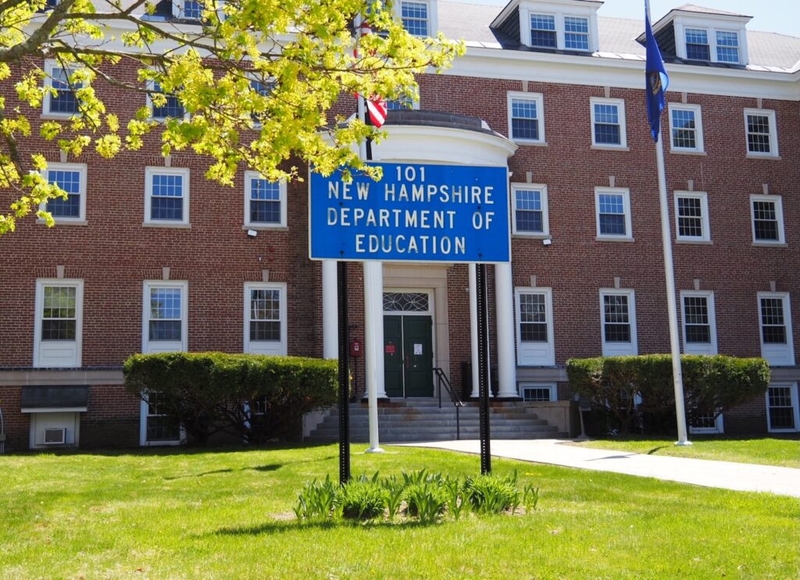
"The department’s advisory makes clear that public school districts must now provide EFA recipients with access to classes and programs, unless it determines they are at capacity." (Photo by Dana Wormald/New Hampshire Bulletin)
Beginning this school year, education freedom account recipients will be allowed to take classes, join sports teams, and participate in clubs and extracurriculars at their resident public school district — without paying extra.
The change, brought about with the passage of House Bill 1817, was hailed by school choice supporters as a way to empower EFA students and denounced by public school advocates as a mechanism that would force schools to provide services without reimbursement.
It is now up to school districts to comply.
On Sept. 25, the state Department of Education issued an advisory to schools stating that “each school district should review its enrollment, participation and fee policies” in accordance with the new law.
Launched in 2021, the education freedom account program allows New Hampshire families to receive around $5,000 of state education funding per year to help pay for private school or home education expenses.
Previously, EFA students required special permission to use public school resources, and some public schools imposed tuition for that access. The department’s advisory makes clear that public school districts must now provide EFA recipients with access to classes and programs, unless it determines they are at capacity.
That list includes curricular courses and co-curricular programs, such as clubs, sports teams, performing groups and career technical education programs.
It also includes standardized tests, such as the statewide assessments given to public school students in middle school and high school, and the preliminary scholastic aptitude test (PSAT).
“This change, which will take effect starting in the 2026-2027 school year, is likely to increase the number of EFA students who elect to participate in activities in their resident district public school,” the department noted in its guidance.
But the law contains a key caveat: If EFA participants, or other nonpublic school students, are enrolled in 50% or more of the instructional time offered by the public school, they will be considered full-time public school students.
And when it comes to determining what activity breaches that 50% mark, the state is giving school boards flexibility.
“Local districts should ensure that their own district policies define instructional time and what 50% enrollment means for each district school or grade level,” the department’s advisory notes.
That means districts could choose a time-based approach, where the number of hours of instructional time a non-enrolled student takes part in cannot exceed 50%; a course-load approach, where the number of courses can’t exceed 50% of all courses available; or a credit-based approach, where the number of credits cannot exceed 50% of those possible.
The law applies only to EFA recipients who live in the school district; public schools are still allowed to charge tuition to out-of-district students for courses or programs.
Additionally, the guidance notes, school districts are not required to accept non-enrolled students into classes that are “at or near capacity” with enrolled students. That should be determined by whether it would take additional resources or staff to accept non-enrolled students, the guidance notes.
And the law does not require schools to accept non-enrolled students into every program; EFA students must still meet the entry requirements for honors classes or advanced sports teams, for instance.
However, if there is space, the districts are not allowed to treat EFA students differently when they choose whom to accept.
The new law gives EFA recipients rights that non-EFA-receiving homeschooled students have had for years. Public schools have long been required to accept those students as long as the students did not exceed the 50% instructional time limit.
But the extension to EFA students contains one substantial difference. When home-schooled students enroll in public school programs, New Hampshire’s school funding formula allows those schools to request the state reimburse them on a pro-rated, per-credit basis. For every one credit a homeschooled student receives, the school receives 15% of the amount the state would send a full-time student.
Public schools will not receive that reimbursement for EFA students under the expansion this year.
Addressing lawmakers in the spring over HB 1817, Department of Education Bureau of School Finance Administrator Mark Manganiello noted that providing that 15% reimbursement for EFA recipients would require the state to pay twice — once for the value of that student’s EFA account and again for the courses offered by the public school district. Lawmakers did not add in a reimbursement mechanism to the law.
The lack of reimbursement has raised concerns from opponents, including the New Hampshire School Boards Association, that the law will shortchange public school districts by allowing students who don’t count toward the district’s per-student reimbursement to use the district’s services.
“Currently, families can access school district programs for their students now by using their ‘Education Freedom Account’ voucher to pay for those resources,” the National Education Association of New Hampshire, the state’s largest teachers union, wrote in a statement opposing the bill.
Meanwhile, even if the lack of reimbursement means the state is not double-paying, the taxpayers in the school district are, the NEA argued.
“… Local taxpayers will pay twice — once for a voucher and again for classes provided by the local public school.”
To supporters of the move, though, the change addresses a different unfairness: the inability for EFA-recipient families living and paying school property taxes in a school district to access that district’s programs for free.
“New Hampshire has long valued responsibility, local connection, and parental commitment,” reads a post on the Children’s Scholarship Fund, the nonprofit organization that contracts with the state to run the EFA program. “Families who choose flexible educational models continue contributing to the public education system through local property taxes while often assuming additional financial responsibility to create the learning environment that works best for their children.”
In an opinion piece in the New Hampshire Journal, Kate Baker Demers, executive director of that organization, deployed an analogy.
“Imagine paying dues to a local recreation center for years,” she wrote. “Your money maintains the basketball courts, the fields, and the after-school programs. Then, one day, your child tries to sign up for the youth league and gets turned away because your family does not use the facility full-time. Most people would call that unfair.”
Concord, NH