Public Question 1: What Indiana’s ballot doesn’t tell you
Oct 19, 2026 | 5:00 am ET

Description
Currently, Indiana law requires that all offenses are bailable, except murder or treason, and further provides judges with discretion to balance individual liberty with public safety. (Getty Images)
Early voting is now open in Indiana, and with that comes a powerful question on every Hoosier’s ballot about one of the most fundamental protections in our justice system: the presumption of innocence and right to remain free while awaiting trial: Public Question 1.
Indiana lawmakers have proposed an amendment to Article 1, Section 17 of the Indiana Constitution, which defines the right to bail for people accused of crimes other than murder and treason. That doesn’t mean everyone gets to go home while awaiting trial, but it does mean they have a constitutional right to seek release on bail.
Public Question 1, which will appear on ballots statewide, asks voters — in a yes or no format — whether to expand the circumstances in which judges can deny bail entirely, causing people to remain jailed before trial if prosecutors show strong evidence supporting the charge and convince a judge that no release conditions could keep the community safe. The exact wording of the ballot can be found here.
This would be a substantial change to constitutional rights in Indiana, not a technical shift in policy or criminal legal practice. For a change to be made to Indiana’s Constitution, the bill must pass in two separate legislative sessions before voters have the final say. Senate Joint Resolution 1 passed the General Assembly twice, in 2023 and 2026, placing the proposed amendment on the November ballot as Public Question 1. Lawmakers also passed two related bills: Senate Enrolled Act 2, which establishes how courts would implement the expanded authority to deny bail, and Senate Enrolled Act 3, which sets the language voters will see on their ballots.
One might assume the detailed implementation bill places clear limits on how far this expanded power to deny bail could reach. It does not. An amendment introduced during the recent session would have excluded people charged with misdemeanors or Level 6 felonies, Indiana’s lowest felony level, from the expanded bail restrictions. Lawmakers rejected it.
Right to bail: Amendment asks voters to rewrite pretrial detention rules
Unlike states that have listed specific violent or sexual offenses to apply — like Texas and Ohio — Indiana leaves this alarmingly ambiguous. The legislation describes the proposed process to allow judges to consider factors like employment, financial resources, family history, and community ties when deciding bail. This raises obvious concerns about bias and how consistently these standards would be applied across the state. How will people experiencing poverty, housing instability, or challenging family circumstances be impacted, and how could this result in unequal treatment all before any trial has taken place?
Indiana is no exception to America’s incarceration crisis. According to the Prison Policy Initiative, about 46,000 people in Indiana are behind bars across prisons, jails, immigration detention, and juvenile facilities. In Indiana’s 92 county jails, approximately 65% of them have not actually been convicted of any offense; they’re still presumed innocent and awaiting trial.
Our state’s chronic jail overcrowding and pattern of deplorable conditions makes these numbers even more troubling, knowing many are enduring these environments compounded with the destabilizing impacts of pretrial detention. These circumstances have a ripple effect that can cost them their livelihood and stable housing, access to vital healthcare, support for their loved ones, and the practical ability to actively build their legal defense. For someone who may eventually be cleared of all charges, these effects can be devastating.
The predominant argument for this amendment cites public safety as its rationale. We all want safe communities, but we are attempting to address an issue the numbers do not support. The Indiana Lawyer investigated data from the Indiana Office of Court Services, finding that 98.6% of assessed “high-risk” people released pretrial did not commit a new violent crime while on release. The numbers are even lower for moderate- and low-risk individuals (98.9% and 99.4%, respectively). And judges already have the necessary tools to address public safety concerns before release: no-contact orders, supervision, electronic monitoring, etc. Indiana law already gives judges the authority to increase or revoke bail when someone poses a risk to public safety. Even when considering all types of offenses, the Indiana Criminal Justice Institute found that approximately 93% of people released before trial in 2025 were not rearrested or charged with a new offense. Even among the remaining 7%, a new charge does not necessarily mean a conviction. So, in short: what evidence justifies ballooning the government’s power to strip Hoosiers of their freedom without any conviction?
Constitutions are written to protect the freedom and rights of individuals, particularly when they are most vulnerable. Presumption of innocence does not apply when convenient, or only for those some believe are deserving. Amid the political acrimony of this election, the decision Hoosiers make on Public Question 1 carries consequences far beyond November, shaping the rights of people awaiting trial and the future of justice in Indiana.
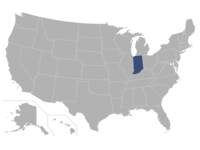
Indianapolis, IN