Prosecutor who sent SC serial killer to death row tells his story in upcoming book
Dec 01, 2025 | 12:49 pm ET
Description
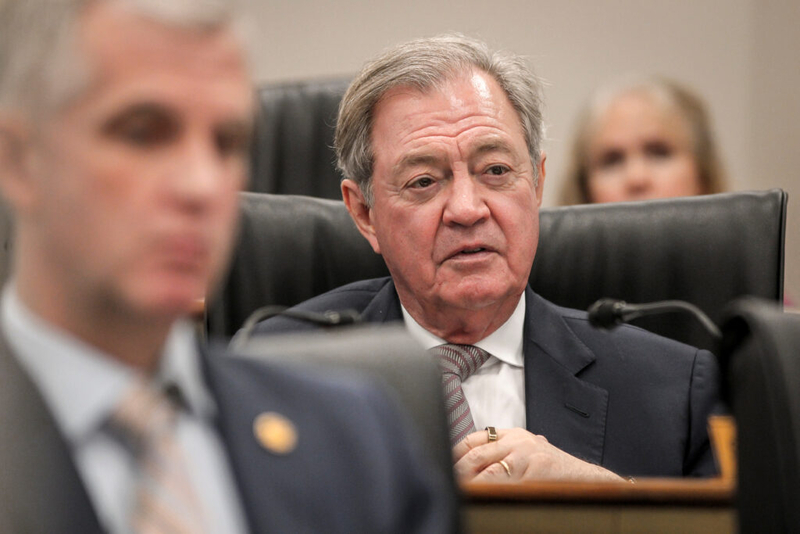
Sen. Dick Harpootlian, seen during a South Carolina Senate Judiciary Committee meeting in Columbia, S.C. on Tuesday, March 15, 2022, is the author of a book about famous serial killer Pee Wee Gaskins. (Photo by Travis Bell/STATEHOUSE CAROLINA/Special to the SC Daily Gazette)
COLUMBIA — During a break in the 1983 trial that sent Donald “Pee Wee” Gaskins to death row, the serial killer called for prosecutor Dick Harpootlian.
“You know, you’re just like me,” Gaskins said.
“You like killing,” Gaskins added. When Harpootlian asked what he meant, Gaskins told him, “You like killing me.”
That interaction stuck with Harpootlian, a Columbia attorney and former state senator. He wanted for years to write a book about Gaskins’ life and the 13 people he confessed to killing during the 1970s but struggled with how to frame it. The moral question he faced over pursuing the death penalty became his angle, he said.
Gaskins “was pure evil, and he got in my head,” Harpootlian said. “The book is about how I got to where I got, how he got to where he got, and how you wrestle with that.”
Harpootlian’s book, “Dig Me A Grave,” comes out Dec. 16.
Harpootlian will launch the book that evening in a conversation with Dawn Staley, coach of the University of South Carolina’s women’s basketball team and a true crime fan, at Columbia’s 701 Whaley event space.
Soon after Gaskins was executed in 1991, a clerk asked Harpootlian if he wanted to keep any evidence from the case. Looking through photographs, records of Gaskins’ arrest and the 300-page written confession Gaskins gave in 1978, Harpootlian realized there was enough for a book, he said. He kept all of it.
“It was a treasure trove of files on Gaskins,” said Harpootlian, a Democrat later elected to Richland County Council and as 5th Circuit solicitor (chief prosecutor for Richland and Kershaw counties) before he became a defense attorney. In 2018, voters sent the former state Democratic Party chairman to the state Senate.
When the COVID-19 pandemic ended the legislative session early and suspended trials, Harpootlian decided to get serious about telling Gaskins’ story. An agent got him in touch with author and journalist Shaun Assael, whose most recent book explored the death of boxer Sonny Liston.
Together, Harpootlian and Assael combed through the old case files and interviewed police officers and other witnesses involved in Gaskins’ investigations and trials. Harpootlian wrote down what he could recall and checked his own memories against those of other people involved, he said.
“I think there’s less speculation in this book than any other true crime book I’ve ever read, because I was there,” Harpootlian said. “I prosecuted. I saw every document. We interviewed every witness. I was in the courtroom for six weeks.”
Harpootlian was even on a first-name basis with Gaskins, a first for the then-prosecutor. The killer could charm just about anyone, and on his first day in the courtroom, he greeted Harpootlian by name.
“From then on, it was Dick and Pee Wee,” Harpootlian said.
Preparing to prosecute Gaskins for the killing of fellow inmate Rudolph Tyner, Harpootlian learned all the brutal details of how Gaskins killed at least 13 people and raped several of them. Gaskins drowned, beat and shot his victims to death, including a 2-year-old and her pregnant mother.
Gaskins later claimed he killed dozens more, but investigators only definitively linked him to those 13 cases.
Although a jury recommended the death penalty during Gaskins’ first murder trial in 1976, after finding him guilty of one of the killings, the state Supreme Court later changed his sentence to life in prison, finding the state’s law about executions unconstitutional.
A year later, a second jury found Gaskins guilty of killing farmer Silas Yates, but because the state’s death penalty law was still considered unconstitutional, Gaskins received another life sentence. Facing a third murder trial, Gaskins pleaded guilty to the 13 killings investigators had linked to him in exchange for eight more life sentences.
By the time Harpootlian stepped in to prosecute the 1982 killing of Tyner, a U.S. Supreme Court decision reinstating the death penalty nationwide made it an option once again. Harpootlian just had to decide whether to try again for a death sentence or allow Gaskins to remain in prison for the rest of his life.
The decision weighed on Harpootlian. He personally opposed the death penalty, but as a prosecutor, he took an oath to uphold the law, he said.
He also had to weigh any decision he made in the context of his own political ambitions.
Harpootlian went to his father, a World War II bomber, for advice. When Harpootlian asked whether his father regretted his actions during the war, his dad responded that everything he did was in self-defense.
Considering Gaskins found a way to kill a man inside the state’s most secure prison facility, Harpootlian decided the same thinking applied in his decision. Executing Gaskins would prevent him from harming anyone else in a way prison walls couldn’t, he said.
“I think the death penalty is appropriate where it’s self-defense,” Harpootlian said. “And Gaskins is self-defense.”
That much was clear when Gaskins attempted to hire someone to kidnap Harpootlian’s then-4-year-old daughter ahead of his execution date, Harpootlian said. When the time came for Gaskins’ 1991 execution, Harpootlian decided not to attend, in part out of fear over leaving his family alone and in part because he didn’t want to watch a man die.
“Wanting to watch somebody die would be what Pee Wee would do,” Harpootlian said. “And I’m not him.”
Grisly descriptions of Gaskins’ death in the electric chair prompted Harpootlian to propose as a legislator giving death row inmates a firing squad option.
His proposal came during Senate floor debate on legislation reverting to electrocution as the state’s primary execution method, which was signed into law in May 2021. Since the state Supreme Court upheld that law last year, three inmates have chosen to die by firing squad.
Harpootlian again ended up in the national spotlight defending Alex Murdaugh, who was convicted in 2023 of killing his wife and son two years prior. Perhaps one day he’ll write a book about that saga, which captured the attention of millions of people, he said.
But Gaskins’ story felt too unique to ignore, he added.
“Gaskins is, thank god, one of a kind,” Harpootlian said. “He was the most evil man I’ve ever met, and when you spend time with and become on a first name basis with evil, it haunts you even after he’s dead.”

Columbia