Proposed NC budget would change funding for statewide remote charter schools
Jul 06, 2026 | 6:00 am ET

Description
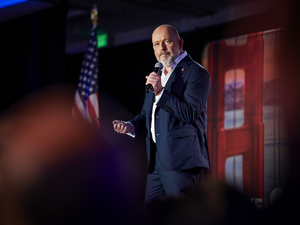
The NC House passed a $34 billion state budget after more than two hours of debate on July 1, 2026. (Photo: Claire Michal/NC Newsline)
As North Carolina expands the number of statewide remote charter schools, lawmakers are proposing to change how those schools receive state funding.
A provision in the proposed state budget would replace a funding method based on the school district where a statewide remote charter school’s administrative office is located with one based on the statewide average.
The funding change was one of the Department of Public Instruction’s legislative priorities adopted by the State Board of Education earlier this year.
“As statewide virtual charter schools increase in number and in the location of their offices, the variation in funding between different districts may make this issue more salient, which is why DPI and the State Board are proposing this change,” Geoff Coltrane, the Department of Public Instruction’s senior director for legislative affairs and strategy, told NC Newsline in March.
Under current law, statewide remote charter schools receive state funding based on the per-pupil funding in the district where their administrative office is located, even though they enroll students from across North Carolina. The budget would instead use the statewide average funding per student. Funding for students with disabilities and English learners would not change.
Supporters say a statewide funding method better reflects the fact that the schools serve students from across North Carolina rather than a single community. It also would ensure schools are funded using the same state formula regardless of where they locate their administrative offices.
The proposal comes as North Carolina expands statewide remote charter schools. For nearly a decade, the state had two statewide virtual charter schools. This year, the Review Board approved four additional statewide remote charter schools.
North Carolina set to nearly double remote charter academies next year
The expansion drew debate earlier this year as some Review Board members questioned whether the state needed additional statewide remote charter schools, citing concerns about demand and the academic performance of existing virtual schools.
The original two charter schools have been designated as “continually low-performing” since they began operating a decade ago as pilot programs, though N.C. Virtual Academy exceeded growth expectations in 2023.
Supporters argued they would provide families with more options and better serve students whose needs are not being met in traditional schools.
The change would take effect beginning with the 2027-28 school year.
Raleigh, NC