This Program Pays New York Cops to Help Border Patrol Arrest Immigrants. Hochul Backs It.
Aug 24, 2026 | 4:00 am ET

Description
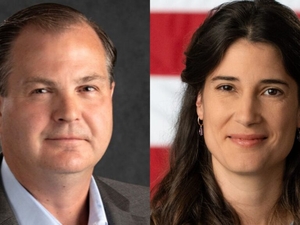
A New York Focus investigation has found that in some New York state counties, Operation Stonegarden has turned local cops into occasional immigration agents. / Screenshots: Oswego County public records request; Photo: Darren McGee / Office of Governor Kathy Hochul | Illustration: Leor Stylar and Alex Arriaga
A Jefferson County sheriff’s deputy was patrolling near a strip mall in Watertown, 30 miles south of New York’s border with Canada, last December, when he spotted a Chevrolet cargo van. He noted three traffic violations: failing to turn on headlights, signaling improperly before making a turn, and driving with cracked glass.
The deputy, Shawn Bulger, stopped the vehicle and learned that the driver, a 52-year-old man, was a native of Brazil. He had a Pennsylvania driver’s license; his passenger was carrying a Brazilian passport. The deputy recorded in sparse detail what happened next: He called a Border Patrol officer “who came to assist.”
“Both individuals were detained and transported to BP Station for deportation,” he wrote.
The call to Border Patrol wasn’t necessary to address the alleged traffic violations, and it had nothing to do with any state crime. But that day, it was very much part of the county deputy’s job. He was conducting a special overtime patrol as part of his agency’s participation in Operation Stonegarden, a federal program that pays local law enforcement to work with US Border Patrol.
A New York Focus investigation has found that in some counties, the program has turned local cops into occasional immigration agents. Available records show that New York sheriff’s deputies on Stonegarden detail have reported turning over at least 24 immigrants to Border Patrol since 2023, mostly after traffic stops. That’s likely an undercount; the records are sourced from five of the 13 participating counties, and New York Focus’s tally does not include an additional 21 people whom deputies turned over to Border Patrol for reasons they did not explain in their reports.
Since 2009, a few years after the program launched on the US–Mexico border, Stonegarden has funneled tens of millions of dollars to the state’s Division of Homeland Security and Emergency Services, which has doled out about $30 million to New York’s border counties for local deputies and police to conduct traffic stops and patrol marinas and trails. The counties also use Stonegarden funds to buy equipment, particularly surveillance technology like automatic license plate readers.
Several sheriffs told New York Focus that Stonegarden patrols have nothing to do with immigration enforcement, focusing instead on drug interdiction or preventing human trafficking. But at least three counties have used the funds to assist in immigration arrests, records show.
The revelations come as New York leaders vow to combat President Donald Trump’s mass deportation campaign. Earlier this year, the state enacted legislation banning a controversial type of formal partnership between local police and Immigration and Customs Enforcement, known as a 287(g) agreement. Passed under the banner “local cops, local crimes,” the measure was a response to concerns that local police were assisting federal agents with immigration arrests.
“We’re sending a strong message to ICE: You will not weaponize local police officers against their own communities in the state of New York,” Governor Kathy Hochul said in January.
To obtain Operation Stonegarden contracts and daily activity reports, New York Focus filed public records requests to the state Division of Homeland Security and Emergency Services and to all of the New York counties that participate in the program. Most counties denied the requests, claiming that the documents are exempt from disclosure, that they no longer had access to them, that only Border Patrol could release them, or that they had no records. New York Focus is continuing to press for the documents.
Yet the measure Hochul signed into law left local cops free to work with immigration agents outside of 287(g) agreements, including through lesser-known programs like Operation Stonegarden.
State Senator Andrew Gounardes, who’s among a group of legislators pushing for a broader ban on local collusion with immigration agents, said New York Focus’s findings regarding Stonegarden show why stricter policies are necessary.
“I think we should push for more guardrails and more answers to these questions, and ask why local police are being funded to turn people over to the federal government based on the suspicion that they’re here without status,” he said.
State Senator Rachel May, whose Syracuse-area district includes a sliver of Lake Ontario, described the program as potentially “an end-run around what we were trying to do” by banning 287(g) contracts.
Hochul and other Democrats have boosted Stonegarden, this year touting the $2.7 million award as part of millions in federal funding to “support counterterrorism and emergency preparedness efforts.” The governor’s public statements about the program don’t mention immigration enforcement.
In response to New York Focus’s findings, a spokesperson for Hochul’s office said in a statement that the governor “will always support local law enforcement in securing our borders and maintaining public safety.”
“This administration will not aid ICE in federal civil immigration enforcement,” the statement said. The spokesperson did not acknowledge that through Operation Stonegarden, local police are assisting Border Patrol — like ICE, part of the Department of Homeland Security — with exactly that.
The federal government paid Jefferson County just over $800 for the 10-hour shift during which a deputy stopped the Brazilian man in Watertown, records show. The form the deputy completed to document his work that day included fields for number of vehicle stops, penal code violations — and total number of people turned over to Border Patrol.
The driver, who asked to be identified by his last name, Martins, told New York Focus that he and his brother-in-law had just left work at a construction site for a lunch break when the sheriff’s deputy pulled him over. He did have a cracked windshield, he said, but insisted he had signalled appropriately and didn’t need to turn on his lights because it was midday.
“He simply approached me so he could call Border Patrol,” Martins said.
Border Patrol agents showed up within 10 minutes, he said. Bulger didn’t write him a ticket, he added.
Bulger did not respond to a request for comment. Jefferson County Sheriff Peter Barnett did not respond to emails and phone calls requesting comment.
Martins, who had lived in the US for almost five years and was in the process of appealing a deportation order, wound up detained by ICE in the Broome County Jail for two months before a federal judge ordered a bond hearing. He was released on a $50,000 bond in early February; his family had to borrow money to pay it.
To keep up with payments, Martins works from 7:30 am to 8 pm almost every day at a construction site in Maryland, he said. His months-long detention was wrong, he believes, in part because of how it started, with a traffic stop on a cold winter day.
“I felt at that moment that my constitutional rights were being violated,” he said. “I felt that it was almost illegal.”
Every border county in New York receives funds through Operation Stonegarden, in amounts ranging from $100,000 to $325,000 this year, plus $90,000 for the St. Regis Mohawk Tribe.
Stonegarden’s funding for overtime patrols is meant to give deputies time and resources to help Border Patrol “secure U.S. international borders,” according to the counties’ contracts with the state. Deputies on a Stonegarden shift aren’t supposed to respond to regular calls involving local crimes unless necessary. Instead, they keep an eye on the interstates and state roads that run toward Canada, as well as waterways and trails near the border. They submit “daily activity reports” to the Department of Homeland Security to document each shift.
In Jefferson and Oswego counties, those reports show that deputies have helped detain at least 23 immigrants since 2023. Chautauqua County deputies turned over at least one person to Border Patrol in 2023. The records do not indicate that the people apprehended had recently crossed over into the United States.
In written responses to New York Focus’s questions, Chautauqua County Sheriff James Quattrone said that Border Patrol has not directed departments participating in Stonegarden to enforce immigration law. At the same time, he wrote, department policy calls for contacting Border Patrol when officers encounter undocumented immigrants during criminal investigations or arrests.
Documents and video footage obtained by New York Focus show how some of the arrests unfolded.
On April 1, 2025, Oswego County Deputy Michael Fera summarized his shift with the line: “Turned over 8 illegal immigrants to USBP.”
Body camera footage from that day shows a deputy pulling over a red pickup truck near a church in Fulton, New York.
“You took like a big winding right, then you were just speeding a little quick back here,” the deputy says. The driver tells him that he and his passengers — all men in work clothes — are on their way to a construction job.
As the deputy walks back to his vehicle, holding the man’s license and registration, he crosses paths with a Border Patrol agent.
“Sup, man,” the deputy says. The two men bump fists. At the end of the 23-minute video, Border Patrol agents lead two of the truck’s passengers into their van.
That same day, an Oswego County deputy conducted another traffic stop that resulted in Border Patrol detaining several more people on their way to work, including a man named Antelmo Labato. In an incident report, Fera wrote that he had been patrolling with a Border Patrol agent when they arrested Labato.
The agent later told him that Labato had a 15-year-old US citizen son who would have no other guardians once Labato was deported, the deputy wrote. He contacted the county Department of Social Services so they could look for a foster family for the boy, who eventually joined his father in Mexico. Fera declined to comment.
Many of the immigration arrests initiated by Oswego County deputies, including Labato’s, were previously reported by Syracuse.com. Last year, the attorney general opened an investigation into the Oswego County Sheriff’s Office’s interactions with federal law enforcement involving immigration. The office declined to comment about Operation Stonegarden and told New York Focus it had no updates on its investigation into Oswego.
“We’re sending a strong message to ICE: You will not weaponize local police officers against their own communities.”
—Governor Kathy Hochul
Oswego County Sheriff Don Hilton did not respond to emails and phone messages requesting comment. Last year, he told the Oswego Palladium-Times that a small fraction of traffic stops his deputies conducted resulted in a call to Border Patrol. Half of those calls involved an ongoing criminal investigation, and the other half were to ask federal agents for translation help, he said. Syracuse.com reported earlier this year that the sheriff’s office said its deputies had conducted no stops with federal agents in 2026.
In another body camera video, an Oswego sheriff’s deputy pulls over a white box truck with expired registration and discovers that the two men inside, who only speak Spanish, lack driver’s licenses. He calls a tow truck to take the vehicle they’re not allowed to drive — and a Spanish-speaking Border Patrol agent to “explain the tickets.”
The men waited nearly an hour for the agent to arrive. Local police in New York are allowed to contact federal agents to report that they suspect someone of being in the country illegally, but they can’t detain people for civil immigration offenses — like overstaying a visa — without a warrant. That includes situations where police hold someone longer than needed to process their criminal charges so immigration agents can arrive to pick them up, Attorney General Letitia James wrote in 2020.
When the agent finally arrives, he describes the traffic violations, then asks the men what countries they’re from and if they have documents to be in the US. The video doesn’t capture their full answers. The agent then pats the men down and directs them into his car.
“Good to go, bro,” the agent says to the Oswego deputy after he shuts the door.
Eleven of the Stonegarden immigration arrests that New York Focus identified took place in Jefferson County, a summer travel destination bordering Lake Ontario and the St. Lawrence River. Deputies reported turning over an additional 17 people to Border Patrol without specifying why they did so. Three of the confirmed immigration arrests took place in the first five months of 2026, the most recent timeframe for which New York Focus obtained records.
“Three subjects turned over to Border Patrol after a traffic stop on state Route 177 in the Town of Adams,” a deputy wrote after a Stonegarden detail in April.
The records show that Jefferson County deputies have also assisted Border Patrol agents with surveillance, sharing information about vehicles of interest with the agency’s Targeting Unit, which identifies people to arrest. On December 30, 2025, one officer spent 90 minutes surveilling a construction site in Watertown.

Sheriff’s departments in five counties told New York Focus that their agencies’ work with Stonegarden doesn’t involve immigration enforcement. That includes the two largest border counties in the state, Erie and Monroe. (Neither county agreed to make agency leaders available for interviews, and an Erie County Sheriff’s Office spokesperson did not respond to follow-up questions.)
Instead, the departments said, the fund supports efforts to deter crime across an international border that receives far less attention than its southern counterpart.
“A civil immigration thing — that’s not what we do,” said Cayuga County Sheriff Brian Schenck. “What we are concerned with is, is there some type of criminal activity connected to our border? Human trafficking, someone running guns or drugs.”
In response to questions from New York Focus, a US Customs and Border Protection spokesperson said that Stonegarden enables to state and local law enforcement to “jointly enhance security along the United States land and water borders.”
Quattrone said that in Chautauqua County, the funding has been particularly useful to help his agency patrol Lake Erie and respond to marine emergencies. The resources Stonegarden provides are useful for boating accidents and search-and-rescue missions as well as working with federal partners “when activity on the lake raises legitimate border-security concerns.”
Records show that officers have spent much of their time during Stonegarden patrols conducting traffic stops that result only in citations. Some mention undercover purchases of illicit drugs or marijuana seizures. Deputies described participating in boat patrols on Lake Erie and snowmobile patrols on trails in the North Country. Many reports include lines like, “No suspicious activity was observed.”
New York Focus obtained daily activity reports from Cayuga and Wyoming counties that showed deputies on Stonegarden details recorded no immigration arrests.
“We do not enforce immigration laws in Wyoming County, and that is not part of that detail whatsoever,” said Undersheriff Colin P. B. Reagan. “We’re not asking about citizenship, we’re not asking anything like that.”
Yet with little oversight from the state, the program has sometimes resulted in the kind of formal working relationship between New York law enforcement and immigration agents that state leaders have vowed to halt.
The state Division of Homeland Security and Emergency Services said that Stonegarden funding “supports the fight against terrorism and transnational crime.” After New York Focus shared the key findings in this story, an agency spokesperson said that Stonegarden is “not related to civil immigration enforcement so we do not track or deal with immigration issues in the management of the grant program.”
In New York and nationally, Operation Stonegarden has largely flown under the radar, in part because it’s relatively small compared to other federal law enforcement programs, costing less than $100 million annually. A 2017 report by the Department of Homeland Security’s Office of Inspector General found weak oversight of Stonegarden spending and little effort to measure what it was actually achieving.
“Border Patrol is unable to accurately depict how border security has been enhanced by program funds,” the report noted.
“On today’s tour I showed up with a half unbuttoned shirt, dirty boots, and coppehagen in my mustache.”
—Chautauqua County deputy's Stonegarden report
Many of the daily activity reports reviewed by New York Focus contain few details. Sometimes, officers reported conducting no stops of any kind during a Stonegarden shift.
In Chautauqua County, where deputies frequently reported patrolling local beaches and marinas and talking to community members, one report appeared to satirize uneventful shifts.
“On today’s tour I showed up with a half unbuttoned shirt, dirty boots, and coppehagen in my mustache,” said a report filed in May 2023, referring to a brand of dipping tobacco. “I sat around for about an hour and a half. I drove to Hanover and got a cup of coffee and a doughnut. I went to sunset and stared at the beach for about 3 hours. Then I drove to Pizza Village and ordered ½ turkey sub, slice of pizza, deep fried mushrooms, and a root beer. I then drove to Ripley for another chew and a nap, by that time it was 2300 and I was $450 less broke, end of tour.”
Chautauqua County Sheriff James Quattrone told New York Focus that the report was completed by someone other than the deputy under whose name it was filed “as a practical joke.”
“How it ended up in the official files I do not know,” he wrote. “The individual who completed the report has been dealt with appropriately.”
Since President Trump returned to office, officials and residents in some counties have criticized the program for potentially opening the door for local police to conduct immigration enforcement.
Last year, seven Monroe County legislators voted against accepting Stonegarden funds. This year, the grant drew more opposition, and activists who oppose local collaboration with immigration authorities launched a campaign to try to defeat it.
“We recognize that other law enforcement agencies across the country may elect to use this agreement to assist the federal government with immigration enforcement,” Monroe County Sheriff’s Office Chief Deputy Michael Fowler wrote to county lawmakers last month. “However, our law enforcement powers are granted by NYS and we must follow NYS law. Therefore, we are prohibited from Immigration enforcement duties by NYS law.”
On August 11, the legislature voted 17–12 to accept the funding.
Earlier this year, after New York Focus uncovered that Oswego County sheriff’s deputies held immigrants at traffic stops until Border Patrol agents arrived, residents packed a meeting of the county legislature to call for police to stop working with immigration authorities. A woman named Connie Alpeter brought up Stonegarden.
“Even counties without formal ICE agreements can still contribute to immigration enforcement activities,” she said. “This is why Operation Stonegarden deserves closer public scrutiny.”
Albany