Power for and by the people? St. Petersburg citizens launch campaign for municipal utilities
Sep 02, 2026 | 5:01 pm ET
Description
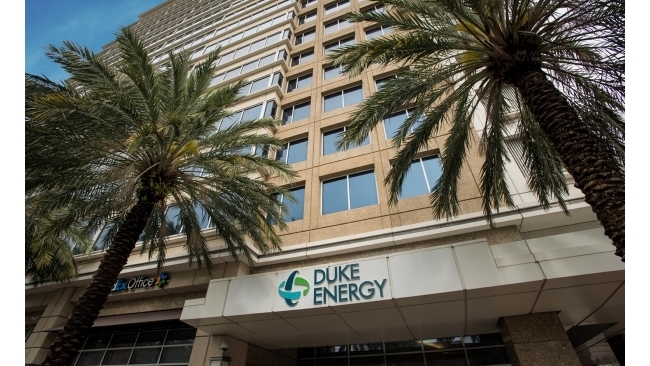
Duke Energy Florida's office located in St. Petersburg. (Photo via Duke Energy's website)
ST. PETERSBURG — A coalition of local organizations in St. Petersburg announced Wednesday a petition campaign to try to place a measure before the public that, if approved, would make the city the first in more than 20 years in Florida to run its own electric utility.
The pronouncement comes after the St. Petersburg City Council voted in June to spend $590,000 to study the feasibility of leaving Duke Energy Florida and creating a city-owned utility. That study is expected to be completed sometime in 2027.
“Our electric bills are way too high,” said Josh Sproat with the Suncoast Sierra Club during a press conference in downtown St. Petersburg. “Duke Energy’s rate increases are out of control. And our neighbors are hurting. If we don’t have this urgency, it’s only going to continue to get less affordable.”
Organizers say that their goal is to collect more than 16,200 signatures, the benchmark needed to place a charter on the ballot about locally owned utilities.
The move comes as energy rates among all the investor-owned utilities in Florida, and across the nation, have increased due to surging power demands, updates to aging power lines, and severe weather conditions that can damage local energy grids.
According to the group Food and Water Watch, Duke Energy’s rates in Florida increased by 49% between December 2020 and January 2026. The group reports that Florida Power & Light’s rates have gone up on average 45%. Tampa Electric’s rates have gone up on average 86%, the report shows. Federal data show public companies’ bills are on average about 14% lower than private companies.
St. Petersburg’s 30-year franchise agreement with Duke Energy expired at the end of July. It was that deadline that prompted City Council member Richie Floyd to give the city “a once-in-a-generation opportunity to look into the city’s options.”
“Right now, St. Pete residents have very little say about the decisions affecting their power bills, their energy reliability, and the investments their city is making into clean energy,” said Juan Ardila, state director with People Power for Florida, an organization founded by state Rep. Anna Eskamani.
In Florida, 54 utilities provide electricity to residents. They include the big four investor-owned providers — Duke Energy Florida, Florida Power & Light, Florida Public Utilities, and Tampa Electric Co. (TECO). Those four serve approximately 75% of the state’s population, with the remaining 25% provided by 33 municipal electric utilities and 16 rural electric cooperatives, according to the Florida Municipal Electric Association.
Also, more than 30 cities in Florida have run their own municipal utilities for decades, including Orlando, Jacksonville, and Tallahassee.
However, no city has launched its own utility since 2005, when the Central Florida city of Winter Park did so.
Duke Energy is fighting back. It retained a group called Concentric Energy Advisors to analyze the potential costs for St. Petersburg to assume Duke’s distribution grid within the city. The report, released Tuesday, says a preliminary analysis found the cost might range between $2.7 billion and $4.1 billion, depending on the transaction date.
“This study makes clear a government takeover of St. Petersburg’s electric service is unaffordable and irresponsible,” said Ana Gibbs, a spokesperson with Duke Energy.
“Our residents deserve a clear understanding of the costs, risks, and long-term implications of this unprecedented proposal. A government takeover could cost as much as $4 billion and our customers would ultimately be asked to shoulder the burden through higher taxes and increased fees or, worse, a reduction in public services.”
Organizers with the campaign, however, noted that when the City of Clearwater began looking at creating its own municipal utility to replace Duke Energy, Concentric Energy Advisors made similar arguments in that case. However, an independent study commissioned by Clearwater later found that electric bills would run 7%-18% lower than Duke Energy’s rates.
Regardless, the Clearwater City Council voted last month unanimously to approve a 30-year extension to its franchise agreement with Duke, citing high costs to make the transition.
Tallahassee, FL