House GOP lawmakers explore increased public health reporting for tick-borne diseases
Sep 02, 2026 | 4:55 pm ET
Description
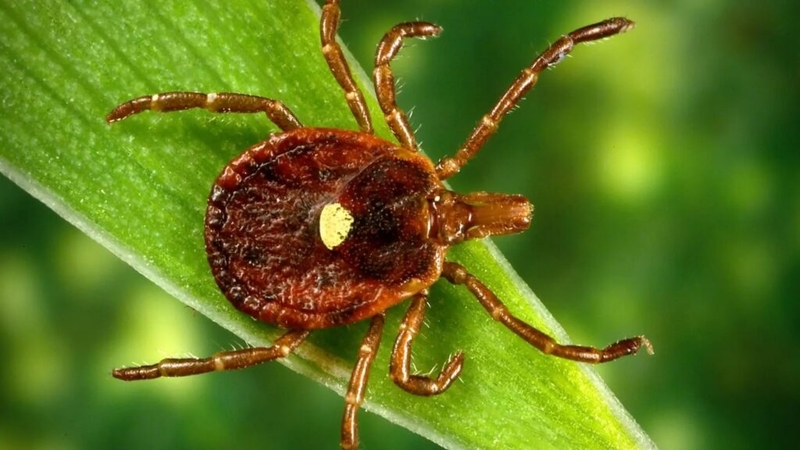
A lone star tick, which is a very aggressive tick that bites humans. A circular rash sometimes follows the bite. (Photo courtesy Centers for Disease Control and Prevention)
While Pennsylvania has long been among the states most affected by Lyme disease, the incidence of other tick-borne illnesses is unknown because there’s no requirement to report them to public health authorities, state lawmakers heard Wednesday.
The commonwealth had more than 16,000 reported cases of Lyme disease in 2024, according to the U.S. Centers for Disease Control, which tracks the bacterial infection nationwide. There were also more than 1,000 cases of anaplasmosis, another common bacterial disease transmitted by deer ticks.
“We know that there’s more than that going on,” said Erika Machtinger, a Penn State associate professor of entomology and leader of the Penn State Extension Vector-borne Disease Team. “But Lyme disease is only the most visible part of the problem. Pennsylvania ticks are associated with many different pathogens.”
Those include babesiosis, Powassan virus and alpha-gal syndrome, an immune reaction to bites from lone star ticks also known as “red meat allergy” because it causes an allergic response to sugars found in tick saliva and most mammals, she said.
The commonwealth has built a strong foundation through years of tick surveillance, Machtinger told the state House Republican Policy Committee. The panel heard from experts and people diagnosed with tick-borne illnesses.
“We increasingly know where the ticks are and what pathogens they carry,” she said. “But the next step is translating that knowledge into prevention.”
Rep. Catherine Wallen (R-Adams), who is a chronic Lyme survivor, said she’s familiar with the struggle those with the infection face, both from the symptoms and in navigating the health care system to get diagnosed.
“We all look fine from the outside, and I’ve heard more than one doctor say, ‘But you look fine.’ Well, you don’t understand what’s going on inside of me,” Wallen said, adding that Lyme patients are sometimes dismissed as seeking pain medication.
Wallen is the prime sponsor of legislation that would require health care practitioners to report cases of babesiosis, a rare malaria-like disease that is spread by deer ticks, the same species responsible for most cases of Lyme disease.
Tick season is getting longer. So is the list of states trying to keep up.
House Bill 2710 would also require medical professionals to complete one hour of continuing education in tick-borne disease diagnosis and treatment as part of the licensure and renewal process.
In a memo seeking co-sponsors for the bill, Wallen noted that the state Department of Health has issued proposed regulations to update communicable disease reporting requirements to include tick-borne diseases, but there’s no guarantee babesiosis will be included in the final regulations, which are not due until 2028.
Reported Lyme disease cases in Pennsylvania have increased from about 2,300 in 2000 to nearly 19,000, according to preliminary data for 2025, Kaitlyn Good, a data visualization specialist at the Center for Rural Pennsylvania, said.
While tick-borne illness is commonly associated with outdoor activity, hotspots for Lyme disease in Pennsylvania include some of the most densely populated areas, she noted.
Allegheny County, which includes Pittsburgh and its suburbs, had the largest number, with 2,628 cases, or 214 per 100,000 people. But when viewed as an incidence rate, it’s clear that Lyme disease is more common in rural counties, despite smaller populations, Good said.
Jefferson and Clarion counties both have incidence rates around 450 cases per 100,000 people.
“Rural Pennsylvania continues to experience a disproportionately high incident rate relative to its population,” she said, noting that hotspots such as Allegheny County and the counties surrounding Philadelphia have remained consistent.
Nicole Chinnici, director of the Pennsylvania Tick Research Lab at East Stroudsburg University, said her team has been studying ticks since the 1990s. The lab conducts tick surveillance in Monroe, Pike, Mercer and Crawford counties to detect trends in the effects of environmental variables on disease rates.
The lab also encourages the public to submit ticks for testing for Lyme and other diseases through its website ticklab.org.

“They put in a lot of information regarding their exposure to that tick bite, so we can better understand how individuals in Pennsylvania are being exposed to ticks,” Chinnici said, adding that people who send in ticks get results within 36 hours. “That gives them a better understanding of what they’ve been exposed to, and helps guide their physicians with treatment and diagnosis.”
She noted a new state law requiring school nurses to report tick bites of children coincided with a spike in tick submissions in 2024.
The lab found that up to half of all ticks carry Lyme disease and that about 6% of ticks with Lyme also carry at least one other tick-borne illness, such as anaplasmosis and babesiosis.
“That relationship with Lyme disease and babesiosis circulating in the population, and babesiosis circulating more frequently with Lyme disease than it does independently, brings an important point to our human risk as well as our physicians being able to treat and diagnose these cases accordingly,” Chinnici said.
Chinnici said that the most common population exposed to ticks is children under 10 years old. She added that most people – 42% – who receive tick bites were simply out in their own back yards.
“That does bring back the awareness that it’s not just going out camping, it’s not just in our parks,” she said.
Machtinger, the Penn State professor, said the first step to preventing tick-borne illnesses is to understand there is a risk anytime you’re outside, whether it’s in the garden or in the forest.
“We don’t want people to not go outside. We just want them to recognize their risk, and then when they are going outside, to take some pretty simple steps,” she said, noting that insect repellent, long pants tucked into socks and wearing light-colored clothing reduce the risk.
Chinnici said the risk of tick exposure is year round in Pennsylvania, any time the temperature is above freezing. She recommended checking for ticks whenever returning indoors. “That is number one when it comes to prevention,” she said.
And if you do find a tick, she said there’s no need to burn it, as some members of the committee asked.
“It is really very simple. You can pull it off with your fingers, or you can use a fine point tweezer,” Chinnici said, adding that saving and testing it is important because the symptoms of tick-borne disease can take up to 30 days to appear. “We can test that tick for you and get better information of whether you’ve been exposed.”
Harrisburg, PA