Plans For New Jail To Include Community-Based Treatment
Oct 30, 2026 | 6:01 am ET
Description
Photo courtesy of Honolulu Civil Beat
After almost a decade of rancorous debate over plans to replace the run-down Oʻahu Community Correctional Center, some of the key players have apparently found common ground: They seem to want community treatment beds as much as they want new jail cells.
The quarrel over OCCC is one of the longest-running stalemates in Hawaiʻi, a messy history of foot-dragging by state government and protests by criminal justice reformers.
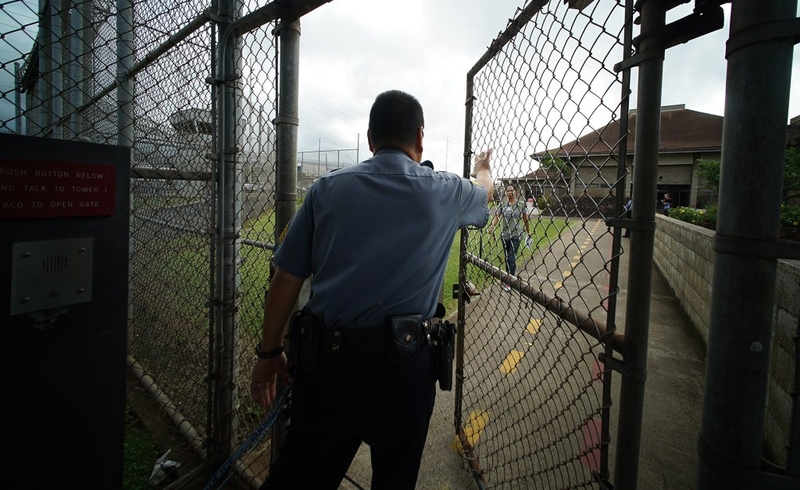
On one side, state officials have stressed the need to rip down the old OCCC and replace it with a more efficient and modern jail. Conditions in the overcrowded facility have been so bad they have triggered lawsuits and two federal consent decrees to force the state to make improvements.
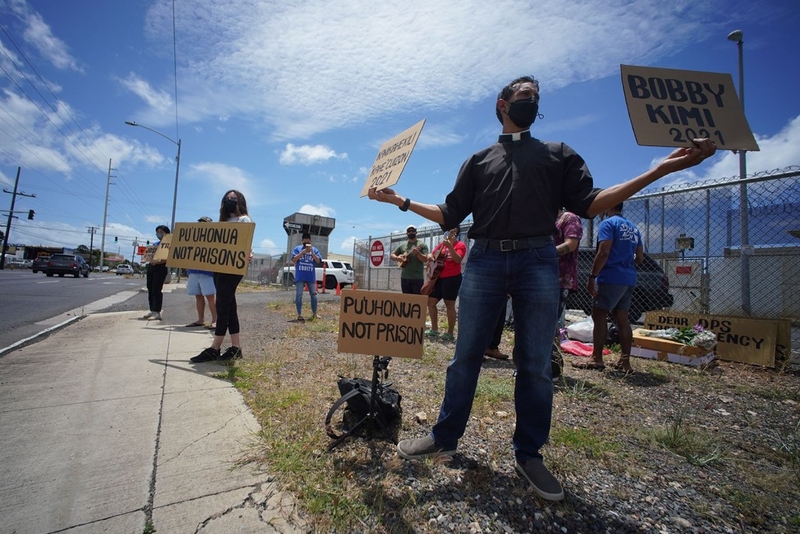
Critics of replacing the jail, meanwhile, argue that many of the people who land behind bars shouldn't be there. They are calling for greater state investment in community-based treatment beds to care for people who are coping with mental illnesses and drug addiction. Those programs would significantly reduce the jail population, they say, making it possible to build a smaller, less expensive new lockup.
"We need to do both," said Department of Corrections and Rehabilitation Director Tommy Johnson. "You need to fix the facilities so we're providing humane conditions for those who end up in our custody and care, and adequate working conditions for our employees. At the same time, we should have robust diversion systems that will address some of these needs where they don't need to be incarcerated."
It is unclear how much money Gov. Josh Green's administration and state lawmakers are prepared to commit to those problems. Even so, the state needs more community beds to house people "who clearly have mental health issues, who shouldn't belong in jail or prison," Johnson told members of the House Public Safety Committee last week. "That's where the entire state needs to come together and work on that."
Romey Glidewell, healthcare administrator for the department, said close to 40% of those in prison and jail have mental health issues, including "severe mental illness, people who will not recover, will not rehabilitate, who have a chronic and degenerative mental illness." She said that is expected to grow to 50% in the years ahead as the population ages.
Experts have said the mental health system inside Hawaiʻi prisons and jails has been overwhelmed. At the same time, the shortage of psychiatrists across the state complicates the department's efforts to connect prisoners with mental illnesses with care outside of jail when it is time to release them.
"As far as the actual transition of care, we are suffering from the same challenges that everyone in community is," Glidewell told lawmakers. "The wait to see a provider on the outside is three to six months. We don't exactly know how to solve that problem as DCR because it really is more of a state-based problem."
"We do have a lot of folks that we call frequent flyers," Johnson said. "They may come into our custody three, four times a year, sometimes more. Most of the time, they have mental health issues and they're off their medication."
Approaching A Consensus, Maybe
The department's plans for a new jail has been critiqued by the national Prison Policy Initiative, and experts with the Vera Institute of Justice's Beyond Jails Initiative also raised questions about the project. Both organizations contend that too many people across the country are being jailed for low-level, non-violent crimes.
Claudine Constant, director of the Beyond Jails Initiative, said the men and women who are locked up often have chronic mental illnesses or are addicted to drugs, and "jails often end up being the caboose or the catchall for those, for that population."
"What actually works is investing in facilities that can actually take care of people and meet populations where they're at," she said, "rather than using jail beds to house people, or jail beds to rehabilitate folks when jails don't rehabilitate anybody in any way, shape, or form."
That sounds strikingly similar to the pitch Johnson made to lawmakers at the briefing at the state Capitol last week.
Johnson readily acknowledged some people are dangerous and belong in jail, but "we will support any effort that will divert and deflect people from our custody that shouldn't be with us," he said. "But I want to make it clear: We need the services in the community to provide to these people."
He added: "If we're able to do that, we can decrease the number of court hours, the number of emergency room visits ... because they're getting services in the community."
Honolulu Prosecutor Steve Alm, meanwhile, praised an initiative by DCR to reduce the size of the new OCCC from the 1,000 beds that had been planned to 800. He suggested the state should have contingency plans it can put into place if diversion programs are able to reduce the jail population below 800.
"The governor and the legislators hopefully would realize we need that effort," Alm said in an interview this week. "We need to have more treatment beds because, you know, for the homeless population many have mental health or drug and alcohol problems."
After listening to Johnson's briefing on the new jail, House Public Safety Committee Chair Della Au Belatti zeroed in on community-based treatment beds as a strategy for the state to pursue.
The game changer, she said, would be for the governor's budget to request dedicated funding for community services, "and it doesn't matter which department it goes to."
The Green administration, she added, could demonstrate "that they really do want to solve this problem" if they request such funding for the next two years.
Green did not respond to a request for an interview about the issue this week, and his staff instead referred the request to the Department of Corrections and Rehabilitation. Grace Johnson, DCR's public information officer, said in a written statement the department is compiling information and will reply next week.
Plans For Bricks And Mortar
In the meantime, the state's decade-long effort to build a new Oʻahu jail grinds on.
Former Gov. David Ige made a pitch in his 2016 State of the State address to tear down OCCC and replace it with a new jail at Hālawa, but lawmakers refused to fund the project. Corrections officials have been lobbying for money for a new jail ever since.
Johnson has repeatedly warned that "if we don't get a replacement for OCCC sometime in the near future, then we're just setting ourselves up" for a federal lawsuit over the poor conditions there. To people who say nothing should be built, "they don't realize the conditions that these people have to live and our staff has to work in," he said. "We can only limp along for so long."
A major reason for the delays is the estimated $1 billion price tag, which would make it one of the most expensive state construction projects ever. State lawmakers have so far been unwilling to fork over such an enormous sum. But Johnson warned that every month of additional delay results in $3 million to $5 million in construction escalation costs.
"Had we built the facility in 2017 when it was proposed, it would have been $537 million or thereabouts," he said.
Johnson told lawmakers last week the latest plan is to scale down the jail to 800 beds, a significant reduction from the 1,000 previously planned. Johnson said the state and its consultants are revising their cost estimates for the jail, and are also reviewing the financing options.
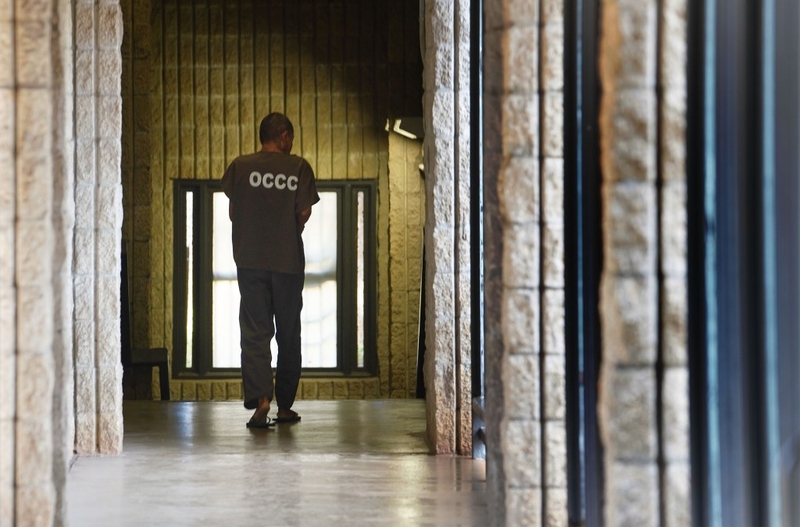
By comparison, the current jail was designed to hold 628 prisoners, and has an operating capacity of 954. It held 911 inmates as of Oct. 19.
DCR plans to incorporate features such as "treatment rooms" within housing modules in the new jail to support rehabilitative services for inmates who need mental health care, and also multi-purpose rooms for educational programs.
Since it seems unlikely the state Legislature will commit the estimated $1 billion the jail will cost, state officials proposed a public-private partnership to have a developer finance and build the new jail. The idea is to have the state put down a substantial down payment on the larger jail project, and have the contractor finance the rest.
Johnson said he is requesting $287.5 million for the fiscal year that begins July 1, 2028 to jump-start the OCCC project, which is about one-quarter of the expected total cost of the new jail. If all goes according to plan, the project would be finished in about late 2031 or early 2032, and the state will then lease the jail from the developer.
The state has already spent or earmarked about $55 million on studies, environmental reports, public relations and planning for the project, and still nothing has been built. That includes $30 million lawmakers approved last year for work that included paying a consultant to develop a request for proposals for the public-private partnership.
There are still significant obstacles to construction. Last week lawmakers were told the site for the new jail in Hālawa is still occupied by a quarantine station operated by the state Department of Agriculture and Biosecurity. It will cost an estimated $60 million to relocate the quarantine facility so that the jail can be built, and it is unclear where that money will come from.
The new jail plan also calls for leveling the old Laumaka work furlough facility that is now at the OCCC site, and rebuilding it on the same property in Kalihi. Johnson said he is requesting $130 million in the fiscal year that begins July 1 to rebuild Laumaka.
The new facility would have 240 beds, doubling the size of Laumaka, Johnson said, and would house inmates who are approaching their release dates. Inmates approved for the state furlough program sleep at the facility and go out into the community for daytime work or school, and the Kalihi site is better suited for those activities.
The history of the much-delayed OCCC project is frustrating to Carrie Ann Shirota, an attorney and former policy director of the ACLU of Hawaiʻi. She described what might have been done with the money that has already been spent on the new jail project.
"We need to acknowledge that we are no better off today than we were a number of years ago, and literally millions of dollars have been spent on consultants," she said. "That money could have been diverted to community providers to provide things such as mental health treatments, substance abuse treatment, family reunification, job training, housing that people need to successfully reenter back into the community."
Honolulu, HI