Pipeline could impact 185 SC landowners on route to proposed new gas power plant
Oct 06, 2025 | 6:00 am ET
Description
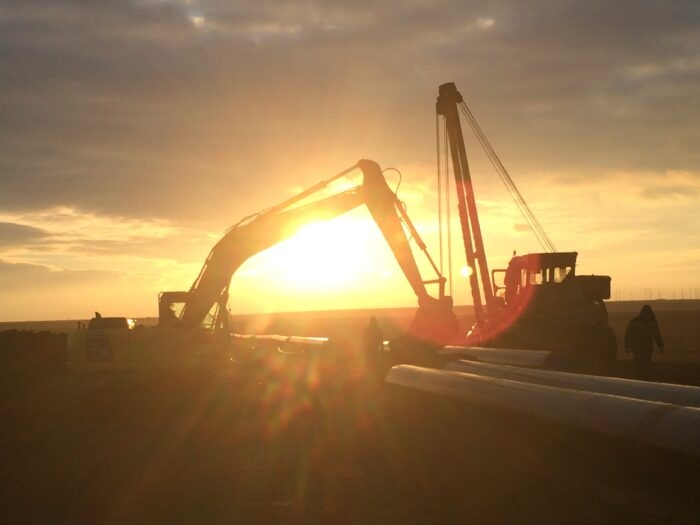
A pipeline company tasked with supplying natural gas necessary to run a proposed power plant in South Carolina’s Lowcountry has sent out letters to 185 potentially impacted landowners as the massive energy project, billed as “generational” for the state, gets underway. (File photo by Getty Images)
A pipeline company tasked with supplying natural gas necessary to run a proposed power plant in South Carolina’s Lowcountry has sent out letters to 185 potentially impacted landowners as the massive energy project, billed as “generational” for the state, gets underway.
Gov. Henry McMaster, in May, signed into law a sweeping energy package that, among other things, granted permission for Dominion Energy and state-owned utility Santee Cooper to partner on a 2,000-megawatt natural gas-fired plant along the Edisto River in Colleton County.
Data centers gobble up energy. Should SC block them from getting special deals?
Utility executives told the SC Daily Gazette they plan to begin the permitting process for that power plant, estimated to cost $2.5 billion, as early as December.
The facility, they say, is essential to meeting South Carolina’s power needs amid rapid industrial and population growth, as well as a proliferation of high-energy data centers that fuel the nation’s ever advancing technologies.
“We need the energy,” Dominion Energy South Carolina President Keller Kissam said.
But before the first shovel turns dirt at Canadys, the companies need to know they’ll have the fuel to power it.
That’s where another partner — Kinder Morgan — comes in.
The power companies have a standing agreement with the Houston natural gas giant to build a $431 million pipeline, running from the south Georgia border, across Hampton and north Colleton counties, to deliver 325,000 dekatherms of gas per day to the plant site 71 miles to the northeast.
Bridge-Project_v1
A number of environmental groups, including Southern Environmental Law Center and Conservation Voters of South Carolina, have already expressed concern over the pipeline’s proposed route — in particular its proximity to the ACE Basin, a 350,000-acre undeveloped estuary named for the Ashepoo, Combahee, and Edisto rivers that feed it.
But one organization dedicated to the basin’s preservation, the ACE Basin Task Force, won’t oppose it, according to chairman Charles Lane.
Lane said the proposed route will have far less impact on the sensitive ecosystem and endangered species than if the utilities had chose to run the pipeline beneath the transmission lines Dominion owns closer to the coast.
The proposed pipeline won’t go into the heart of the basin. In all, it will cross just four miles of land that’s part of the ACE’s larger watershed — where rainfall might eventually drain into the basin — according to Kissam.
Laying plans and laying pipe
The three companies started laying their pipeline plans last year.
As part of that process, Kinder Morgan Vice President of Public Affairs Allen Fore, along with engineers and project managers, took a helicopter flight over the projected route, landing occasionally to see things from the ground.
“One of the things I do on every major project we have across the United States is to see with my own eyes the potential route from the air and to go every mile,” Fore said. “That’s the level of detail that we take on projects, from a very, very high level to an individual conversation with the landowner.”
The company also has met, both publicly and privately, with officials from both counties. Now, they’re asking landowners’ permission to survey the land under which the pipe could run.
Kinder Morgan plans to hold community meetings with the landowners, who received letters last week.
The company will seek to survey a path 300 feet wide but ultimately will need a 50-foot-wide right-of-way, for which they will pay rent to the landowners. How much is unknown. Amounts will depend on the land’s value and negotiations.
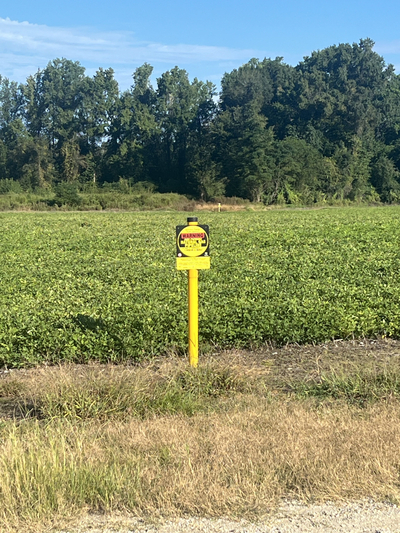
Easements will give Kinder Morgan permanent access to the property. Landowners can still use the land, with limitations. They can plant crops or bushes, but not large trees with deep roots, and they can’t build any kind of structure on it in case Kinder Morgan has to come back and dig up the pipe for maintenance. And payments don’t transfer if the landowner sells.
A large portion of the pipeline’s route will run under existing power lines owned by Santee Cooper so as not to disturb more land than necessary.
Once they’ve secured a final path — sometime between April and June of next year — they’ll officially begin the permitting process with the Federal Energy Regulatory Commission.
In addition to permission from the presidentially appointed commission, they’ll need various approvals from the U.S. Army Corps of Engineers, U.S. Fish and Wildlife Service, South Carolina Department of Natural Resources, state Department of Archives and History, and the state Department of Environmental Services.
The partnership
Meanwhile, cleanup and site work at the former gas plant is largely complete, Kissam said.
The Virginia-headquartered power company has now started placing orders for the plant’s specialized equipment, including turbines, steam generators and transformers, which take a long time to have built and delivered.
In addition to the Canadys plant, Dominion is eyeing sites for gas plants in its home state and expects to buy in bulk as a way to save on costs.
“We need to be ordering the equipment,” said Santee Cooper President Jimmy Staton. “But we’re going to wait for the certainty of the certification of the pipeline before we start spending, in my view, major dollars.”
The partnership wasn’t necessarily easy to secure. Legislators and power customers pushed back, still upset over an earlier failed deal between Santee Cooper and Dominion’s now defunct predecessor, South Carolina Electric & Gas.
The two companies mothballed a planned expansion of the V.C. Summer Nuclear Station in Fairfield County in 2017 amid fraud, mismanagement and cost overruns. Customers of both companies are still paying for the nuclear reactors that have never produced a single megawatt.
Here’s how much SC power customers are still paying for a failed nuclear project
Now, consumer groups say, customers will be asked to pay for a gas plant on top of it.
Under initial agreements, copies of which Santee Cooper provided to the SC Daily Gazette, the two utility companies plan to each have equal ownership and equal cost sharing in the gas plant.
The companies will split that natural gas supply from the pipeline 45/55, with Dominion taking the larger portion and selling off any excess to its customers.
While Dominion Energy crews will handle the power plant’s construction, Santee Cooper’s chief operating office will oversee it, the executives said.
When it’s operational, the plant will employ between 40 and 60 full-time workers in rural Colleton County, which struggled economically following Canadys’ coal closure in 2013.
The access to natural gas the pipeline provides could draw other industry to the area as well, Kissam said.
“Everywhere natural gas comes, businesses follow,” Staton added. “And so, we think it’s not just a great opportunity for us to get the electricity that the state needs, but it’s also a great opportunity for economic development for those areas.”
Kinder Morgan will own and operate the pipeline.
And by working with Kinder Morgan, Staton and Kissam said, they’ll be able to tap in to its vast system. That includes 80,000 miles of pipe that spans 43 states, drawing from every major gas-producing basin in the country.
That means, if something impacts one pipeline — a natural disaster or a maintenance outage — the utilities can get their gas from another Kinder Morgan line without having to pay a higher price to buy from other providers, Staton said.
In addition, the Canadys pipeline is part of a larger $6 billion proposed expansion by Kinder Morgan across the Southeast, with lines across Mississippi, Alabama and Georgia, most of which is following the route of the company’s existing pipelines.
Even without those expanding lines, Fore said, Kinder Morgan already has enough on its existing system to power Canadys.
Environmental protections
To protect the environment, Fore said, Kinder Morgan electronically monitors its pipelines 24/7. With the flip of a switch, and in many cases automatically, the pipeline will shut down if there’s any indication of a leak.
“(The power) plant is state of the art — so is our pipe,” Fore said.
And because the line is carrying natural gas, which is lighter than air, any leak will rise rather than sinking underground or contaminating a water source, he said.
When necessary, the company has the ability to drill down and run lines some 70 or 80 feet underground without disturbing the ground above. It already has pipelines that run beneath the Mississippi River and the San Francisco Bay, for example.
When it comes to the power plant, Kissam said, the companies plan to use an air cooling system for the turbines, rather than water. The plant will use 1/100th of the water consumed from the Edisto River by its coal-fired predecessor.
Because natural gas plants are easier to fire up and pull back, tracking right along with power demand at any given time, they also work much better alongside solar power than their coal-based counterparts, Staton said.
Until battery technology becomes more developed, power companies cannot rely on renewable energy alone to keep the lights on. When the sun is shining, gas power can easily be dialed back. When it’s cloudy, the gas takes over.
“That’s critical for us if we’re going to continue to develop renewable resources around South Carolina,” Staton said.
Currently, Dominion Energy South Carolina has 1,000 megawatts of solar capacity on its system, while Santee Cooper and the electric cooperatives collectively have 638 megawatts.
Under Santee Cooper’s latest long-term plan, the utility company plans to add another 1,500 megawatts of solar power by 2040, largely by purchasing power from solar developers rather than owning and operating its own arrays. One megawatt of solar is enough to power 168 homes, on average, according to the Solar Energy Industries Association.
Kinder Morgan hopes to have the necessary approvals in hand to start constructing the pipeline in early 2029, Fore said.
Work on the power plant would follow.
Columbia